Goa is abuzz with excitement as vintage bike and car owners, users, collectors and fans are decking […]
Old is Gold
October 4, 2016
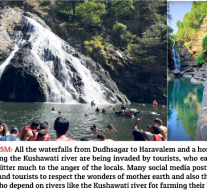
The residents of Khushawati recently pleaded with tourists and picnickers of Goa to stay away from the beautiful banks of the river and the waterfalls along its course. River of happiness Khushawati is being converted into river of sorrows “dukawati” due to continuous pollution.
Goa, a state famously known for its golden beaches, is also privileged to have the Western Ghats — one of the four major biodiversity hotspots of India — cascading through it along with complex network of rivers and waterfalls that sustain its unique biodiversity. Something lesser known, is that this emerald hinterland is currently facing an unprecedented crisis. The Kushawati river, alongside the iconic Dudhsagar and Harvalem waterfalls, is buckling under the weight of “over-tourism,” unregulated picnicking, and a systemic failure in waste management. What was once a pristine sanctuary for Western Ghats flora and fauna is now rapidly transforming into a landscape of plastic, noise, and chemical contamination.
The Kushawati river, a major tributary of the Zuari, and is synonymous with the cultural and agricultural heritage of south Goa. Its name, derived from “Kushasthali,” hints at its ancient significance. Yet, its ecological health is being quietly eroded. Unlike high-profile beaches, riverine degradation is often insidious, manifesting in the slow accumulation of non-biodegradable waste along its banks.
The very beauty that attracts visitors to the Kushawati is the cause of its downfall. Weekend “picnic culture” has surged, with groups congregating near bridges and shallow embankments. The aftermath is a familiar, grim sight: plastic plates, Styrofoam cups, and an alarming volume of glass beer bottles. In many areas, these bottles are deliberately broken, posing a permanent hazard to local villagers, cattle and the river’s micro-habitats. Glass does not decompose. Glass fragments eventually settle into the riverbed, altering the substrate where many benthic organisms reside.
Beyond physical litter, the Kushawati river faces a chemical threat. The proliferation of riverside rentals and unauthorized commercial set-ups often lacks sophisticated sewage treatment. Direct discharge of gray water leads to increased levels of phosphates and nitrates. This triggers eutrophication, a process where excessive nutrients stimulate algae blooms, depleting dissolved oxygen and leading to “dead zones” where fish and native aquatic plants cannot survive.
Dudhsagar is Goa’s “Sea of Milk” and one of India’s most visually stunning landmarks. Situated within the Bhagwan Mahavir Wildlife Sanctuary, it is a critical corridor for leopards, sloth bears, and endemic bird species. However, the sheer volume of tourists — sometimes exceeding several thousand per day which absolutely overrides its carrying capacity — has turned this sanctuary into a high-stress zone.
Waste Management in High Altitudes
Managing waste in a rugged, forested terrain like Dudhsagar is a logistical nightmare. Tourists traveling by rail or jeep often discard plastic snack wrappers and PET bottles into the foliage. These areas are difficult to reach for sanitation workers to access the plastics dumped and so they remain for years, leaching chemicals into the groundwater and ingested by opportunistic wildlife like macaques and wild boars. There have been documented cases of forest animals suffering from intestinal blockages due to the consumption of discarded plastic liners.
The roar of the waterfall is now frequently drowned out by the roar of jeep engines and the clamour of large crowds. For the diverse avian population of the Western Ghats, noise is a pollutant. It interferes with mating calls, territorial signals, and predator-prey communication. Constant human intrusion forces shy, deep-forest species to retreat further into the interior, shrinking their effective habitat and reducing genetic diversity.
Harvalem represents a different set of challenges. Located closer to urban centers like Sanquelim, it is a primary spot for local recreation. The degradation here is characterized by a lack of formal infrastructure to handle the waste generated by mass bathing and “fly-tipping”, another term for illegal dumping.
Harvalem lacks adequate sanitation facilities for the volume of visitors it receives. This leads to the direct contamination of the pool below the falls with fecal coliform and detergents from bathing. For a river system that provides water for downstream agriculture, this is a significant public health concern.
The presence of mugger crocodiles in these waters adds an element of danger. As food waste attracts smaller scavengers, crocodiles are drawn closer to human-heavy areas, increasing the risk of conflict. The alteration of reptile behaviour due to human presence and food availability is a major concern for local herpetologists. All of which increase human-wildlife conflict resulting in the mortality of either.
PLASTICS ACCUMULATION
THE impact of this degradation is structural and horrifying. The accumulation of plastic in the Kushawati and its tributaries eventually moves toward the coast, where it impacts mangrove ecosystems.
Mangroves act as the “kidneys” of the Goan landscape, filtering sediment and providing nurseries for marine life. When these filters are choked with plastic and micro-plastics, the entire tropic ladder which ranges from microscopic plankton to the commercially important fish species, is compromised. As plastics weather under the intense Goan sun and the hydraulic force of the falls, they fragment into micro-plastics. These are then ingested by freshwater fish and crustaceans, entering a food chain that eventually reaches the plates of local communities.
We are literally eating the waste we leave behind. Near Harvalem as well the sheer volume of broken glass and spilled alcohol alters the soil pH and introduces toxins that kill the delicate mosses and ferns endemic to the waterfall’s spray zone– plants that exist nowhere else on earth.
To save these vital ecosystems, a shift from “volume-based tourism” to “value-based ecology” is mandatory because every ecosystems is resilient, but they each have breaking points. With Dudhsagar showing signs of “ecological fatigue” wherein the forest can no longer regenerate faster than it is being trampled, extinction is permanent.
Once the topsoil on the trekking paths is gone and the native birds stop nesting, a “clean-up drive” won’t bring them back. These sites, once places of local spiritual retreat and quietude transformed into a loud, trash strewn landfills, represents a profound loss of Goan heritage. We are trading centuries of natural serenity for a few hours of unregulated leisure. For how much longer are we going to sit with beer bottles in our hands, on a soft mat, looking at a beautiful scenery getting slowly, but surely eroded, until it is too late and we have nothing to look upon?
 LETTER TO THE EDITOR FOR THE ISSUE DATED OCTOBER 17, 2026
 AZAD MAIDAN NO LONGER FREE!
 AZAD MAIDAN CRACKDOWN! Goa’s crackdown on protesters raises grave questions about democracy! By Our Special Correspondent
 INDIAN WOMEN ARE ON THE STREETS AGAIN. EVERYTHING HAS CHANGED BUT NOTHING HAS CHANGED!By Shilpa Phadke
 RBI TIGHTENS SCREWs ON ECONOMY!By Arvind Pinto
 SSR OVERRULED SIR IN GOA!
 HI MUMBAI MERI JAAN BUT…
 RAJENDRA ARLEKAR WILL REPLACE PRAMOD SAWANT?
 MENTAL HEALTH ACROSS THE LIFESPAN! By Dr Amit Dias
 WEEKEND UPDATES
 LETTER TO THE EDITOR FOR THE ISSUE DATED OCTOBER 10, 2026
 WHEN THE MACHINE OVERRIDES THE LAW!
 HAS GOA BECOME MORE PERMISSIVE? By Special Correspondent
 BILLIONAIRES MULTIPLYING AT THE COST OF THE MIDDLE CLASS!
 THE SHADOW OF VOTE THEFT: WHY CEC GYANESH KUMAR MUST RESIGN!By Dr Olav Albuquerque & Deborah Cordeiro
Goa is abuzz with excitement as vintage bike and car owners, users, collectors and fans are decking […]