Goa is abuzz with excitement as vintage bike and car owners, users, collectors and fans are decking […]
Old is Gold
October 4, 2016
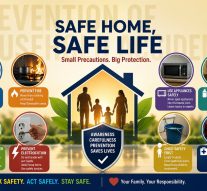
This week reminded us that fatal accidents can occur not only on roads or at workplaces, but within the walls of our own homes. Incidentally, April 28 is observed as World Day for Safety and Health at Work, reminding us that safety must begin wherever we live and work. Before we inspect the workplace, let us first examine the safety of our homes. Dr Amit Dias tells us more on how to think safety, act safely and stay safe.
We often think of danger as something that happens outside — on highways, in factories, or at construction sites. Yet many serious and sometimes fatal accidents occur quietly at home: a fall in the bathroom, an electric shock during a repair, a kitchen fire, a gas leak, burns from hot liquids, poisoning, or a child slipping into an unattended bucket of water.
This week, we mourned the loss of a doctor colleague following a fall that caused a severe head injury and brain bleed. We also heard of a young nurse in the DHS who was electrocuted while attempting to repair an inverter at home. Recently, there was the heartbreaking loss of an infant, who reportedly fell into a bucket of water at home. These are not freak events. They are reminders that home safety deserves far more attention than it receives.
Globally, household and domestic injuries contribute substantially to emergency visits, disability, and premature deaths. According to World Health Organization, falls alone cause an estimated 684,000 deaths annually worldwide, making them one of the leading causes of accidental injury deaths. One in 4 elders fall every year and 20 % result in major injuries such as fracture of the bones or head injury. Burns account for approximately 180,000 deaths each year, many occurring in domestic settings. Countless others suffer fractures, electrocution, poisoning, and long-term disability.
The good news is that most of these incidents are preventable. As the saying goes, “An ounce of prevention is worth a pound of cure.”
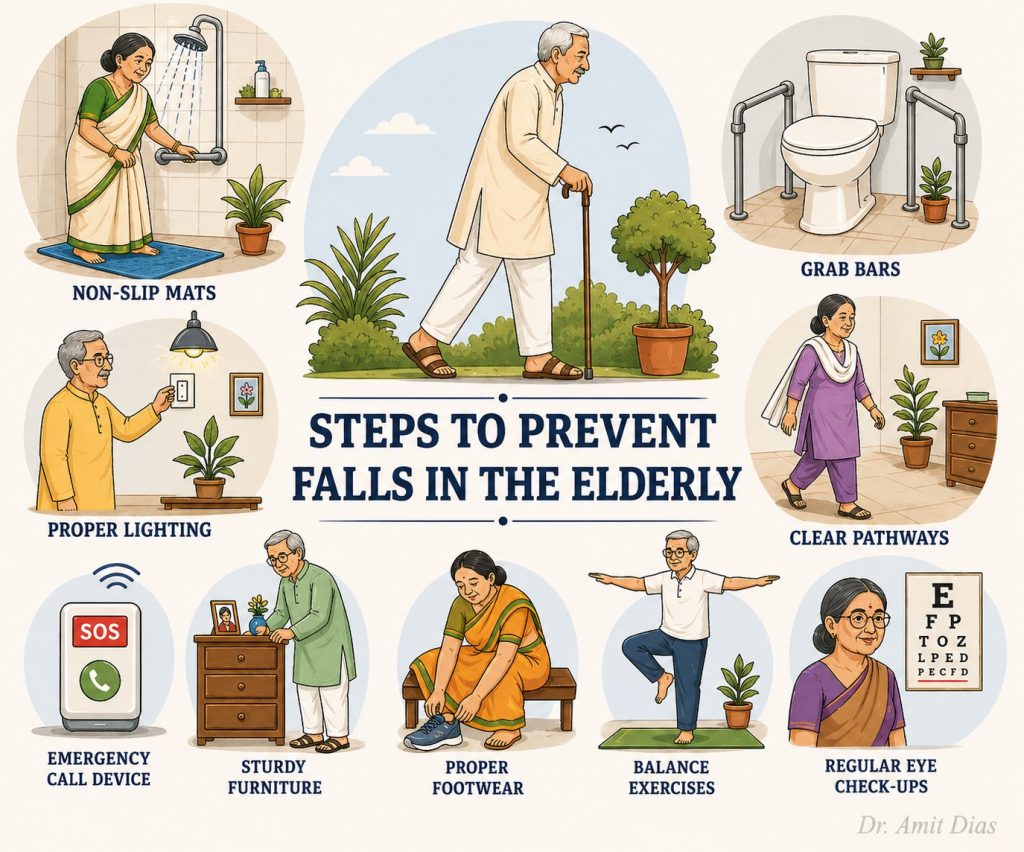
Common Causes of Falls in the Elders:
— Wet or slippery bathroom floors
— Loose rugs, mats, or trailing wires
— Poor lighting, especially at night
— Uneven steps or thresholds
— Cluttered walkways
— Standing on chairs or unstable stools
— Not knowing how to sit, stand and walk
— Lack of handrails or grab bars
— Footwear with poor grip
PREVENTION:
— Keep floors dry and wipe spills immediately
— Use anti-skid tiles or mats in bathrooms
— Install grab bars near toilets and showers
— Provide sturdy handrails on stairs
— Improve lighting in corridors, staircases, and bedrooms
— Remove clutter and loose wires from pathways
— Use a proper step ladder instead of chairs
— Encourage older adults to wear supportive non-slip footwear
— Use assistive technology for fall prevention
— Review medications with your doctor — some can predispose you to falls
— Consider fall-proofing homes during renovation or construction
FIRST AID
If someone falls, do not rush to lift them immediately. First check for pain, bleeding, swelling, deformity or inability to move. Watch for warning signs after head injury such as confusion, vomiting, drowsiness, headache or loss of consciousness. Seek urgent medical attention if any of these occur.
2. FIRE SAFETY
Kitchen fires, candles, diya, incense sticks, and faulty wiring are common triggers.
Prevention:
— Never leave cooking unattended
— Keep cloth, paper, and curtains away from flames
— Turn off stoves after use
— Keep matches and lighters away from children
— Install smoke alarms if possible
— Keep a fire extinguisher in the kitchen
If Fire Starts:
— Switch off gas/electricity if safe
— Smother small pan fires with a lid
— Never throw water on oil fires
— Evacuate early if fire spreads
3. GAS CYLINDER AND LPG SAFETY
LPG cylinders are safe when properly used, but gas leaks can be deadly.
Prevention
— Keep cylinders upright and ventilated
— Check the hose and regulator regularly
— Replace damaged tubing
— Turn off the regulator when not in use.
If You Smell Gas
— Do not switch on lights or appliances
— Do not use flames or matches
— Open doors and windows
— Turn off the regulator
— Move out and call for help \
4. ELECTROCUTION: THE INVISIBLE HAZARD
Electric shocks at home are often caused by wet hands, exposed wires, faulty appliances, or untrained repair attempts. As we saw this week, even trying to repair an inverter resulted in electrocution. Recently we had two patients at our clinic with severe burn injuries while repairing an air-conditioner.
Prevention
— Never handle switches with wet hands
— Replace damaged wires immediately
— Use proper earthing and safety breakers
— Avoid overloaded plug points
— Childproof sockets
— Leave repairs to qualified electricians
Microwaves and High-Voltage Appliances
— Microwave ovens contain internal high-voltage components and should never be opened for self-repair. Inverters and battery systems also require caution.
Can Electric Cars Give a Shock?
Electric vehicle vehicles use high-voltage batteries, but modern EVs are designed with multiple safety systems, insulation, and automatic shutoffs. Under normal use, they are safe. Risk arises mainly after flood damage, severe crashes, tampering, or unauthorized repairs.
First Aid
Do not touch a person still connected to power. Switch off mains supply first. Call emergency help and start CPR if trained.
5. POISONING AND CHOKING
Children are naturally curious and may swallow tablets, detergents, coins, batteries, or small objects.
Prevention
— Store medicines and chemicals locked away
— Keep button batteries and coins out of reach
— Keep products in original containers.
Never transfer chemicals into soft drink bottles
If It Happens
Do not induce vomiting unless advised. Seek urgent medical care.
6. BUCKET AND BATHROOM SAFETY FOR INFANTS
A small amount of water can be dangerous for infants and toddlers. Buckets left filled after mopping or bathing can pose risk.
Prevention
— Empty buckets immediately after use
— Keep bathroom doors closed
— Never leave infants unattended near water containers
–Supervise constantly
FINAL WORDS:
“Safety does not happen by accident and the best emergency is the one that never happens.”
 LETTER TO THE EDITOR FOR ISSUE DATED SEPTEMBER 19, 2026
 ELEVATED HIGHWAY TO HELL!
 MEDICAL DEVICES LOOT!By GS Mudur
 HOSTILE ACT BY PAKISTAN: `PNS HUNAIN’ TRIED TO DISRUPT OUR NAVAL SURVEILLANCE! By Dr Olav Albuquerque & Deborah Albuquerque
 BLACK MONEY IN POLITIAL PARTIES: ADR’s Alarming Revelations By Arvind Pinto
 `KHANDVI MILLE-FEUILLE’ AT BRICS ALL VEG BUFFET!
 SATYA NIKETAN TRAGEDY: HOW GLOBAL STUDENT HOUSING MODELS COULD HELP INDIA FIX A BROKEN SYSTEM!By Sneha Swaminathan
 GANESH PANDALS HIJACKED BY ADANI, AMBANI
 WHY DOES A DEMENTIA DIAGNOSIS MATTER? By Dr Amit Dias
 WEEKEND UPDATES
 LETTERS TO THE EDITOR FOR ISSUE DATED SEPTEMBER 12, 2026
 GOAN TEACHERS ARE CONTRACT LABOR!
 THE COLOUR IS PRESTIGIOUS! THE PROCESS MUST BE EQUALLY SO!
 DOGS ATTACK GOANS, OWNERS GET ACQUITTED!By Dr Olav Albuquerque & Deborah Cordeiro
 CYBER FRAUD: A THREAT TO FINANCIAL SECURITY & MENTAL WELL-BEING! By Adv Vinayak (Mama) D Porob
Goa is abuzz with excitement as vintage bike and car owners, users, collectors and fans are decking […]