Goa is abuzz with excitement as vintage bike and car owners, users, collectors and fans are decking […]
Old is Gold
October 4, 2016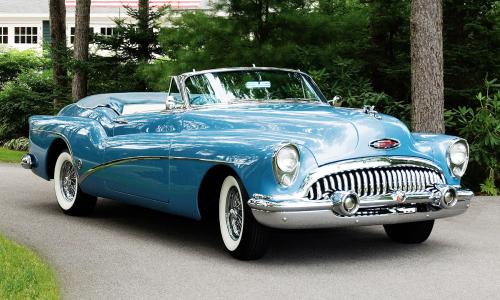
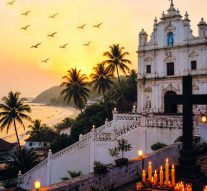
WHEN we arrived from Kenya in the late 1970s, Goa did not feel like a place trying to define itself. It simply lived.
After a year at Loyola in Margao, my father moved us to our village diocesan school, Our Lady of Perpetual Succour in Cortalim. It was, in hindsight, the best decision he could have made. The city was exciting, but it distanced us from the rhythms of village life. In Cortalim, everything came back into focus. It felt like home.
We were a mixed bag of village children. My closest friends were Hindus. Faith was never something we needed to explain. We walked to school together, swam in the village creek, played cricket, football, hockey each evening. When the Angelus bells tolled, we paused instinctively. No one told us to. No one questioned why. It was simply understood that we were different, and yet, we belonged together.
We celebrated everything. Diwali, Christmas, New Year’s. Ganesh Chaturthi was not THEIRS it was OURS. The annual village Sarvajanik celebration gave every talented child a stage and every family a place to gather. Our teachers came from Maharashtra, Kerala, Karnataka, and Goa, bringing with them different languages, accents, foods, and beliefs. None of it divided us.
At night, some of us gathered at our mathematics teacher Sir Cherian’s home to study. We slept over, waking early to wait for Raghu’s tea shop to open, where hot bread, potato bhaji and jelebis tasted like reward. One of his rooms doubled as a village library, run on trust. Books and comics checked out were returned without question.
His home was more than a classroom. It was where we celebrated everything. The living room became a dance floor, music crackling from a radio tuned to the BBC. Later, we formed our first hesitant boy band, ‘The Temptations.’ Just before the paddy harvest, a Ganesh idol would be installed in the same room. We sang bhajans, avoided non vegetarian food, and on the final day, after immersion in the well, gathered for a meal of chicken xacuti that felt like a celebration of everything we shared. Life was simple, but it was shared.
IN SCHOOL, Catholics attended religion class, while Hindu students went to moral science. On some days when we went to church, they stayed back, learning values that were never very different from ours. Faith was never imposed. It was practiced quietly, with respect.
I remember classmates performing Marathi plays such as “To Mi Navhech” (“That’s Not Me” and “Xevitt Cheya Pela” (“I Can’t Leave”). If there was one regret, it was that Konkani was not allowed in the classroom then. But even in that absence, something deeper held. A sense that we belonged to one another. During the village procession of Our Lady, Hindu families would wait along the route, garlands in hand, to honor the statue as it passed. No one saw contradiction in that. It was simply Goa.
In college, those bonds continued. We visited each other’s homes, shared meals, celebrated festivals. There was no vocabulary of division because there was no need for one.
IN the 1980s, after I joined the National Institute of Oceanography, my mornings began with a ferry across the Zuari, followed by a run to catch the bus from Agacaim for a prized window seat. The buses moved with an unhurried grace, gathering familiar faces along the way. At every stop came the calls from the two “kheelendars” at the doors, “fuddem vos, fatlean vos.” We were packed like sardines, but it did not matter. The scent of talcum powder and Lifebuoy and Liril soaps filled the air.
At Bambolim Cross, the bus would halt briefly. The driver and conductor, whether Hindu, Muslim or Catholic, stepped out to place garlands on the cross. Near the four pillars before Panjim, the same bus paused again, just long enough for everyone to bow their heads toward the Maruti temple on Mala hill. No one instructed us to do this. No one debated it. It was instinctive. It was understood that our gods were not in competition.
The bus would empty near Mary Immaculate School, and we would walk past rows of colorful heritage homes of Fontainhas into the city. At the imposing church of The Immaculate Conception overlooking the city, parents of different faiths paused their scooters to bow at the church. These were not acts of display. They were gestures of belonging.
At NIO, I encountered India in its full diversity for the first time. Colleagues came from across the country, with different foods, languages, and beliefs. We worked together without ever questioning each other’s faith. Our director, Dr Qasim, a Muslim, led with fairness and quiet authority. It never occurred to us to see difference as a threat. Many colleagues would later say that raising their children in Goa, in that atmosphere of easy acceptance, was one of the greatest gifts they could have given them. That was Goa then. Not perfect, but coherent.
Our political leaders too reflected this spirit. Dayanand Bandodkar and Jack Sequeira contested ideas, not identities. People voted across lines, guided more by vision than by religion. In more recent times, Manohar Parrikar understood this instinctively. He did not allow those who sought to disturb communal peace to take root. There was a clarity then, that Goa’s harmony was not to be gambled with.
Today, that coherence feels fragile. The easy acceptance that once defined us is being replaced by something more brittle. Identity is asserted more loudly. Differences are drawn more sharply. What we once lived without effort now seems to require explanation, even defence.
THAT should concern us, because harmony was never built through grand declarations. It was built in small, everyday acts. In shared buses, shared classrooms, shared festivals, shared silences. It lived in the instinct to pause for a bell, a cross, a temple, without asking why. If we lose that instinct, if we let outsiders know nothing about Goa and its culture, if we destroy it, we lose something far more fundamental than nostalgia.
Prof Joaquim Goes is a scientist at Columbia University, New York and writes this exclusive take on the changing life and times in Goa after the huge commotion created by a Hindutva Sanatani member from Maharashtra in Goa.
 LETTER TO THE EDITOR FOR ISSUE DATED SEPTEMBER 19, 2026
 ELEVATED HIGHWAY TO HELL!
 MEDICAL DEVICES LOOT!By GS Mudur
 HOSTILE ACT BY PAKISTAN: `PNS HUNAIN’ TRIED TO DISRUPT OUR NAVAL SURVEILLANCE! By Dr Olav Albuquerque & Deborah Albuquerque
 BLACK MONEY IN POLITIAL PARTIES: ADR’s Alarming Revelations By Arvind Pinto
 `KHANDVI MILLE-FEUILLE’ AT BRICS ALL VEG BUFFET!
 SATYA NIKETAN TRAGEDY: HOW GLOBAL STUDENT HOUSING MODELS COULD HELP INDIA FIX A BROKEN SYSTEM!By Sneha Swaminathan
 GANESH PANDALS HIJACKED BY ADANI, AMBANI
 WHY DOES A DEMENTIA DIAGNOSIS MATTER? By Dr Amit Dias
 WEEKEND UPDATES
 LETTERS TO THE EDITOR FOR ISSUE DATED SEPTEMBER 12, 2026
 GOAN TEACHERS ARE CONTRACT LABOR!
 THE COLOUR IS PRESTIGIOUS! THE PROCESS MUST BE EQUALLY SO!
 DOGS ATTACK GOANS, OWNERS GET ACQUITTED!By Dr Olav Albuquerque & Deborah Cordeiro
 CYBER FRAUD: A THREAT TO FINANCIAL SECURITY & MENTAL WELL-BEING! By Adv Vinayak (Mama) D Porob
Goa is abuzz with excitement as vintage bike and car owners, users, collectors and fans are decking […]