Goa is abuzz with excitement as vintage bike and car owners, users, collectors and fans are decking […]
Old is Gold
October 4, 2016
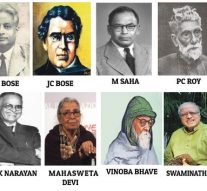
THE Nobel prizes attract global attention each year, symbolising the pinnacle of achievement in science, literature, peace, and humanitarian efforts. However, the history of the Nobel prize reveals significant omissions, with many remarkable individuals not receiving this honour. India, with its rich legacy of influential scientists, philosophers, writers, and reformers, has seen several of its deserving figures overlooked. While Nobel decisions are influenced by various factors, many believe that certain Indians warranted recognition. I highlight here their stories: while prizes can acknowledge greatness, they do not define it.
No discussion of Nobel omissions can begin anywhere other than with Mahatma Gandhi. The architect of India’s freedom struggle and the apostle of non-violence transformed political resistance into a moral force. Gandhi was nominated several times for the Nobel Peace Prize. Yet he never received it, even with a Nobel Worthiness (NW) mark of 10/10. After his assassination in 1948, the Nobel Committee chose not to award the Peace Prize that year. Decades later, members of the Norwegian Nobel Committee publicly acknowledged that Gandhi’s exclusion remains one of the greatest omissions in Nobel history. The influence of his philosophy of non-violent resistance can be seen in movements led by Martin Luther King Jr., Nelson Mandela, and countless advocates of civil rights and peace around the world. If the Nobel Peace Prize seeks to honour those who advance fraternity among nations and promote peace, Gandhi remains perhaps its most conspicuous absentee.
Satyendra Nath Bose’s omission from Nobel recognition is a surprising oversight in the history of science (NW 10/10). In 1924, he published a groundbreaking paper on quantum statistics, which Albert Einstein translated into German and published, leading to the development of Bose-Einstein statistics. The term “boson” now honours Bose, as every particle with integer spin belongs to this family, including the Higgs boson. Despite many Nobel Prizes awarded for work based on his concepts, Bose himself never received the prize, making his omission notable among historians of physics.
Dr Upendranath Brahmachari (NW 9.5/10) played a pivotal role in transforming public health in India during the early twentieth century. He developed Urea Stibamine, an effective treatment for visceral leishmaniasis (kala-azar), which significantly reduced mortality and saved many lives. His blend of scientific innovation and humanitarian impact aligns with Nobel-winning medical achievements. Despite being nominated multiple times, he was never awarded the Nobel Prize, prompting historians to question his exclusion.
Jagadish Chandra Bose (NW 9/10) is known for his groundbreaking work in wireless communication and microwave research, anticipating developments that would later revolutionise global telecommunications. His other pioneering work in plant electrophysiology demonstrated that plants respond to stimuli, opening new research avenues. Today, historians acknowledge him as a significant scientific innovator of the twentieth century, with some scholars suggesting his work deserved Nobel-level recognition.
Few scientific equations have transformed astrophysics as profoundly as the Saha Ionisation Equation (NW 9/10). Developed by Meghnad Saha, the equation enabled astronomers to determine the temperature and chemical composition of stars by analysing their spectra. Modern stellar astrophysics owes an enormous debt to this breakthrough. Saha was nominated for the Nobel Prize several times but never won it. Yet his work continues to be taught worldwide and remains fundamental to our understanding of the universe. His omission highlights how even groundbreaking theoretical advances can sometimes escape Nobel recognition.
Prafulla Chandra Ray (NW 7/10) holds a significant place in India’s scientific history. He not only contributed to chemistry but also fostered a culture of scientific inquiry in colonial India. As the founder of Bengal Chemicals and Pharmaceuticals, he inspired many scientists through his teaching. His notable work, A History of Hindu Chemistry, is a key contribution to the history of science. Although his discoveries may not have garnered Nobel recognition, his impact on modern Indian chemistry was remarkable and lasting.
LITERARY LANDSCAPE
INDIA’S literary landscape also contains figures whose influence far exceeded the recognition they received internationally. Sri Aurobindo combined philosophy, spirituality, poetry, and political thought into a body of work that continues to inspire readers worldwide. He was nominated for the Nobel Prize in Literature and later for the Peace Prize, but never received either honour. Sarat Chandra Chattopadhyay (NW 8/10), one of the most beloved authors in South Asia, explored themes of social injustice, human relationships, and women’s struggles with rare sensitivity. Works such as Devdas, Srikanta, and Charitraheen remain literary classics. Similarly, R. K. Narayan introduced generations of readers to the fictional town of Malgudi and became one of India’s most influential English-language novelists. Mahasweta Devi combined literary excellence with passionate advocacy for tribal communities and marginalised populations. Each of these writers profoundly enriched Indian literature, even if Nobel recognition remained elusive.
The Blind Spots
INDIA’S contribution to social reform and humanitarian action extends beyond Gandhi. However, not all Indian achievers suffered from neglect but from the limitations of Nobel categories themselves. We call them “Blind Spots.”
Vinoba Bhave’s “Bhoodan Movement” persuaded landowners to voluntarily donate millions of acres of land to the poor. It remains one of the world’s largest experiments in peaceful social transformation. Prof M S Swaminathan led India’s Green Revolution, helping transform the country from a food-deficient nation into one capable of feeding its vast population. His work arguably saved millions from hunger.
Verghese Kurien engineered the White Revolution, making India the world’s largest milk producer and empowering millions of rural families through cooperative institutions. Yet agriculture, food security, and rural development have no dedicated Nobel category. Their achievements, despite their immense impact on humanity, fell outside the traditional Nobel framework. Similarly, Srinivasa Ramanujan, one of the greatest mathematical geniuses of all time, could never have won a Nobel Prize because mathematics is not among the recognised Nobel disciplines.
The stories of these remarkable Indians reveal that while Nobel Prizes are prestigious, they do not define human achievement alone. History often remembers individuals for the lives they touched and the ideas they inspired. Gandhi’s philosophy fuels peace movements, while JC Bose and SN Bose are celebrated in modern physics. Brahmachari’s discoveries saved lives, Saha advanced astrophysics, and Ray established scientific institutions. Swaminathan and Kurien helped feed a nation, and Chatterjee, Aurobindo, Narayan, and Mahasweta Devi enriched cultural life for millions.
Since 1974, the Nobel Foundation has generally avoided posthumous prizes, and its decisions are final. However, historical justice matters, and while a posthumous Nobel is unlikely, India can still seek global recognition for its 20th century contributors. Their lasting impact extends beyond awards, benefiting humanity. The government of India, national academies, universities, and international scholarly bodies could undertake initiatives to honour these achievers, by- (a) seeking formal acknowledgement from Nobel institutions by organising symposia or publications on historical exclusions, like Gandhi’s. (b) establishing an “Indian Nobel Omissions Project” to document significant Indians overlooked for Nobel awards, (c) creating prestigious National Chairs and International Awards in their names, (d) pursuing broader recognition through UNESCO and global academic networks.
Many Nobel laureates are primarily remembered for their awards, while figures like Gandhi, Brahmachari, Bose, Saha, Kurien, and Swaminathan are celebrated for their significant contributions to society and science. As historian Will Durant said, “Civilisation is a stream with banks,” where awards represent the banks and achievements are the stream.
(The author Pinakpani Bharadwaj is a fellow of the Tapovan-Centre for Contemporary Research, a Goa-based think-tank.)
 LETTER TO THE EDITOR FOR THE ISSUE DATED OCTOBER 24, 2026
 THERANOS MULTI-BILLION US PATHOLOGY COMPANY EXPOSED!
 INDIA’S PATHOLOGY LABORATORY SCANDAL! By Our Special Correspondent
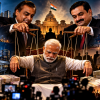 MUKESH, ADANI CONTROL MODI?By Our Special Correspondent
 “FRANCE KE SCHOOL THIK KARO”By Paris Correspondent
 INTEGRITY MUST BE CONDiTION FOR POWER!By Ranadhir Mukhopadhyay
 A PARADIGM SHIFT: POWER MOVES FROM POLITICS TO TECHNOLOGY AND TACTICS! By Arvind Pinto
 HI MUMBAI, MERI JAAN BUT…
 VILLAINOUS MUSK, ALTMAN, ZUCKERBERG, HOLMES!
 OPTOGENETICS AND THE RAY OF HOPE: LIGHT MEETS THE BRAIN! By Dr Amit Dias
 WEEKEND UPDATES
 LETTER TO THE EDITOR FOR THE ISSUE DATED OCTOBER 17, 2026
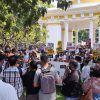 AZAD MAIDAN NO LONGER FREE!
 AZAD MAIDAN CRACKDOWN! Goa’s crackdown on protesters raises grave questions about democracy! By Our Special Correspondent
 INDIAN WOMEN ARE ON THE STREETS AGAIN. EVERYTHING HAS CHANGED BUT NOTHING HAS CHANGED!By Shilpa Phadke
Goa is abuzz with excitement as vintage bike and car owners, users, collectors and fans are decking […]