Goa is abuzz with excitement as vintage bike and car owners, users, collectors and fans are decking […]
Old is Gold
October 4, 2016
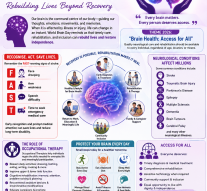
EVERY thought we think, every word we speak, every step we take, and every memory we cherish begins in one extraordinary organ — the brain. It is the command centre of the hu-man body, orchestrating everything from movement and memory to emotions, commu-nication, learning, and decision-making. Despite its remarkable abilities, brain health is often overlooked until illness or injury suddenly changes the course of a person’s life.
Observed annually on July 22, World Brain Day is a global initiative dedicated to raising aware-ness about neurological health and the im-portance of timely access to quality care and rehabilitation. The World Federation of Neurol-ogy has announced the theme for World Brain Day this year as “Brain Health: Access for All.” This is to emphasize that every individual de-serves equitable access to neurological ser-vices, regardless of age, location, or socio-economic status.
Neurological disorders are among the leading causes of disability worldwide. Conditions such as stroke, traumatic brain injury, Parkinson’s disease, epilepsy, multiple sclerosis, dementia, cerebral palsy, brain tumours and other neuro-logical illnesses affect millions of people and their families every year. While advances in medical science have improved survival rates, many individuals continue to experience long-term physical, cognitive, emotional, and social challenges that affect their independence and quality of life.
Recovery is not measured solely by medical reports or diagnostic scans — it is measured by a person’s ability to return to meaningful daily life. Everyday activities such as dressing, bath-ing, preparing meals, writing, remembering ap-pointments, returning to work or school, and participating in family and community life can become difficult following a neurological condi-tion. Helping individuals regain these abilities is the true essence of rehabilitation.
ONE of the greatest barriers to successful re-covery is delayed recognition and treatment. Warning signs such as sudden weakness or numbness on one side of the body, facial drooping, difficulty speaking, loss of balance, sudden vision problems, severe unexplained headache, or confusion should never be ig-nored.
Remember the FAST-warning signs of stroke:
• F – Face drooping
• A – Arm weakness
• S – Speech difficulty
• T – Time to seek emergency medical care
Early recognition and prompt medical atten-tion can save lives and significantly reduce long-term disability.
Once the immediate medical emergency has been managed, the journey towards recovery continues through rehabilita-tion. Rehabilitation is the bridge between sur-vival and meaningful living. A multidisciplinary team — including neurologists, rehabilitation physicians, nurses, occupational therapists, physiotherapists, speech-language pathologists, psychologists, and social workers — works together to maximise recovery and improve quality of life.
Among these professionals, occupational ther-apists play a unique role in helping individuals return to the activities that give life purpose and meaning. Occupational therapy focuses not only on treating impairments but also on enabling people to participate in the everyday occupations they need, want, and are expected to perform.
Occupational therapists assist individuals in re-learning essential daily activities such as dress-ing, bathing, grooming, eating, writing, cooking, and household management. They provide re-habilitation to improve upper limb and lower limb functions, cognitive rehabilitation for memory, attention, problem-solving, and plan-ning difficulties, and recommend assistive de-vices and environmental modifications to en-hance safety and independence at home, school, and the workplace.
They also educate caregivers, promote energy conservation strategies, facilitate community reintegration, and support individuals in return-ing to work, education, leisure, and social par-ticipation.
Occupational therapy is not merely about help-ing people recover — it is about restoring in-dependence, confidence, dignity, and partici-pation in everyday life.
Protecting brain health begins long before ill-ness occurs. Many neurological conditions can be prevented or their impact reduced through healthy lifestyle choices. Regular physical activi-ty, a balanced diet, quality sleep, effective management of blood pressure, diabetes, and cholesterol, avoiding tobacco and excessive al-cohol consumption, using helmets and seat belts, keeping the mind active through lifelong learning, and maintaining meaningful social re-lationships all contribute to lifelong brain health.
This year’s theme — “Brain Health: Access for All”– reminds us that quality neurological care should never depend on where a person lives or what they can afford. Every individual de-serves timely diagnosis, appropriate medical treatment, comprehensive rehabilitation, assis-tive technology when required, and community support that promotes inclusion and inde-pendence.
Brain health is a shared responsibility. Healthcare professionals, families, educators, employers, policymakers, and communities all play an important role in creating an environ-ment where individuals living with neurological conditions can thrive. By promoting awareness, encouraging early intervention, reducing stig-ma, and improving access to rehabilitation ser-vices, we can build healthier and more inclusive communities.
As we observe World Brain Day 2026 let us re-member that recovery is not simply about sur-viving a neurological illness — it is about help-ing every individual reclaim the ability to partic-ipate in the activities that matter most. Through timely medical care, comprehensive rehabilitation, and the invaluable contribution of occupational therapy, individuals with neuro-logical conditions can overcome challenges, re-gain independence, and continue to lead mean-ingful and fulfilling lives.
When brain health is accessible to all, inde-pendence becomes possible, participation be-comes meaningful, and hope becomes a reali-ty.
(Dr Vailanki Nazira Raposo (OT), Occupational Therapist at Occupational Therapy OPD 17 Department of Orthopaedic Surgery, Goa Medical College & Hospital)
 LETTER TO THE EDITOR FOR THE ISSUE DATED OCTOBER 17, 2026
 AZAD MAIDAN NO LONGER FREE!
 AZAD MAIDAN CRACKDOWN! Goa’s crackdown on protesters raises grave questions about democracy! By Our Special Correspondent
 INDIAN WOMEN ARE ON THE STREETS AGAIN. EVERYTHING HAS CHANGED BUT NOTHING HAS CHANGED!By Shilpa Phadke
 RBI TIGHTENS SCREWs ON ECONOMY!By Arvind Pinto
 SSR OVERRULED SIR IN GOA!
 HI MUMBAI MERI JAAN BUT…
 RAJENDRA ARLEKAR WILL REPLACE PRAMOD SAWANT?
 MENTAL HEALTH ACROSS THE LIFESPAN! By Dr Amit Dias
 WEEKEND UPDATES
 LETTER TO THE EDITOR FOR THE ISSUE DATED OCTOBER 10, 2026
 WHEN THE MACHINE OVERRIDES THE LAW!
 HAS GOA BECOME MORE PERMISSIVE? By Special Correspondent
 BILLIONAIRES MULTIPLYING AT THE COST OF THE MIDDLE CLASS!
 THE SHADOW OF VOTE THEFT: WHY CEC GYANESH KUMAR MUST RESIGN!By Dr Olav Albuquerque & Deborah Cordeiro
Goa is abuzz with excitement as vintage bike and car owners, users, collectors and fans are decking […]