Goa is abuzz with excitement as vintage bike and car owners, users, collectors and fans are decking […]
Old is Gold
October 4, 2016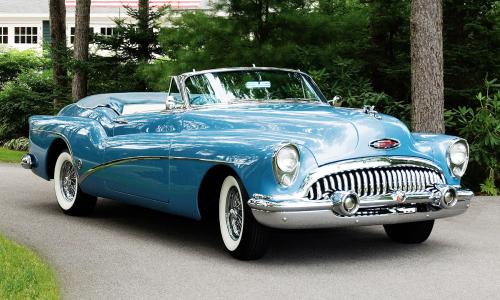

The recent gathering of over 300 activists at the ‘Marathi Melava’ in Panaji, demanding that Marathi be declared an official language of Goa, has reopened historic wounds . While Marathi is undoubtedly a well-developed language with a rich repository of literature, classics, and religious traditions written in the Devanagari script, its position in Goa remains highly contentious. The primary issue is geopolitical and historical: Marathi is already the official language of neighbouring Maharashtra.
The push for Marathi in Goa dates back to the post-liberation era under Goa’s first Chief Minister, Dayanand. Originally from Tuljapur in Maharashtra, Bandodkar founded the Maharashtrawadi Gomantak Party (MGP), which heavily favored merging the then-Union Territory of Goa, Daman, and Diu with Maharashtra. However, these integrationist efforts were decisively defeated in the historic 1967 Opinion Poll—the only official referendum ever conducted in independent India.
The MGP still continues to survive after Shashikala Kakodkar took over from her father, Dayanand Bandodkar and supported the setting up of Marathi-medium schools in Goa. The MGP was riven by rifts, defections and polemics but its agenda of merging Goa with Maharashtra changed after the 1967 Opinion Poll. Today that pernicious agenda has been achieved because unchecked migration from other impoverished states has culminated in the misuse of section 39A of the Town and Country Planning Act so that moneybags and media magnates from Delhi, and elsewhere can buy posh bungalows along the beaches in Goa, reducing Goans to second-class citizens in their home state.
This is why Konkani is vital for Goan identity. Marathi has already ousted Konkani as the language spoken in the urban areas like Vasco, Panjim and Mapusa market. What the MGP failed to achieve through the Opinion Poll has been perniciously achieved by the demands to make Marathi as the official language of Goa. This tiny coastal state has already become a backyard of Maharashtra with thousands of non-Konkani speaking people settling in this state and calling themselves Goans.
Identity, Suppression, and Sacrifice
In contrast to the regional associations of Marathi, Konkani is universally spoken and written across Goa by Hindus, Catholics, and Muslims alike, all of whom identify as native Goans (niz Goemkars). For centuries, Konkani faced severe suppression under Portuguese colonial rule, which mandated the use of Portuguese for official and social advancement. This historical suppression delayed its structural development compared to Marathi, leaving it vulnerable to contemporary marginalization.
Consequently, current attempts by groups like the Marathi Bhasha Nirdhar to claim that “everyone speaks Marathi in Goa” are viewed by many as dangerous overreaches. Critics argue that these efforts seek to erase Goa’s distinct cultural identity and turn the state into a political appendage of Maharashtra. Meanwhile, Konkani continues to face systemic neglect within education and administrative frameworks.. Konkani-medium schools face closures, and the language is rarely utilized in government offices, where official documentation remains dominated by English and Marathi. This institutional sidelining undermines the ultimate sacrifice of the seven activists who laid down their lives during the language agitations.
The Legal Framework and Political Silence
From a constitutional standpoint, Article 345 empowers individual states to prescribe their own official languages. Under this provision, the historic Goa’s Official Language Act of 1987 explicitly states: “The Konkani Language in the Devanagari script shall be the official language of the state of Goa.” Despite this clear legal mandate, successive state administrations have rarely integrated Konkani into official daily correspondence
Instead, courts throughout Goa accept legal filings in Marathi, and official notifications continue to be published in multiple languages. This practice actively dilutes the spirit and letter of the 1987 Act. Both major political parties, the BJP and Congress, have maintained a damning silence on the matter. Rather than reinforcing Konkani as the sole official language, authorities have allowed the Marathi movement to gather momentum without any structured administrative counter-mobilization.
This passivity is not political neutrality; it is administrative negligence. Observers point out that the RSS-linked Marathi movement operates as a calculated electoral project designed to engineer Marathi vote banks across all 40 of Goa’s constituencies. This political engineering succeeds primarily because Konkani advocates have remained relatively quiet in recent years.
Preserving Goemkarponn
History demonstrates that linguistic identity—not religion—is the bedrock of Goan identity (Goemkarponn). The Goa-Maharashtra Samyukta Movement of the 1960s and the bloody agitations of 1987 proved that the Konkani language was the single most effective barrier against Goa being absorbed and effaced by its larger neighbor
Following intense public pressure and tragic loss of life, the Pratapsingh Rane government was forced to capitulate. The administration recognized Konkani as the official language, though it simultaneously appeased the Marathi lobby by granting Marathi “equal status” short of official declaration.
While Marathi newspapers and cultural texts enjoy a healthy readership in Goa, substituting or elevating Marathi to official status overlooks a fundamental principle of federal demarcation: a state’s distinct identity is anchored to its language, and two states should not share the same primary official tongue. Konkani earned its place in the Eighth Schedule of the Indian Constitution through immense struggle. If native Goans passively allow their language to be sidelined in job recruitments and administration, they risk losing the very essence of their unique cultural heritage.
 LETTER TO THE EDITOR FOR THE ISSUE DATED OCTOBER 24, 2026
 THERANOS MULTI-BILLION US PATHOLOGY COMPANY EXPOSED!
 INDIA’S PATHOLOGY LABORATORY SCANDAL! By Our Special Correspondent
 MUKESH, ADANI CONTROL MODI?By Our Special Correspondent
 “FRANCE KE SCHOOL THIK KARO”By Paris Correspondent
 INTEGRITY MUST BE CONDiTION FOR POWER!By Ranadhir Mukhopadhyay
 A PARADIGM SHIFT: POWER MOVES FROM POLITICS TO TECHNOLOGY AND TACTICS! By Arvind Pinto
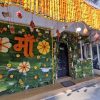 HI MUMBAI, MERI JAAN BUT…
 VILLAINOUS MUSK, ALTMAN, ZUCKERBERG, HOLMES!
 OPTOGENETICS AND THE RAY OF HOPE: LIGHT MEETS THE BRAIN! By Dr Amit Dias
 WEEKEND UPDATES
 LETTER TO THE EDITOR FOR THE ISSUE DATED OCTOBER 17, 2026
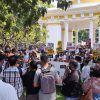 AZAD MAIDAN NO LONGER FREE!
 AZAD MAIDAN CRACKDOWN! Goa’s crackdown on protesters raises grave questions about democracy! By Our Special Correspondent
 INDIAN WOMEN ARE ON THE STREETS AGAIN. EVERYTHING HAS CHANGED BUT NOTHING HAS CHANGED!By Shilpa Phadke
Goa is abuzz with excitement as vintage bike and car owners, users, collectors and fans are decking […]