Goa is abuzz with excitement as vintage bike and car owners, users, collectors and fans are decking […]
Old is Gold
October 4, 2016
EVERY year on July 22 the world observes World Brain Day, an initiative of the World Federation of Neurology (WFN), to raise awareness about brain health and neurological disorders. The theme for this year, “Brain Health: Access for All,” highlights an important message: everyone, regardless of age, gender, income or where they live, deserves access to knowledge, prevention, timely diagnosis, treatment, rehabilitation and support for brain health. Good brain health should not be a privilege enjoyed by a few — it is a fundamental part of healthy living that should be accessible to all.
The human brain is the most remarkable organ in the body. Weighing only about 1.3–1.4 kilograms, it contains nearly 86 billion neurons, each forming thousands of connections that create an astonishing communication network. It controls our thoughts, memories, emotions, movement, speech and personality. Every heartbeat, every breath, every decision and every dream begins in the brain.
Yet, despite its importance, brain health is often overlooked until disease strikes.
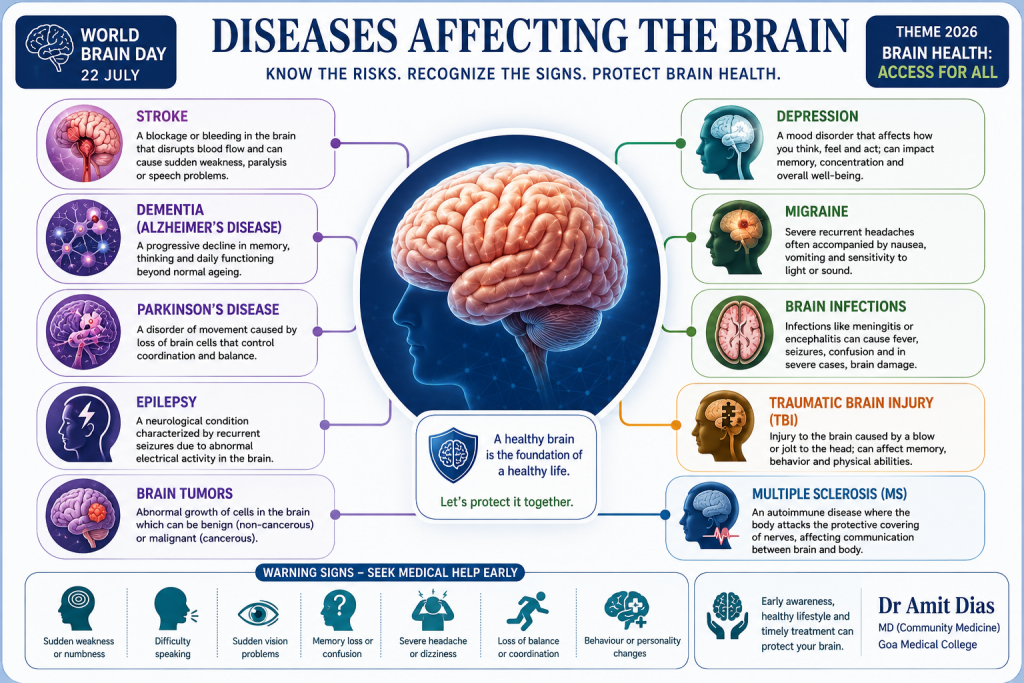
According to the World Health Organization, neurological disorders are among the leading causes of disability worldwide. More than 55 million people are living with dementia, with nearly 10 million new cases diagnosed each year. Stroke remains one of the leading causes of death and long-term disability, while conditions such as Parkinson’s disease, epilepsy, migraine and traumatic brain injury affect millions more. The encouraging news is that research, including our findings from the Lancet Commission on Dementia Prevention, suggests that up to 45% of dementia cases could potentially be prevented or delayed by addressing modifiable risk factors throughout life.
The choices we make every day have a profound impact on our brain health. An easy way to remember these healthy habits is through the word BRAIN.
B – Be Physically Active
EXERCISE is one of the most effective ways to keep the brain healthy. Regular physical activity improves blood circulation to the brain, stimulates the growth of new brain cells, enhances memory and concentration, reduces stress and lowers the risk of stroke, dementia and depression.
Adults should aim for at least 150 minutes of moderate-intensity physical activity every week, such as brisk walking, or 75 minutes of vigorous exercise like jogging, swimming or cycling. Muscle-strengthening exercises should be done at least twice a week, while older adults should include balance and flexibility exercises to prevent falls.
You do not need an expensive gym membership. A 30-minute brisk walk on most days, climbing stairs instead of taking the lift, gardening, dancing or cycling can all contribute to better brain health.
R – Read, Learn and Remain Mentally Active- learn and engage in brain stimulating activities.
THE brain is like a muscle—the more you use it, the stronger it becomes. Learning stimulates neuroplasticity, the brain’s remarkable ability to form new connections throughout life.
Keep your brain active by reading books and newspapers, solving crossword puzzles or Sudoku, learning a new language, playing a musical instrument, taking up painting or photography, learning to use new technology or teaching someone a new skill. Even changing your daily routine or exploring a new hobby challenges the brain in healthy ways.
Aim to spend 20–30 minutes each day doing an activity that makes you think.
A – Avoid Tobacco, Limit Alcohol and Adopt a Healthy Diet
SMOKING damages blood vessels, reduces oxygen delivery to the brain and significantly increases the risk of stroke and dementia. Excessive alcohol can impair memory, affect judgement and damage brain cells over time.
Instead, choose foods that nourish the brain. Eat at least five servings of fruits and vegetables daily, include whole grains, pulses, nuts and seeds, and if you eat non-vegetarian food, include fish once or twice a week. Reduce salt intake to less than five grams per day, limit sugary drinks and processed foods, and drink adequate water.
Studies on the Mediterranean and MIND diets show that healthy eating patterns rich in vegetables, fruits, whole grains and healthy fats are associated with slower cognitive decline and a lower risk of dementia.
I – Interact with Family and Friends
HUMANS are social beings, and the brain flourishes through meaningful relationships. Loneliness and social isolation have emerged as important risk factors for depression, cognitive decline and dementia.
Spend quality time with family, meet friends regularly, join community groups, volunteer for social causes, participate in religious or cultural activities, or simply enjoy conversations with neighbours. Older adults benefit greatly from participating in senior citizen groups, Memory Cafés and recreational activities.
Meaningful conversations stimulate the brain, reduce stress and improve emotional well-being.
A simple conversation is also an exercise for the brain!!
N – Never Ignore Health Problems
MANY medical conditions silently damage the brain long before symptoms appear. High blood pressure, diabetes, high cholesterol, obesity, hearing loss, depression and poor vision are all associated with an increased risk of stroke and dementia.
Have regular health check-ups and know your numbers. Keep your blood pressure, blood sugar and cholesterol under control, maintain a healthy weight and seek treatment for hearing or vision problems.
Never ignore warning signs such as sudden weakness, difficulty speaking, severe headache, loss of balance or memory problems. In the case of a stroke, every minute counts — time lost is brain lost. Early treatment can save lives and reduce disability.
Other Ways to Protect Your Brain
HEALTHY sleep is essential for memory and learning. Adults should aim for 7–9 hours of quality sleep each night. Manage stress through meditation, yoga, prayer or deep breathing. Wear helmets while riding two-wheelers, always fasten seat belts and take steps to prevent falls in older adults. Protect your hearing from excessive noise and keep vaccinations up to date to prevent infections that may affect the brain.
Amazing Facts About the Human Brain
THE brain accounts for only about 2% of body weight, yet uses nearly 20% of the body’s oxygen and energy.
It contains approximately 86 billion neurons.
Nerve impulses can travel at speeds exceeding 400 kilometres per hour.
The brain itself has no pain receptors, which is why brain surgery can sometimes be performed while a patient is awake.
Throughout life, the brain continuously adapts by forming new neural connections—a process known as neuroplasticity.
Conclusion
BRAIN health begins long before old age. The habits we cultivate today determine how well our brain serves us tomorrow. This World Brain Day, let us embrace the theme “Brain Health: Access for All” by ensuring that every individual has the opportunity to learn about brain health, adopt healthy lifestyles and access timely healthcare when needed.
Remember the word BRAIN:
B – Be physically active
R – Read, learn and remain mentally active
A – Avoid tobacco, limit alcohol and adopt a healthy diet
I – Interact with family and friends
N – Never ignore health problems
Small steps taken every day can protect the most extraordinary organ in our body. After all, every memory, every emotion and every dream begins in the brain. The Memory Café has a lot to help you a highway your goals.
 LETTER TO THE EDITOR FOR THE ISSUE DATED OCTOBER 17, 2026
 AZAD MAIDAN NO LONGER FREE!
 AZAD MAIDAN CRACKDOWN! Goa’s crackdown on protesters raises grave questions about democracy! By Our Special Correspondent
 INDIAN WOMEN ARE ON THE STREETS AGAIN. EVERYTHING HAS CHANGED BUT NOTHING HAS CHANGED!By Shilpa Phadke
 RBI TIGHTENS SCREWs ON ECONOMY!By Arvind Pinto
 SSR OVERRULED SIR IN GOA!
 HI MUMBAI MERI JAAN BUT…
 RAJENDRA ARLEKAR WILL REPLACE PRAMOD SAWANT?
 MENTAL HEALTH ACROSS THE LIFESPAN! By Dr Amit Dias
 WEEKEND UPDATES
 LETTER TO THE EDITOR FOR THE ISSUE DATED OCTOBER 10, 2026
 WHEN THE MACHINE OVERRIDES THE LAW!
 HAS GOA BECOME MORE PERMISSIVE? By Special Correspondent
 BILLIONAIRES MULTIPLYING AT THE COST OF THE MIDDLE CLASS!
 THE SHADOW OF VOTE THEFT: WHY CEC GYANESH KUMAR MUST RESIGN!By Dr Olav Albuquerque & Deborah Cordeiro
Goa is abuzz with excitement as vintage bike and car owners, users, collectors and fans are decking […]