Goa is abuzz with excitement as vintage bike and car owners, users, collectors and fans are decking […]
Old is Gold
October 4, 2016

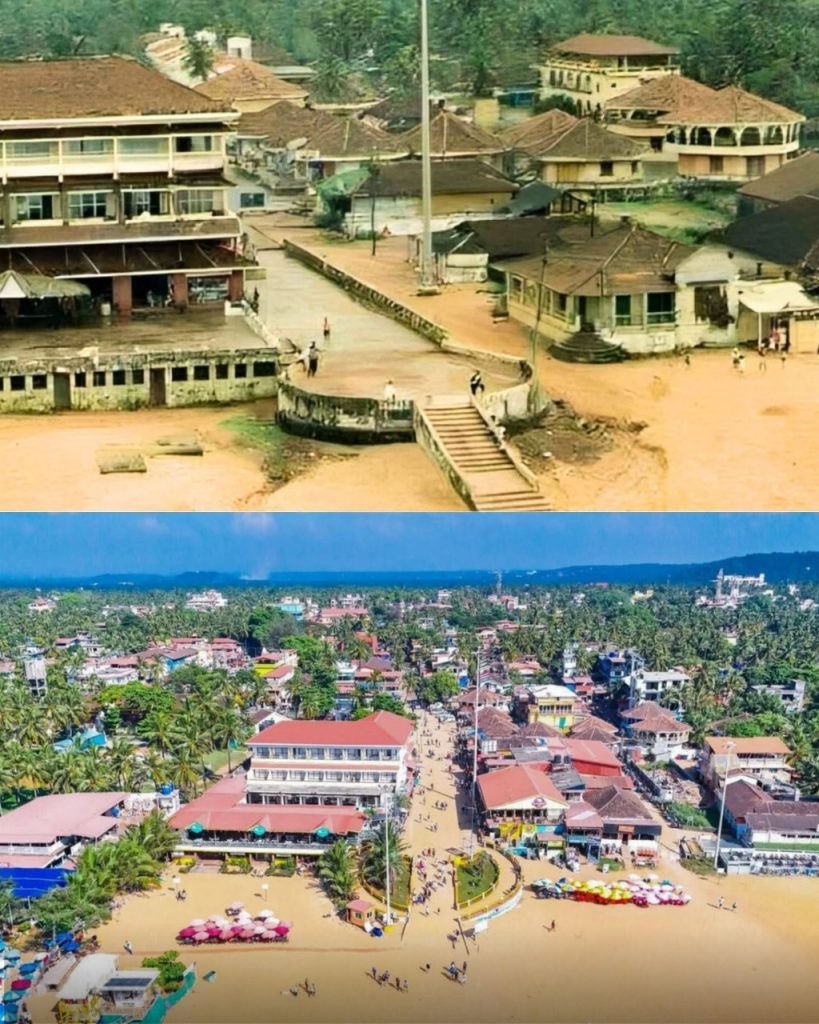
The skyline of Goa has changed dramatically. If from your sea view flats you turned back, you would see blocks of ugly concrete buildings blocking out sunshine and the pleasing sight of green paddy fields and swaying coconut trees….
TAKING a look at Goa today, you will see a landscape in profound tension with its own memory. For those who knew the coastal state in its quieter decades, the region was defined not by the roar of commercial nightlife or the silhouettes of multi-story luxury apartment complexes, but by a quiet, rhythmic relationship with nature. It was a land of low-lying coastal floodplains, dense coconut orchards, windswept laterite plateaus, and pristine sand dune systems that breathed with the Arabian Sea.
Over the years, a relentless surge in tourism, rapid infrastructure expansion, and a hyper-inflated luxury real estate market have fundamentally altered Goa’s geography. Built-up urban areas expanded by more than eight times between 1973 and the mid-2020s. This rapid conversion of natural, agricultural, and orchard lands into paved settlements has left Goa’s fragile, self-sustaining ecosystems fighting a daily battle for survival.
Concrete Over Clay
IN the past, travelling through Dona Paula and Taleigao meant navigating an emerald patchwork of low-lying khazan lands and expansive paddy fields. The Dona Paula plateau itself was a wild, windswept expanse of laterite rock and scrub, acting as a crucial ground sponge for monsoon rains. Local communities operated on an agricultural calendar deeply tied to the seasonal monsoons.
Today, the Dona Paula plateau has transformed into one of the most expensive and densely built real estate corridors in Western India. The open, wild grasslands have been largely paved over by gated luxury communities, premium hotels, and expansive institutional campuses.
Further south, the cultural town of Margao has experienced a similar transformation. Once buffered by continuous vistas of swaying coconut bhats and deep green rice paddies that kept the local microclimate cool, Margao’s outskirts have rapidly urbanized. While isolated pockets of fields remain near Fatorda, vast areas of agricultural land have been fragmented to accommodate multi-storied commercial markets, apartment blocks, and widened asphalt corridors designed for heavy vehicle traffic. The iconic horizon of uninterrupted palm trees is increasingly obscured by concrete and billboards.
Goa’s agricultural identity has long been defined by its horticulture, most notably the legendary mancurad mango and its highly prized local strain, the Kulkarni variant. Historically, these fruits grew on old, massive trees within protected family orchards.
This botanical heritage is currently facing unprecedented structural threats. Legislative amendments — specifically the controversial implementation of Section 39(A) of the Town & Country Planning (TCP) Act — have allowed hundreds of thousands of square meters of natural orchards and hilly slopes to be legally reclassified as “settlement zones.”
While a single mancurad mango harvest can still command exorbitant prices at the start of the summer season, the canopy that produced them is shrinking, systematically replaced by retaining walls and deep concrete foundations.
Sluice Gates and Salt Pans
AMONG Goa’s most ingenious historical engineering feats are its khazan lands and the salt pans. For centuries, coastal communities managed a delicate, brackish water equilibrium. Using outer dykes built from laterite stone and clay, backed by thick stands of wave-breaking mangroves, they protected low-lying floodplains from the sea. Specialized self-regulating wooden sluice gates “manos” controlled the daily tidal flow.
During the dry months from March to May, these flat, clay-lined pans were used to produce mineral-rich, unrefined Goan sea salt through natural solar evaporation.
By the mid-2020s, this sustainable eco-cultural system had fallen into severe disrepair due to:
Siltation and Runoff: Debris from mega-infrastructure projects, bridge constructions, and historical iron-ore mining rejects have choked the delicate channel networks feeding the pans.
Abandonment of the trade: Flooded by cheap, industrially refined iodized salt, the. traditional vocation of the mithkars have dwindled, leaving once-productive shimmering salt pans abandoned, overgrown with weeds, or quietly filled with rubble.
Slicing the Slopes
THE topographical bookends of Goa — its coastal sand dunes and its inland laterite hills — have borne the most violent physical scars of this rapid ecological transition.
Historically, Goa’s expansive beaches were backed by massive, intact, rolling sand dune systems. These dunes were not merely aesthetic; they were functional, dynamic barriers that absorbed the energy of ocean storms and prevented severe coastal erosion.
The explosion of beach tourism completely transformed these fragile boundaries. The construction of permanent luxury resorts, rows of commercial beach shacks, and heavy, unregulated foot traffic flattened these primary dune lines. Without their natural sand reservoirs, coastal stretches now suffer from chronic, severe erosion, forcing the state to rely on artificial geo-textile bags and rocky rip-raps to keep the rising sea at bay.
Inland Hill-Cutting
INLAND, the rolling laterite hills that define Goa’s mid-land geography are facing a structural crisis. These hills serve as massive natural aquifers, absorbing the heavy monsoons like a sponge and feeding thousands of perennial freshwater springs across lower villages.
Over the last decade, however, the slicing away of hillsides has escalated into a major environmental emergency. Slopes with gradients far exceeding the safe 25% threshold have been cut away to carve out terraced real estate plots for high-end villas with infinity pools.
Stripping these hillsides of their deeply rooted scrub forests destroys their water-retaining capacity. This disruption causes local water tables to plummet during the dry season, while generating dangerous structural instability during the monsoons.
The Wider Ecological Shift
THE environmental transformation extends far beyond real estate boundaries, altering the broader hydrology, climate, and acoustic environment of the state.
The Modern Response
THE story of modern Goa is not entirely one of passive loss; it is also defined by a strong undercurrent of community resilience. As the pressures on land and water have intensified, local citizens, village gram sabhas, and grassroots environmental coalitions have mobilized to protect what remains of their heritage.
Faced with severe degradation, Goans are increasingly utilizing legal frameworks to protect their environment. In response to intense public outcry, the state government recently instituted a tiered penalty structure for unauthorized hill-cutting, with fines escalating up to Rs1crore for repeat offenses.
Furthermore, a significant regulatory step was taken when the forest department designated 6.72 crore square meters of vulnerable land along the banks of the Mandovi and Zuari rivers as ecologically sensitive zones, explicitly barring commercial development within these boundaries to safeguard river hydrology.
From the successful 44-day peaceful agitation by villagers in Chimbel to protect their local wetland lake from a massive commercial construction project, to youth groups volunteering to rebuild breached agricultural bunds, Goa’s civil society is actively fighting back. They are proving that the true value of the Goan landscape cannot be measured in real estate yields or tourist footfalls, but in the long-term survival of its unique, fragile ecology.
 LETTER TO THE EDITOR FOR ISSUE DATED SEPTEMBER 19, 2026
 ELEVATED HIGHWAY TO HELL!
 MEDICAL DEVICES LOOT!By GS Mudur
 HOSTILE ACT BY PAKISTAN: `PNS HUNAIN’ TRIED TO DISRUPT OUR NAVAL SURVEILLANCE! By Dr Olav Albuquerque & Deborah Albuquerque
 BLACK MONEY IN POLITIAL PARTIES: ADR’s Alarming Revelations By Arvind Pinto
 `KHANDVI MILLE-FEUILLE’ AT BRICS ALL VEG BUFFET!
 SATYA NIKETAN TRAGEDY: HOW GLOBAL STUDENT HOUSING MODELS COULD HELP INDIA FIX A BROKEN SYSTEM!By Sneha Swaminathan
 GANESH PANDALS HIJACKED BY ADANI, AMBANI
 WHY DOES A DEMENTIA DIAGNOSIS MATTER? By Dr Amit Dias
 WEEKEND UPDATES
 LETTERS TO THE EDITOR FOR ISSUE DATED SEPTEMBER 12, 2026
 GOAN TEACHERS ARE CONTRACT LABOR!
 THE COLOUR IS PRESTIGIOUS! THE PROCESS MUST BE EQUALLY SO!
 DOGS ATTACK GOANS, OWNERS GET ACQUITTED!By Dr Olav Albuquerque & Deborah Cordeiro
 CYBER FRAUD: A THREAT TO FINANCIAL SECURITY & MENTAL WELL-BEING! By Adv Vinayak (Mama) D Porob
Goa is abuzz with excitement as vintage bike and car owners, users, collectors and fans are decking […]