Goa is abuzz with excitement as vintage bike and car owners, users, collectors and fans are decking […]
Old is Gold
October 4, 2016
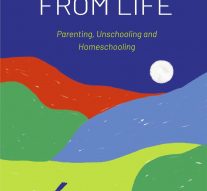
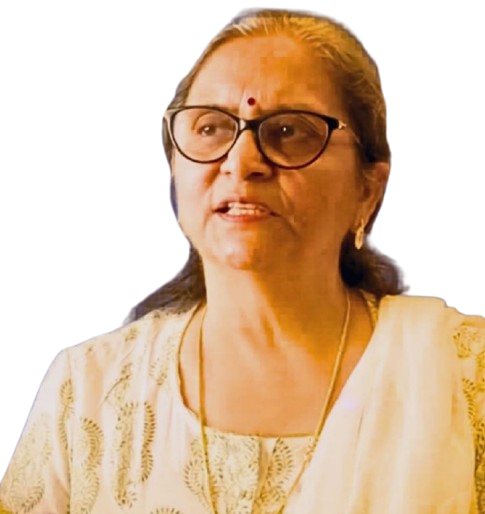
Author Vineeta Sood’s book `Learning from Life’ is a recent book, published last year in 2025. Recent years have seen a sea change in perceptions and the reality of what exactly defines a huge big important subject of our times: Education. Educating the children. More and more educated parents are beginning to think that perhaps it’s a better idea to educate children through what is being called home schooling. Instead of sending them to school for years on end for what we perceive as standard education, one cap fitting all, or so to speak. In her book Vineeta Sood asks, What kind of living, breathing spaces invite children to grow with authenticity, curiosity and a sense of purpose? Her book simply interestingly, curiously and exquisitely, describes and details all this…to address and redress larger issues. This book is an invaluable guide for a generation of younger parents seeking new and better ways of educating their children, raising them to be thinking human beings who see life more holistically, beyond themselves and presumably skip the obscene race and chase we see today all around us. Seeking a kind of success which makes for neither enduring happiness nor a sense of life well lived! This is a must- read book for educators across the education spectrum…
By Vineeta Sood
BEING a parent and bringing up children with attention and presence is an experience of ‘Growing Up Again’, as goes the title of a book authored by award-winning Transactional Analyst and a parent educator, Jean Illsley Clarke. Confronting aspects of ourselves that we would rather avoid is a challenging endeavour, and that is precisely what our children take us through.
As I look back at my journey of parenthood, it becomes evident that when children are born, they hold numerous possibilities within them, which unfold according to the interaction between their nature, nurture, and culture. Right from birth, they seek connection with the world by communicating with us. Yes, infants do communicate with us. We can hear them very clearly when we pause to listen. Our responses help them make sense of who they are by themselves, and in relation to us as a family, a community, and in this world. Even as we respond to children and to the world around them, they are picking up attitudes, beliefs, values, and tools to live their lives.
When we become parents, we navigate so many aspects, starting from sleep schedules and feeding to daily routines and our relationship with the newborn. Our relationship with ourselves, our spouse and others also transforms. The presence of an adorable human being in our life is both challenging and exciting at the same time. We don’t know a thing about this new member of the family, and we are unaware of all the changes he/ she will bring to us and our lives. Everything is new and we have to figure out a lot of things on our own.
In the first quarter of 1990, our son Karan came into our lives. Curiosity, spontaneity, and the free spirit of a child-firsthand! I was As a first-time mother, I encountered the authenticity, originality fascinated by this defenceless, pretence-less, fearless explorer, even if often his drive didn’t align with the way I wanted our to unfold. He dictated the course of our days. Like any child, he determined when, what, and how much to eat as well as when to sleep and rise. What he engaged with while awake was also at his discretion. He had his own reasons and his own way of doing things. I found myself deeply intrigued by this small being, who was so dependent on us as his parents, yet consistently guided us towards his needs and desires. It was a whole new learning phase for me.
Our second son, Kabir, was born in the last quarter of 1994. Being a parent felt more organic the second time around. I was more aware of my connection with him. I was also aware of the pitfalls and knew what worked in difficult situations, or so I thought. I knew how observant I had to be to understand and respond to the general rhythm that might emerge with the newborn. Having already experienced parenthood through that stage with Karan, a shift in my own conditioning as a parent had occurred. Consequently, some of the struggles I had with Karan no longer felt difficult with Kabir.
It appears the firstborn must weather the inexperience of their parents, allowing the second child to benefit from the lessons learned as parents evolve and gain insights into parenting.
Sibling Bonding
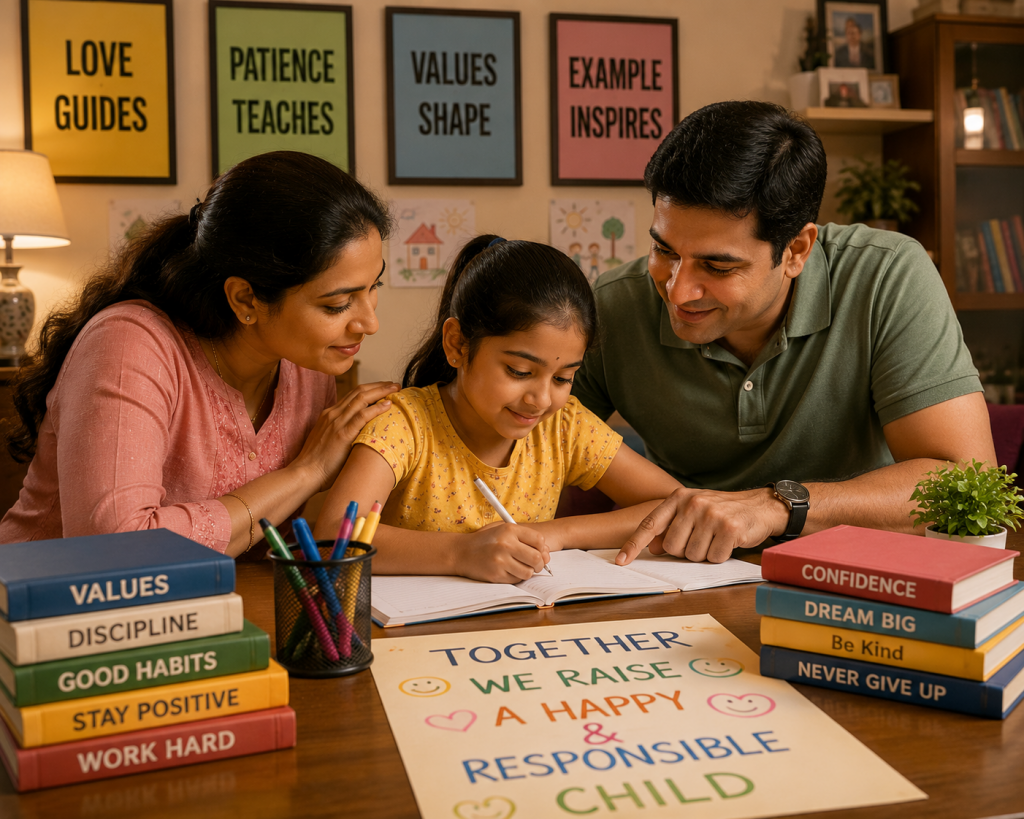
THE birth of a sibling brings mixed feelings for the elder child. While they are excited about having a sibling, they struggle with the changed dynamics in the family. Given the prevalent nuclear family system, they find themselves sharing their erstwhile undisputed space and attention with their sibling. This challenges them to discover their new normal in this changed scenario. They express this in various ways. They might become more demanding, cranky, overcaring or withdrawn.
Karan was a little over four years old when I was expecting Kabir. It was amazing to witness how easily he comprehended the idea of having a sibling. When we shared the news about my pregnancy with him, he bombarded me with numerous questions about the baby. His excitement about welcoming a sibling into his life was palpable. He eagerly looked forward to having a playmate. It was very endearing to see him praying to God to give him a brother like the curious and adventurous monkey named George, the protagonist from his favourite bedtime story, ‘Curious George’.
This was also the time when his drawings began to evolve. Gradually, they started revealing that he was trying to grasp the implications of having a sibling, particularly in terms of his relationship with us, his parents. In his initial drawings, he depicted three of us, placing himself in the centre, with the baby positioned away from me, on the other side of Vishv. Over time, however, the baby gradually moved closer until it occupied the space between Vishv and me while Karan occupied the space on the other side of Vishv. I was genuinely amazed by the evolving perception he had regarding the arrival of his sibling.
Karan knew that his sibling was expected to arrive sometime in October. During this period, he attended a playgroup that provided an unstructured environment, allowing children to explore their own rhythms and learn through their experience. On October 1st, he went to the playgroup as usual but by ten o’clock, I received a call informing me that Karan was in tears due to stomachache and wanted to come home. I promptly informed Vishv, who left work to bring Karan home. Once he was back, he seemed perfectly fine. Given his usual enthusiasm for playgroup, I couldn’t help but wonder what had troubled him. In the evening, he asked me if he could stay home the ne for the playgroup, I couldn’t help but wonder what had trouble the month when the baby was expected. He was afraid that day. After some probing, he revealed that it was already October might go to the hospital while he was away at the playgroup.
Even though I tried to assure him that Vishv would pick him up before we headed to the hospital, it did not alleviate his concerns. He was still reluctant to go. I sensed that even if convinced him to attend the playgroup, he would likely spend the day feeling anxious, unhappy, and apprehensive, unable to enjoy his play or his activities. So, I decided to inform the person in-charge that he would be taking a break for a few days. He happily stayed at home, only returning to his playgroup after we came back from the hospital following Kabir’s birth.
At the time, we were in Kerala, where childbirth and the health of the mother and child were taken very seriously. We were required to stay in the hospital for five days, and Karan stayed by my side throughout. The day after Kabir’s birth, as we all rested in the hospital room in the afternoon, Karan slowly crawled into my bed and nestled beside me. I embraced him as we lay together. He whispered cautiously, “Mama, do you have some time for me?” I had no inkling that, with the arrival of his sibling, he had begun to feel that I no longer had time for him. I realised how his world had changed in that one day, and that he was now figuring out his place in the changed situation in his family system. With tears in my eyes, I hugged him tightly and assured him, “Yes, of course.” He then asked if I could create some dots for him in his notebook, which he could connect to create a drawing.
I had previously declined such requests as I believed such activities were simple time fillers or at best helped develop some basic motor skills without allowing for creative expression. I had always encouraged him to draw freehand, expressing whatever he wanted. However, I realised that in the given situation, Karan had a different need. He simply wanted a confirmation whether his mother was still available to him. I sensed his vulnerability in that moment. So, I took his drawing book and made some dots for him to work with. He sat quietly beside me, finishing his drawing. This activity became a special part of our ‘together time’ for the next few days.
Once we returned home, I ensured that I prioritised Karan’s needs in the mornings. He frequently asked who I loved more, him or Kabir. It took years for him to fully embrace my response that I loved both of them, equally. He probably felt my love for him had become less with the arrival of his sibling. The simple logic would have been that a mother has ‘X’ amount of love, and with the arrival of his sibling, this love was divided into two. The idea that a mother’s love can stay unchanged and stay the same for all her children was definitely too complex for him to comprehend.
He also inquired about what I would do if both he and his brother needed my attention simultaneously. His questions reflected his ongoing effort to understand and navigate this life- altering event in his life. It was fascinating to witness his evolving experience of adjusting to having a sibling. Initially, he often put himself in situations where he would need my assistance, especially when I was feeding or changing Kabir, or putting him to bed. Whenever Karan needed me, I would immediately attend to him, even if it meant leaving everything else aside. Often, he would purposely fall and start crying, especially when I was feeding Kabir. Consequently, Kabir would cry when I tried to leave him on the bed to attend to Karan. Upon hearing him cry, Karan would get up, dust himself off, reassure me that he was fine and would insist that I take care of his brother. As we explored how he felt, it became clear to me that his primary need vas to know that he was still as deeply loved as before Kabir’s arrival and that his needs remained just as important to me they were earlier. Once he felt secure in this knowledge, this behaviour and this need for reassurance gradually faded away.
In the life of the second child, the dilemma of someone else Kabir was concerned, Karan, Vishy and I were a part of his life encroaching on his/her exclusive space does not exist. As far a right from the gestation period and such issues did not arise for him. I believe that for the elder child, the arrival of a sibling is both an exciting and destabilising experience. His/her place is taken by someone else, and he/she must navigate his/her role within the changed family dynamics. It certainly is not an easy adjustment.
I was amazed to see the power of being seen and heard. I learned that if we can acknowledge the child’s experience and engage with him/her with empathy, it helps him/her get in touch with his/her real need behind the expressed behaviour. This makes it possible to address his/her real need which goes a long way in making the child feel secure and bond with his/her sibling.
Interpersonal Dynamics
The children are individuals with distinct personalities, needs, and ways of perceiving, relating and responding. After Kabir’s birth, the interpersonal dynamics among us as a family completely changed. I found that when I was able to let go of my need to control or manipulate any situation to a outcome, we could move ahead more organically and joyfully. To some extent, I developed the capacity to become aware of my own conditioning, to stay attuned to myself and to both of them individually and collectively. This helped me grow as a person specific as well as a mother.
It is important to clarify that I didn’t master these skills overnight nor was I able to be present all the time. However, I am so grateful that I was often aware of these dynamics and recognized when we veered off course. My willingness to pause when my children reacted or expressed discomfort was a gift I acquired in the process of growing up with my youngest brother Vineet. He was born as a Down syndrome child. While he grew chronologically, his mental age remained that of a 4- or 5-year- old child. Growing up with him added immense value to my personal growth and to my relationship with my children. (You can read more about what I learned from him in the chapter titled, ‘My Teachers’, page 21.)
As my children were growing up, their full-time occupation appeared to be to relate, respond, and seek a response. Even when they were just a few days old, if I was attentive enough, I could see that the sounds they made had distinct meanings. They had distinct sounds when they asked to be picked up, changed, held, fed, or simply wanted eye contact. They tossed and turned in bed, even when asleep, when they had to respond to nature’s call. If they were already wet, they made a certain sound that told me bedwetting had already happened.
It was just a matter of how keenly I listened to them. And the joy on their faces when I responded to their call, according to their need, was so very precious. They felt contented and settled very quickly. When I took longer to respond, they felt uncertain, cried, and clung to me until they felt comfortable to be left on their own again. It was an amazing phenomenon. How secure or insecure they felt was so dependent on how well they were held, heard, and understood.
My sons soon figured out how to evoke the desired response in me. As I responded to them, they modified their Engagement with me. Through these dynamics, they developed an understanding of life. This was a life university for them and for me, through which we were learning life, together.
Sleep Patterns
After birth, children take some time to align with the rhythm to ours. Every evening, as we finished dinner, tired and ready to of day and night. Karan arrived with a rhythm that was opposite meaning people advised us not to pay attention to him when he go to bed, he became active. He cooed and wanted to play. Well. played at night, leaving him to cry and fall asleep; they assured us that his sleep pattern would slowly change. I tried that for a day or two; after his initial attempts to get my attention, he cried himself to sleep due to exhaustion and resignation.
For me, this approach was extremely challenging. The idea of allowing my child to cry indefinitely conflicted with what I felt was instinctively right. I just wanted to hold him, and cuddle and comfort him. But then how would his sleep routine settle into place? I experienced an internal conflict between my need to discipline him and make him feel comfortable and secure. It just felt so counter-intuitive. Far from helping him develop a healthy attitude to life, I felt like I was making him miserable. I asked myself what I was trying to accomplish by making him feel so helpless and alone in his agony. What message was I giving him?
It was during his waking hours that he was ready to relate and engage with his surroundings and with us. Even when he was a few weeks old, he didn’t like it if I fell asleep next to him or took my eyes off him when he played. I could see how essential this connection was for him to feel secured and anchored. I also realised how essential this connection was for me to honour my maternal instinct and to relate to him as a human being and as a soul, and how essential it was for both of us to connect, grow together and learn to know each other. So, who was better equipped to adapt – my newborn or me? The answer was clear. I adjusted my rhythm to naturally align with his until his internal system synchronised with the rhythm of the day.
We all know that parenting a newborn involves sleep deficit. Vishy and I learned to balance our need for rest with his office hours and my household requirements. I adjusted my schedule so that I attended to my chores and snatched some rest while Karan slept during the day and when Vishv took care of him after coming back from the office in the evening. This also meant our home was not kept very well during those years. Both Vishv and I were able to be flexible about it. It took about four or five months for Karan’s schedule to coincide with our day and when it did, it happened seamlessly.
Kabir’s sleep time was less erratic, and I was able to sleep for a few hours when he did. I was more observant and relaxed, and way more flexible with my routines and my expectations.
In essence, responding to their needs in a way that aligned with their individual rhythms extended to all aspects of our lives, whether it was brushing their teeth, maintaining hygiene, mealtimes, or engaging in various other activities. When I was not able to let go of my predefined notions of how things ‘should be’, there was a lot of struggle and frustration on their part and mine. That just didn’t feel right.
(Vineeta Sood is an author, therapist, and advocate for homeschooling and alternative education. She lives in Panjim, Goa and has brought up her own two children through home education with amazing and remarkable success; hence, is an advocate for alternate ways of educating children.)
 LETTER TO THE EDITOR FOR ISSUE DATED SEPTEMBER 26, 2026
 DIVIDED EVEN IN DEATH!By Rajan Narayan
 IF YOU CLAIM THE CREDIT, TAKE THE RESPONSIBILITY!By Joquim Goes
 8 EMAILS IN 7 DAYS, BUT VALID GOA VOTERS STILL LEFT OUT: EC’S FLAWED SYSTEM!By Ritika Chopra
 MAKE IN INDIA: UNITED PAYMENTS INTERFACE India’s digital local leap to global benchmark…By Arvind Pinto
 BRING BACK THE FLATBREADS OF INDIA!
 EARLIER YOU KNOW, THE MORE YOU CAN DO Dementia diagnosis matters… By Dr Vailanki Nazira Raposo
 YOUNG LOVE IS A CRIME IN BIHAR!
 THE BOAT BECKONS, THE UNICORN WATCHES! By Prema Viswanathan
 WEEKEND UPDATES
 LETTER TO THE EDITOR FOR ISSUE DATED SEPTEMBER 19, 2026
 ELEVATED HIGHWAY TO HELL!
 MEDICAL DEVICES LOOT!By GS Mudur
 HOSTILE ACT BY PAKISTAN: `PNS HUNAIN’ TRIED TO DISRUPT OUR NAVAL SURVEILLANCE! By Dr Olav Albuquerque & Deborah Albuquerque
 BLACK MONEY IN POLITIAL PARTIES: ADR’s Alarming Revelations By Arvind Pinto
Goa is abuzz with excitement as vintage bike and car owners, users, collectors and fans are decking […]