Goa is abuzz with excitement as vintage bike and car owners, users, collectors and fans are decking […]
Old is Gold
October 4, 2016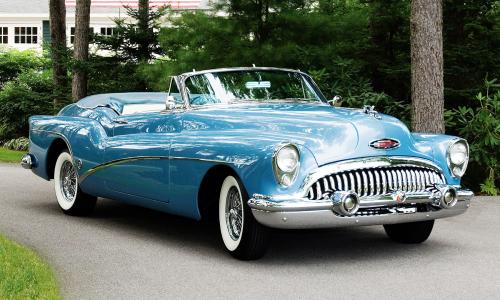
THE Tata Group is facing one of its most turbulent phases in decades: a bitter boardroom split over leadership and compliance with RBI’s listing mandate, coupled with political sparring between the government and opposition. This “Tata Tussle” is not just about corporate governance — it is a battle over the future of India’s most iconic conglomerate. What is happening today would make Jamshedji Nusserwanji Tata who established this dynasty in 1868 or the iconic JRD Tata, who took the empire to literally to the skies, turn in their graves.
Key Themes in the Tata Tussle
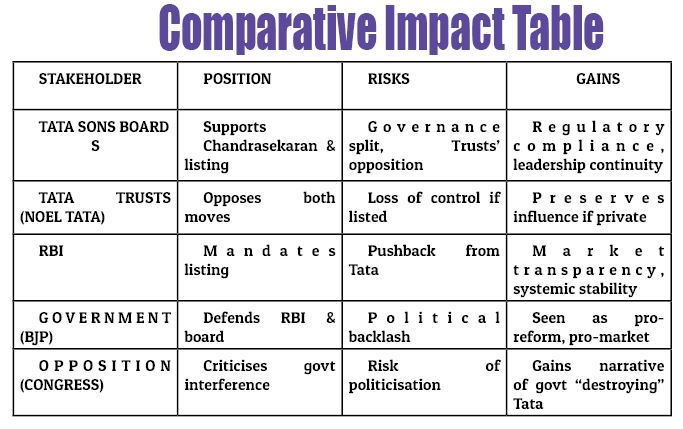
ON September 17, 2026 the Board of Tata Sons took up the reappointment of its Chairman, Mr N Chandrasekaran. By a majority of four votes to one, the dissenter was Mr Noel Tata; Mr Chandrasekaran was given a five-year extension from 2027 to 2032. Mr Noel Tata however contested this move; arguing the item on the agenda was the debriefing from the nomination and renumeration committee and not a vote on the extension of the Chairman. Further he argued that Article 118 of the Association of Tata Sons required the appointment of a five-member selection committee. Finally Mr Tata stated that the reappointment required an affirmative vote from the Tata Trust’s nominee director; namely himself who voted against the motion. Looking at the imbroglio Chandrasekaran decided not to continue beyond 2027, but was persuaded by the other board members and subsequently reversed his decision. With this impasse, Chandrasekaran continues as Chairman, until the AGM of the Tata Sons, scheduled to be held on December 31, 2026. This meeting will be a cliffhanger, since the Tata Trusts have a 66% majority and Noel Tata controls the trusts. There is also an issue of governance to the issue; can a chairman’s casting vote override rights reserved for Tata Trusts’ directors? This is a legal issue that would be challenged at the National Company Law Tribunal (NCLT) subsequently. Chandrasekaran’s journey is itself emblematic of Tata’s modern face. A technocrat from TCS, he steered the group through digital transformation, acquisitions, and debt restructuring. Yet his reappointment raises questions: is continuity of leadership more important than consensus with Tata Trusts, which hold 66% of Tata Sons? The discord has deepened with Darius Khambata, a senior advocate and a trustee of Tata Trusts resigning from the Tata Trusts. How will this impact the trusts, since advocate Khambata was a close associate of Noel Tata.
RBI Ruling
TATA Sons is a holding company that controls around hundred companies. By itself, Tata Sons is an unlisted private entity, whose shareholding is controlled by eight trusts; of which the two major trusts are the Sir Sorabji Trust and Sir Ratan Tata trust. These trusts have a 66% stake in the company. The Shapoorji Pallonji (SP) Group has a 18.4% stake while other Tata companies and significant individuals have a 15.6% stake. Thus, while the Tata Trusts control Tata Sons, the SP group is seeking a listing of Tata Sons since the group would like to unlock the value of the company, as a company Tata Sons holds a majority shares in most of the bigger Tata companies. Further the company is the owner of the “Tata Brand” for which is obtains royalty for the use of the Tata name. With assets over 2.01 lakh crore as on March 31, 2026 Tata Sons has a little operating business, while indirectly controlling a majority of the Tata-owned companies. Tata Sons holds a Certificate of Registration from the RBI as a Core Investment Company. This license lets it operative as a holding company that raises money from banks or can issues bonds. In 2024, Tata Sons applied to surrender their licence having repaid all its Rs 21,813 crore debt. However in September 2026, the RBI rejected this application stating that Tata Sons has access to public funds through its group companies and the RBI is now asking Tata Sons to list as a public entity The RBI is now pushing Tata Sons to list on the stock exchange within three years. The Governor of Reserve Bank stated that Core Investment companies sit atop group companies. They can leverage funds. Further they use the balance sheets of the group companies to return these funds. Thus the funds of the public, whether through banks, corporate bonds or other means are at risk. The RBI is pushing Tata Sons to list
Political Crossfire
The Tata tussle has its political repercussions. Leader of Opposition Rahul Gandhi has accused government of “criminally destroying” the Tata image. Rahul further accused Modi-Shah of treating Indian business as a “plaything” while only furthering the interests of the Ambani and Adani groups. In response, Finance Minister Nirmala Sitharaman warned against “politicising commercial matters,” accused Congress of smothering entrepreneurship under Licence-Quota Raj. Thus, while the Opposition looks at the tussle as governmental interference to destroy the Tata legacy, the ruling BJP sees it a regulatory compliance and governance issue.
In reality, government has worked indirectly since they hold the levers to both the RBI as also to corporate funding. The House of Tatas is known to be neutral in politics and this is not particular acceptable to the government of the day, since much political funds comes from the corporate world.
Wider Implications
THE Tata tussle has immense implications for corporate India. The Tata model is one that was being followed by most of the older corporate groups, such as Birla, Mahindra, Bajaj, Murugappa. All these groups have a holding trust that controls several unlisted companies which in turn have the majority shareholding in the listed operating companies. Should RBI compel the Tata Sons to list, this will apply to several other groups.
All corporate groups have their family or kinsfolk at the helm of affairs. But with professionals now coming to the fore, corporate India faces a conflict between the families that control the company and the professionals who work for them.
Today corporate India faces the test between the promoter versus the professional CEO. In the case of Chandrasekaran who is locked in a board battle with Noel Tata, should the former succeed it would see the end of the dynasty or promoter rule and the rise of professionalism in the Indian corporate world.
The Tata tussle will also test the supremacy of whether the Articles of Association can override the diktats of the RBI and SEBI. The issue is presently before the Bombay High Court and will finally reach the Supreme Court for a decision. With several foreign investors having stakes in Tata companies, this uncertainty has already shaken foreign investor confidence in the Indian corporate system. It is of importance that the issues come to closure for Indian corporate governance. The philanthropy model whereby the Tata Trusts gave back to society in terms of health, education, from the dividends of Tata Sons, will be diluted.
Over the decades, the name of Tata has been associated with integrity in business and philanthropy in giving back to society from its earnings. The current tussle has brought to public domain the seamier side of one of India’s oldest corporate groups. Which of the warring parties will come up winner? It will be for our courts to finally decide!
(Arvind Pinto is the chairperson of Citizencredit Cooperative Bank Ltd, he also practises at National Company Law Tribunal and is retired chief commissioner.)
 WHO’S DREAMING OF A BLUE WAVE IN GOA?What will it take? Asks PhD researcher and architect… Tahir F de Noronha
 FREEDOM OF SPEECH AND EXPRESSION! By Cleofato Almeida Coutinho
 STIFFLING OF DISSENT
 AI HITS IT JOBS VERY HARD!
 MISSING AUTORIKSHAS AND ‘PANI-PURI’ OF MUMBAI!
 DIALOGUES AT THE ICG…
 BEFORE IT STRIKES: EARLY ACTION ON DIABETES! By Dr Amit Dias
 A CENTURY IN MEDIA AND STILL BATTING!
 WEEKEND UPDATES
 LETTER TO THE EDITOR FOR ISSUE DATED OCTOBER 31, 2026
 COMMERCE MINISTER PIYUSH GOYAL, CA TO DB BUILDERS, AWARDED CONVENTION DEAL?
 DONA PAULA CONVENTION CENTRE!By Our Special Correspondent
 THE SWAN TELECOM–2G SPECTRUM CASE!By Our Special Correspondent
 ALDEIA DE GOA: THE LAND, PLANNING PERMISSIONS AND THE 2022 HIGH COURT JUDGEMENT!By Our Special Correspondent
 RE-DEVELOPMENT DREAMS OR RE-DEVELOPMENT NIGHTMARES?By Arvind Pinto, Our Legal Consultant
Goa is abuzz with excitement as vintage bike and car owners, users, collectors and fans are decking […]