Goa is abuzz with excitement as vintage bike and car owners, users, collectors and fans are decking […]
Old is Gold
October 4, 2016
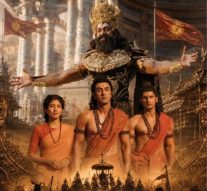
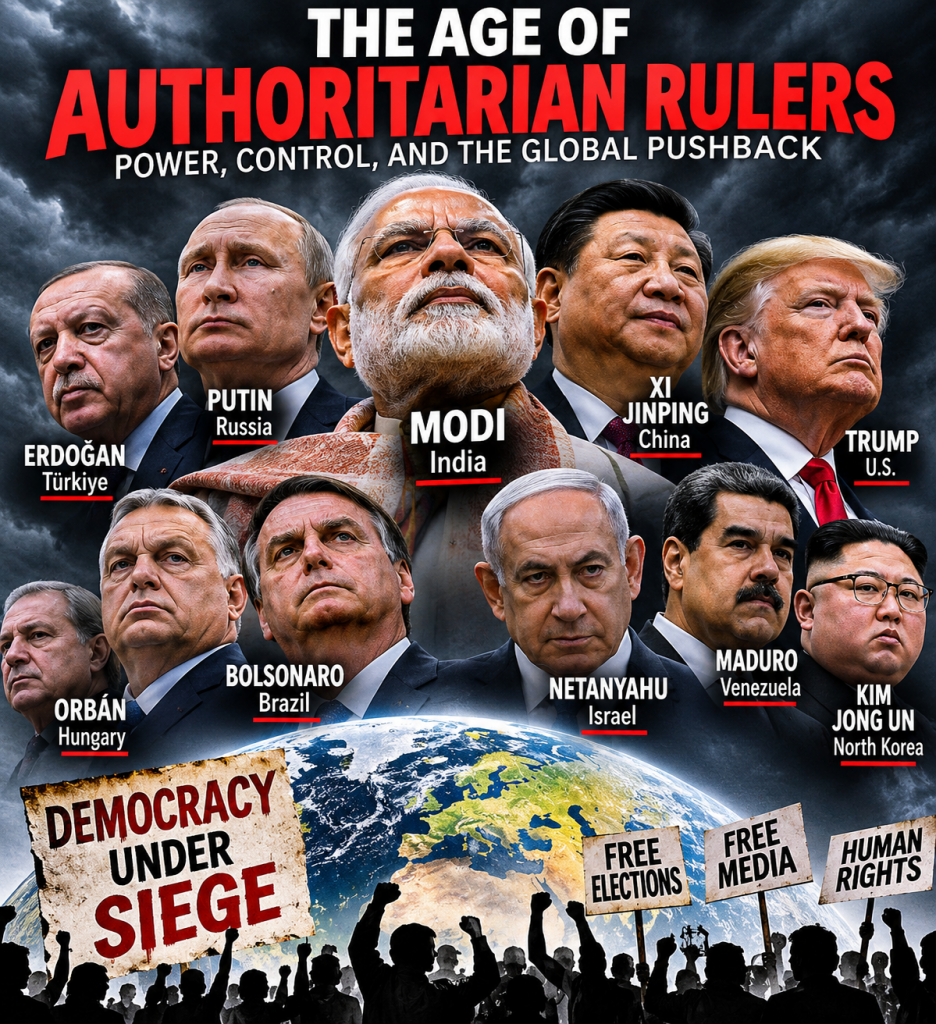
Nitesh Tiwari’s mega film ‘Ramayana’ glorifies Ravana, the absolute dictatorial demon king, rather than the maryada purush Rama. In a larger context it legitimizes authoritarian power and dictators like Vladimir Putin in Russia, Donald Trump in the United States and our own Narendra Modi in Bharat that is modern India…
THE most revealing aspect of Nitesh Tiwari directed `Ramayana’ Part I is that it does not begin with Rama, it begins with Ravana. This is a significant narrative decision. For a substantial opening stretch, the audience inhabits Ravana’s world. His depravation, his mother’s expectations, his intellectual interests and his extraordinary rise to power.
The film gives Ravana something that conventional Ramayana adaptations have often denied him. A political history and perhaps an alibi and an explanation that made him an evil rakshasa and not a maryada purshottam. Comparatively, Ram comes out as a indesisive waffling character particularly in the scenes relating to Sita’s agnipariksha story.
But besides glorifying the villain Ravana at the expense of the historical hero of the epic Ramayana it also raises an uncomfortable question. When a filmmaker spends considerable time explaining how a powerful ruler was made. Does the explanation risk becoming a justification of what he subsequently does. There is a major correlation between the ongoing political narrative on prime minister Narendra Modi and the new Ramayana version.
One of the most important new features of the Ramayana narrative is the portrayal of Ravana as a member of the marginalized asura community. Whose people suffer deprivation and indignity. Ravana’s mother Kaikasi nudges him towards playing a more assertive role in defending his community. In important early scene in the film in which he questions his inclination towards music when his people are struggling to survive. It is not widely known that besides being a scholar and a Shivbakt, Ravana was also a great musician. Indeed, the rudraveena is Ravana’s invention. Ravana’s transformation from an artistic inclined young man into a warrior and political leader is therefore presented as a response to collective injustice. It may be recalled that a similar justification was offered by Adolf Hitler for launching the second world war.
Deprivation can be a legitimate grievance. The political danger it nurtures when a leader converts a suffering of a community into a prominent source of personal authority. Original injustice becomes a justification for subsequent accesses. This is relevant to contemporary nationalistic politics. Including he politics of restoring the Ram Rajya and the building of the Ayodhya temple. The false narrative of national decline under Nehru.
The question is not whether historical grievances are real. A leader may begin by fighting injustice and eventually become an instrument of injustice himself like creating a corrupt elections commission to undermine the democratic mandate if the Constitution.
Ravana’s grand coronation in a glittering golden Lanka in contrast to the rustic Ayodhya also shows a difference between a reformer and an autocrat. One of the more interesting aspects of Ravana’s character in the film is his promise on ascending the throne of Lanka to establish a kingdom based on equality. Like Modi’s promises of Vixit Bharat and claims of having reduced poverty. All this complicates the historical narrative of Ravana being an inherently evil ruler. Initially, Ravana is seen as motivated by the desire to restore the dignity of his people. His ambitions appear to have a collective purpose. ‘The Indian Express’ review of the film draws attention to the contrast between his early promise of equality and his latter manifestation of an absolute dictator. The rakshasa to beat all rakshasa. The original promise of social justice, economic equality and restoration of national pride may be sincere. The real test comes after power has acquired. Does the leader build institutions that can function independently like the judiciary and the election commission. Does he tolerate criticism or creates the world of godi media. Does he allow others to question his decisions ? Or does the Hindutva movement become an organization with the purpose of protecting the supreme leader Narendra Modi?
The 10 heads of Ravana also get a different twist in the film. The filmmaker attributes the various heads and voices to various aspects of the same personality. One head urges restrain, another for revenge. There are competing impulses of scholarship, devotion, ambition , anger and pride. This becomes very relevant when it comes to the reaction of Ravana to the humiliation of Surpakarna . It may be recalled that in the traditional Ramayana narrative Surpanaka unlike in the film does not aspie to b Ram’s girlfriend. In the new version of Ramayana Mandodari the wife of Ravana counsels caution. Surpanakha whose nose was cut by Lakshman who wants revenge for humiliation. Ultimately, Ravana decides to retaliate. This is an extraordinary metaphor for the relationship between political power and advice. A democratic leader should be surrounded by independent advisors. A democratic leader should respect the Constitution. He should welcome critical media. The purpose of media is not to applaud the leader but challenge decisions which may be misguided.
When all power is concentrated in a leader like Narendra Modi or Donald Trump, the leader hears only he wishes to hear. Advisos compete to demonstrateloyalty rthr than ofer independent judgement. Eventually, the internal debate disappears. The leader’s own instinct for power becomes the final authority. Will a real Ram Rajya of Maryada Purush be restored in India. Will the Indian electorate imitate their American counterparts in restoring democracy and challenging authority?
There’s also aparallel to the misuse of political power and the absuction of Sit a in the new vesion of the Ramayana. The abduction of Sita is shown as the ultimate test of whether there is any limit to the power of a meglomanic ruler . The abduction is aturning point of the Ramayana. Curiously, the film also presents Ravana’s attraction to Sita.The conflict between desire and restraint. Ravana abducts her using deception and taking advantage Rama’s absence . Ironically, the Congress in India projecting Rahul Gandhi as the Jatayu,the legendary vulture which tries to protect Sita and enters into a combat with Ravana. Ravana is enormously powerful king. He has wealth, military strength and the capacity to command obedience. Just as absolute power did not give Ravana the right to abduct Sita, his position as prime minister does not give Narendra Modi the right to steal the popular mandate. A government may possess a large parliamentary majority as the BJP does. It may have political popularity. But democratic legitimacy does not mean unlimited authority . The right of individuals including the “demagi Naxals” and minorities do not become dispensable simply because the majority supports the government. This is where the distinction between Ravana and Ram matters. The distinction between absolute power and righteousness. The true test of a powerful ruler is not how much he can take but in how much he recognizes he has no right to take.
 LETTER TO THE EDITOR FOR THE ISSUE DATED NOVEMBER 14, 2026
 THE 10-HEADED RAVANA: WHEN DEMOCRACY LOSES ITS MANY VOICES
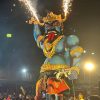 NARKASUR CELEBRATES BAHUJAN SAMAJ CREATIVITY!By Kaustubh Naik
 THE DIGITAL DIVIDE – BRIDGING THE GAP!By Arvind Pinto
 GOA AND MACAU: SHARED HERITAGE, DIFFERENT DESTINIES! By Dr RG Wiseman Pinto
 MUMBAI IS MORE HEALTH CONSCIOUS THAN GOA!
 MORTAL BY DAY, GODDESS BY NIGHT!By Prema Viswanathan
 MAMA MIA ‘UN-COLPO DI FULMINE’… A BOLT OF LIGHTNING!
 The Invisible Pandemic WHEN MEDICINES STOP WORKING Fight Anti-Microbial Resistance! By Dr Amit Dias
 WEEKEND UPDATESLETTER TO THE EDITOR FOR ISSUE DATED NOVEMBER 07, 2026
 WHO’S DREAMING OF A BLUE WAVE IN GOA?What will it take? Asks PhD researcher and architect… Tahir F de Noronha
 FREEDOM OF SPEECH AND EXPRESSION! By Cleofato Almeida Coutinho
 STIFFLING OF DISSENT
 AI HITS IT JOBS VERY HARD!
Goa is abuzz with excitement as vintage bike and car owners, users, collectors and fans are decking […]