Goa is abuzz with excitement as vintage bike and car owners, users, collectors and fans are decking […]
Old is Gold
October 4, 2016
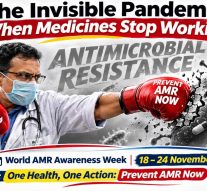
IMAGINE a day when a simple infection becomes difficult to treat, a routine surgery carries a serious risk of infection, or a child with pneumonia does not respond to the antibiotics prescribed. This is not a scene from a science-fiction movie. It is a very real possibility in a world increasingly threatened by antimicrobial resistance (AMR)…. Medications that we used just a decade ago are no longer effective in treating the microbes that are developing resistance to it.
Medicines that once saved lives are gradually losing their power. The danger is not that we are running out of medicines, but that some of the medicines we already have may no longer work when we need them most.
Every year, from November 18 to 24 the world observes World Antimicrobial Resistance Awareness Week (WAAW) to highlight this growing public health challenge. The theme for 2026 — “One Health, One Action: Prevent AMR Now” — is a timely reminder that preventing resistance is everyone’s responsibility. It calls for action not just from doctors and hospitals, but also from communities, farmers, pharmacists, veterinarians and policymakers.
What exactly is antimicrobial resistance?
ANTIMICROBIAL resistance occurs when microorganisms such as bacteria, viruses, fungi and parasites develop the ability to survive or multiply despite medicines that were previously effective against them.
Think of antibiotics as weapons used to fight bacteria. When antibiotics are used unnecessarily, incorrectly or excessively, susceptible bacteria are eliminated, while those with the ability to survive may multiply. Over time, these resistant organisms become more common and infections become harder to treat.
A problem that can no longer be ignored
AMR is often described as a silent or invisible pandemic because it spreads gradually, without the dramatic headlines associated with an outbreak. Yet its consequences are enormous.
According to global estimates for 2019, bacterial AMR was directly responsible for approximately 1.27 million deaths and associated with nearly 4.95 million deaths worldwide. These figures underline the enormous human cost of infections that no longer respond to available antibiotics.
The consequences extend far beyond individual patients. Resistant infections mean longer hospital stays, more expensive treatments, increased healthcare costs, greater risk of complications and, in some cases, death. They also threaten modern medicine itself. Organ transplantation, cancer chemotherapy, intensive care and major surgery all depend on effective antibiotics to prevent and treat infections.
India faces a particularly important challenge because of its large population, high burden of infectious diseases, easy access to antibiotics in some settings and substantial use of antimicrobials in human and animal health. The emergence and spread of drug-resistant infections, including multidrug-resistant tuberculosis and resistant typhoid, make responsible antimicrobial use an urgent priority.
From typhoid to malaria: resistance is everywhere
AMR is not restricted to one disease or one group of medicines. Consider the familiar typhoid fever. Caused by Salmonella Typhi, it has become increasingly difficult to treat in many parts of the world because of resistance to commonly used antibiotics. Infections that were once easily managed may now require more expensive or less readily available medicines.
Malaria provides another important example. The malaria parasite, Plasmodium, has developed resistance to certain antimalarial medicines in different parts of the world. Resistance to artemisinin-based combination therapies is a particular concern in parts of Asia. This threatens the progress made in malaria control.
Drug-resistant tuberculosis is another major concern, with multidrug-resistant TB requiring longer, more complex and expensive treatment.
One Health: One problem, one connected world
WHY does the 2026 theme emphasise One Health?
One Health recognises that human health, animal health, plant health and the health of our environment are closely interconnected. Microorganisms do not respect boundaries between hospitals, homes, farms, rivers or communities. AMR illustrates this connection beautifully, although the consequences are dangerous.
For example, antibiotics used in livestock and poultry can encourage the development of resistant bacteria. These organisms or their resistance genes may spread to humans through direct contact, contaminated food or the environment. Inadequately treated sewage and hospital waste can release resistant microorganisms into water bodies. Agricultural run-off can further contribute to environmental contamination.
Similarly, resistant organisms can travel through food chains, animals, people and international travel.
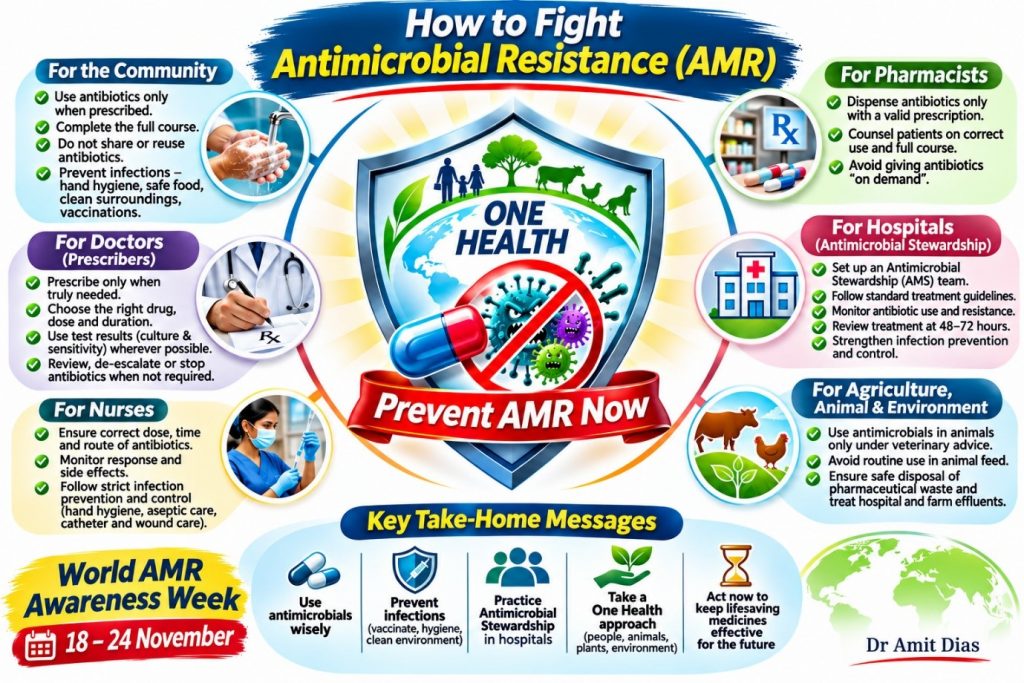
What can the community do?
The fight against AMR begins at home. Every individual can make a difference by following a few simple principles:
The fight against antimicrobial resistance is not just a medical battle. It is a shared responsibility. One Health, One Action: Prevent AMR Now.
(Dr Amit Dias is an Assistant Professor in the Department of Preventive and Social Medicine at Goa Medical College. He is also a Trainer for the Antimicrobial Resistance Capacity Building Initiative by Americares for the state of Goa. He holds a Diploma in Tropical Medicine and Hygiene (DTM&H) from the London School of Hygiene & Tropical Medicine (LSHTM), UK.
 MORTAL BY DAY, GODDESS BY NIGHT!By Prema Viswanathan
 MAMA MIA ‘UN-COLPO DI FULMINE’… A BOLT OF LIGHTNING!
 WEEKEND UPDATES
 LETTER TO THE EDITOR FOR ISSUE DATED NOVEMBER 07, 2026
 WHO’S DREAMING OF A BLUE WAVE IN GOA?What will it take? Asks PhD researcher and architect… Tahir F de Noronha
 FREEDOM OF SPEECH AND EXPRESSION! By Cleofato Almeida Coutinho
 STIFFLING OF DISSENT
 AI HITS IT JOBS VERY HARD!
 THE TATA TUSSLE: BOARDROOM BATTLES! By Arvind Pinto
 MISSING AUTORIKSHAS AND ‘PANI-PURI’ OF MUMBAI!
 DIALOGUES AT THE ICG…
 BEFORE IT STRIKES: EARLY ACTION ON DIABETES! By Dr Amit Dias
 A CENTURY IN MEDIA AND STILL BATTING!WEEKEND UPDATES
 LETTER TO THE EDITOR FOR ISSUE DATED OCTOBER 31, 2026
Goa is abuzz with excitement as vintage bike and car owners, users, collectors and fans are decking […]