Goa is abuzz with excitement as vintage bike and car owners, users, collectors and fans are decking […]
Old is Gold
October 4, 2016

CHILD SEX ABUSE IN GOA!

THERE have been two cases of child sex abuse in the last one week around. In Mapusa the three-year-old daughter of a balloon vendor’s family was allegedly sexually assaulted on Diwali night on Sunday, Nov8, 2026. Police have arrested Pundalik Gudge, a daily wage earner from Dharwad in Karnataka.
It may be remembered that more recently a four-year-old girl was allegedly sexually assaulted in down south Goa in Canacona. The police arrested a 24-year-old from Bihar, a migrant worker. In the third incident of child sexual assault reported in the last four days an eight-year old primary school student was allegedly sexually assaulted by a 13-year-old secondary school student in the toilet of an aided school in Tiswadi. According to Goa Victim Assistant Report, almost 4,000 cases were referred between 2014 and 2026. In 88% of this cases the victims knew the person who attacked and molested or raped them.
Chief Minister Dr Pramod Sawant has has claimed that 90% of such cases are committed by outsiders. There is, however, no proof that only migrants are involved in child sex abuse. The government has failed to implement a recommendation for crèches at construction sites, particularly when both construction site working parents may be working, their children left indifferently or unattended.
BEST EDITOR VIJAY S DE SOUZA OF `NAVHIND TIMES’

THE State government’s Department of Information & Publicity has announced the winners of Goa State’s Journalist Awards for this year. The editor of the “The Navhind Times” — Vijay De Souza — has been awarded the Best Editor award for National Integration and Communal Harmony and for editorial celebrating statehood. Gauree Malkarnekar, senior assistant editor of The Times of India in Goa has won yet another award for reporting on education for her article “Raising the bar behind bars: One degree at time.” The article is about prisoners in the Colvale Jail. Nida Sayed gets her award for Best Reporting on Public Issues. The Lifetime Achievement award in the senior journalists category has gone to Gurudas Sawal, former news editor of the Marathi language paper “Navaprabha.”
The DIP awards have been instituted to encourage journalists in their respective fields of reporting. They are conferred in ten categories for news items and articles, news reports, published during the previous calendar year and carries a cash prize of Rs25,000 each category with certificate and a memento.
Other winners: Shirish Kunkaleker of Prudent Media for rural reporting for his video story “Zayo: Bloom in battle.” Loukik Shilkar of Prudent Media gets an award for video report “Illegal work of diversion of Mhadei water at Bhandura” in best reporting with special reference to women and children/social issue.
In sports reporting Rohit Vadkar (Prudent Media) bagged the award for his report “The Legend-Padmashri Brahmanand Shankhwalkar.” The award in reporting on art and culture goes to Sameep Narvekar of Bhangarbhuin for “Chuthachi shendri jama zaopache vater” (coconut frond mats are on verge of extinction). Gayatri Kunkalekar of “Tarun Bharat” gets an award on reporting on government achievement for her report “Goavyatil Pahil’ Agri Clinic, Sankhali” (about Goa’s first agri-clinic). TOI’s Rajtilak Naik gets award for best photograph of the year.
The State Journalists Awards Committee who judged the awards were Dr Prakash Vazarikar (Professor at the Government College, Khandola), Sr journalist Kishor Shet Mandrekar and former program executive, Doordarshan (Panaji) Uday Kamat. All awards will be presented on National Press Day function to be held on November 16, 2026 at Ravindra Bhavan, Margao.
ESG’S AAKASH KANDIL COMPETITION FOR 57th IFFI 2026
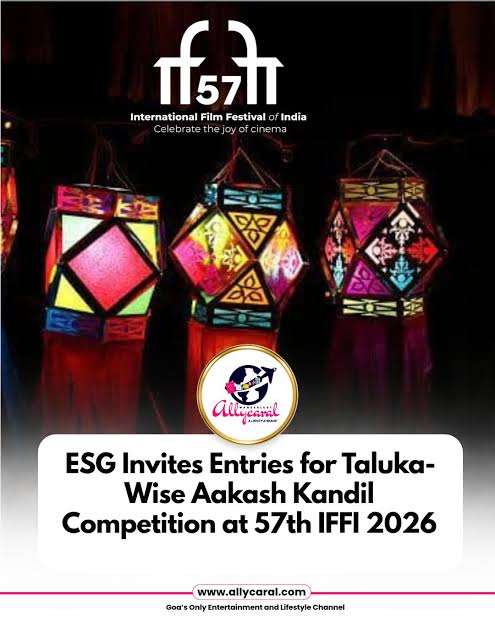
THE Entertainment Society of Goa (ESG), in collaboration with the government of Goa has announced its 3rd edition of Aakash Kandil (lantern making) Competition as part of the 57th International Film Festival of India, Goa 2026 (IFFI 2026). This initiative celebrates Goa’s rich cultural heritage, fostering creativity and community spirit through a stunning showcase of traditional and innovative lantern designs.
Key Details of the Competition:
Participation Criteria:
DISCREPANCY IN VOTE COUNT
THE Association for Democratic Rights has revealed that more votes were counted in the two Lok Sabha constituencies in 2024 than the number of people who voted. In the case of North Goa the total number of votes counted was 4,51,054 though the EVMs showed only 4,51,042 votes. In the case of South Goa, the votes counted were 4,45,924 against the total EVM count of 4,45,916. The additional votes counted, which were not recorded by the EVM is 12 additional votes in North Goa and eight additional votes in South. This is true not only in the case of Goa but across the 500 Lok Sabha constituencies across the country.
As in the case of SIR the Election Commission has no explanation as to how more votes were counted than the number of votes polled by the voters. Surely, the number of votes counted should equal the number of voters who have press the EVM button? Golmal anyone?
SIR U-TURNS
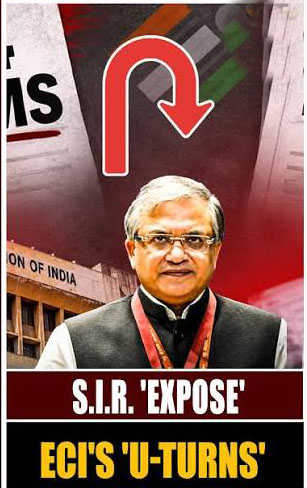
THE latest development on November 6, 2026 is that the Election Commission has given voters left out of the draft electoral rolls in seven states, another opportunity to put their name back. On November 4 the EC had completed the removal of an additional SIR declaration from the online Form 6 used by new voters.
This development follows an “Indian Express” investigation documenting 14 occasions over 10 months when there was a disagreement in the EC. In July 2026 the EC had introduced an additional declaration for new voters. This has been subsequently withdrawn by the EC. In spite of several reversals by the EC in respect of the SIR, Chief Election Commissioner Gyanesh Kumar refuses to quit.
JATAYU, THE VULTURE, IS HERO!
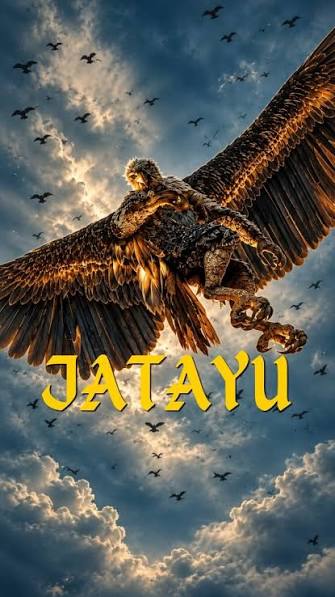
TRADITIONALLY, the vulture is considered an evil bird which preys on dead bodies of animals. In the Parsi tradition, dead bodies are left in the Tower of Silence for the vultures to feast on. A vulture is traditionally associated with death. In an extraordinary revisiting of the country’s epic in the new “Ramayana” film, it is the vulture Jatayu who tried to rescue Sita from the Pushpavimana — when she was being abducted by Ravana.
Indeed, in the new film version of the story it is Lord Rama who conducts the funeral of Jatayu.
THE SCIENCE BEHIND THE FEAR
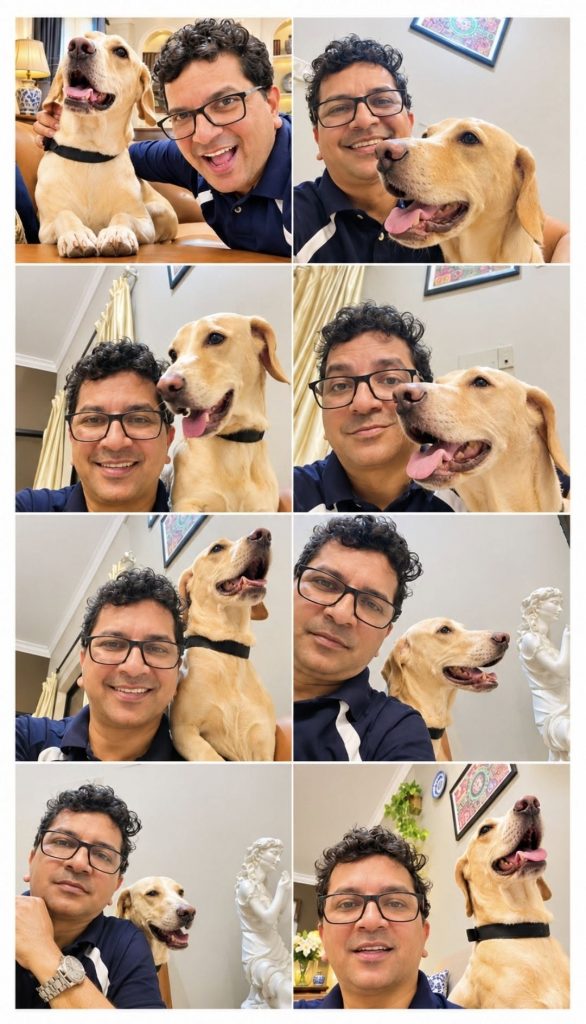
THIS “Spark” does not seem to like the crackers!! Sudden explosive sounds like firecrackers can be overwhelming for dogs. Their hearing is far more sensitive than that of human ears, making the loud, unpredictable bursts of fireworks out on the streets particularly distressing for pets.
Such sounds trigger the body’s fight-or-flight response, releasing adrenaline and other stress hormones. The heart races, limbs tremble, breathing quickens, and all the domestic pets want is a safe place. So Spark has been by my side all night, seeking comfort and reassurance. Spark, our pet dog.
SOCIETY OF PILAR HOSTS INTERELIGIOUS DIALOGUE
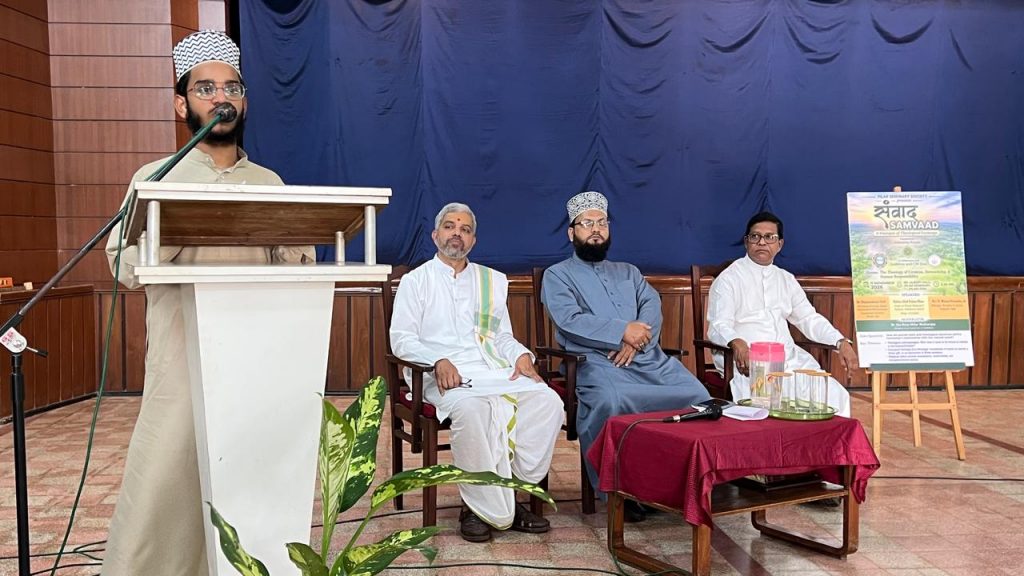
SOLIDARITY Forum of The Society of Pilar in collaboration with Sadbhav and the Conference of Religious India (CRI), Goa and Daman, organised “Samvaad – A Dialogue of Theological Exchange” on November 11 at Br Albert Hall, Pilar Seminary, Pilar. The interreligious theological dialogue focused on the theme, “The Theology of Creation, Stewardship, and Human Responsibility.”
The dialogue brought together speakers from Hindu, Muslim and Christian traditions, to explore humanity’s relationship with the natural world from different religious and theological perspectives. The speakers included Satish Suryakant Gaude (Assistant Professor of Sanskrit at Swami Brahmanand Mahavidyalaya, Tapobhoomi, Kundaim, Ponda); Hafeez Abul Kalam Khan (Imam of Masjid Mehboob E Subhani, Makhdoom Ashraf Nagar, Cortalim); and Fr Mateus Fernandes (SFX, Manager of Miracles High School, Sanguem).
Dr Ida Rose Miller Mukherjee, member of the Core Committee of Sadbhav, moderated the dialogue. The central question guiding the exchange was: “How do sacred texts and theological doctrines define humanity’s relationship with the natural world.” Presenting the Hindu perspective, Satish Gaude highlighted the significance of the five elements that constitute the universe and sustain life. He emphasised the need for humanity to remain connected with one another with the warning that this neglect would ultimately threaten human life. He stressed that the responsibility for protecting and conserving nature rests with everyone and requires collective effort. Referring to the principle of Vasudhaiva Kutumbakam (the world is one family), he called for unity and collective responsibility in maintaining the balance of nature, stating that humanity must work together to safeguard the natural world.
Hafeez Abul Kalam Khan presenting the Islamic perspective emphasised protecting and preserving the earth as a shared responsibility of all humanity, transcending religious and community boundaries. He said humans are not the owners of the earth but its stewards, entrusted with the responsibility of caring for and safeguarding the natural world. He called for collective efforts across religions and communities to preserve the environment.

Presenting the Christian perspective, Fr Mateus Fernandes SFX emphasised that creation is God’s gift and humanity is entrusted with the responsibility of protecting it through responsible stewardship rather than exploitation. Referring to Pope Francis’ encyclical Laudato Si’, he highlighted the interconnectedness of human beings and nature, warning that consumerism and excessive consumption contribute to ecological destruction, particularly affecting the poor and vulnerable.
He called for practical measures such as conserving water, reducing plastic use, protecting trees and avoiding food wastage. Urging schools, parishes and religious communities to become models of ecological responsibility, he stressed: “The earth is not our personal property; it is God’s gift entrusted to us.”
Dr Ida Mukherjee’s concluding words highlighted the complementary roles of science, politics and theology in addressing the ecological crisis. She observed that while science explains what is happening and politics determines the rules to be followed, theology provides the deeper reason why humanity must care for creation.
Emphasising the need for a change in human attitudes and lifestyles, Dr Mukherjee called for a shift from consumerism to care and from greed to gratitude. Addressing the ecological crisis requires not merely external changes but a transformation in the way human beings relate to the natural world.
Participants included those from the Christian tradition belonging to the Pilar Seminary, Palotine Seminary, Assagao, Redemptorist Seminary, Varca, and nuns from Institute of Mater Dei, Old Goa. There were students from Swami Brahmanand Mahavidyalaya, Shri Kshetra Tapobhoomi Kundaim, Ponda, and students from the Madrasa-e-Ashrafiya, Verna, and all interacted with the panelists. The welcome address was by Fr Elvis Fernandes SFX, Convenor of Solidarity Forum and Sadbhav and stressed on the meaning of inter-religious dialogue and its different forms.
A verse from the Prithvi Sukta (Atharva Veda 12.11.12), Surah Al- Rahman 55: 7-9) and Ps 104: 10-14,24 were presented by the representatives of different faiths. Scholastic Agustine Coelho SFX, thanked all. Jisha Ponnachan anchored the program and concluded it with a prayer.
 LETTER TO THE EDITOR FOR ISSUE DATED NOVEMBER 07, 2026
 WHO’S DREAMING OF A BLUE WAVE IN GOA?What will it take? Asks PhD researcher and architect… Tahir F de Noronha
 FREEDOM OF SPEECH AND EXPRESSION! By Cleofato Almeida Coutinho
 STIFFLING OF DISSENT
 AI HITS IT JOBS VERY HARD!
 THE TATA TUSSLE: BOARDROOM BATTLES! By Arvind Pinto
 MISSING AUTORIKSHAS AND ‘PANI-PURI’ OF MUMBAI!
 DIALOGUES AT THE ICG…
 BEFORE IT STRIKES: EARLY ACTION ON DIABETES! By Dr Amit Dias
 A CENTURY IN MEDIA AND STILL BATTING!
 WEEKEND UPDATES
 LETTER TO THE EDITOR FOR ISSUE DATED OCTOBER 31, 2026
 COMMERCE MINISTER PIYUSH GOYAL, CA TO DB BUILDERS, AWARDED CONVENTION DEAL?
 DONA PAULA CONVENTION CENTRE!By Our Special Correspondent
 THE SWAN TELECOM–2G SPECTRUM CASE!By Our Special Correspondent
Goa is abuzz with excitement as vintage bike and car owners, users, collectors and fans are decking […]