Goa is abuzz with excitement as vintage bike and car owners, users, collectors and fans are decking […]
Old is Gold
October 4, 2016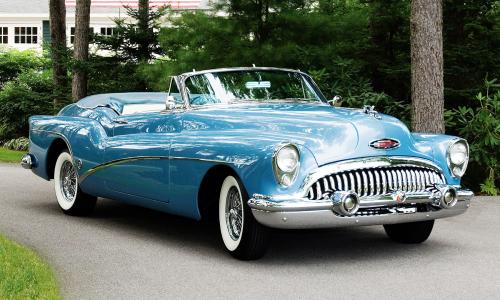
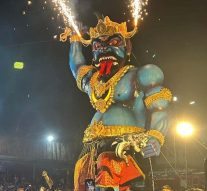
For many years during our Diwali vacation, my cousin Rohan and I would spend days trying to put together a standing structure that could eventually be called a Narkasur. Often, we would be helped by our grandmother to finish the job. Her philosophy was that Narkasur should be made from everything that needs to be destroyed. Being from a theatre family, we would have ample supply of material from the elaborate sets we would erect and that needed to be discarded. We used all this material to erect a Narkasur effigy that would challenge conventions of human anatomy. I vividly remember using cardboard barrels that served as a spine, a bamboo basket to contour his skirt, and gunny bags filled with dry leaves and clothes to create a protruding belly. Rohan and I spent a jolly time making these homemade Narkasurs for several years before we grew up and entirely gave up on this tradition.
In our village in Goa, the local boys would erect a bigger (and a proper) Narkasur. The scaffolding for the effigy would be made of Bamboos, and layers of newspaper would be applied as flesh and muscles. We would use a specially prepared (literally boiled and cooked) adhesive called ‘Khal’. The effigy then would be finished with a coat of spray paint, or clothed using a variety of craft papers for look and texture. Often the Narkasur would be erected on a trolley to take him around with young kids singing and dancing. The village would descend on the street to appreciate this collective art making, eventually to be burnt in the midnight.
In recent years, the Narkasurs have transformed into something else entirely. Naraksur effigies in Goa have increasingly become sophisticated and muscular, displaying a remarkable range of movements. The effigy has evolved from an agrarian harvest folk craft into a semi-urban industrial engineering project. Today, technical advancement has allowed these groups to perfect their knowledge and move to metal structures. They utilize hydraulics and allied technologies to build what are essentially towering humanoids. This transition from using organic village materials to metal scaffolds and fabrication mirrors Goa’s own socio-economic shift, where the villagers who were once connected with agrarian occupations have moved into skillsets that fetched them jobs in the industrial expansion in Goa. The second reason is obviously the affordability of this material, and the kind of patronage economy that has come to define the Narkasur making in Goa, but more about that later.
It should be emphasized here that the Narkasur effigies have always been a marvel of Bahujan craftsmanship. Not only the composition of village collectives that build these effigies come from hitherto marginalised caste background, I also call it Bahujan in terms of collective and shared authorship. There is no one artist who signs under the effigy. It is always a collaborative process to an extent that competing groups also help each other with specific artistic or technical skills. Growing up, each village would have at least one or two boys in the village who were exceptionally gifted at drawing and painting. But often, these boys did not end up at the Fine Arts college in Goa for social or economic reasons. There would be some who were trained at the Industrial Training Institutes (ITIs) who had basic knowledge of welding and fabrication but even that would be rare in some instances.
Most of the boys who contributed their skills and labour to this project were self taught, and learnt from each other while making it. The implementation of reservation in professional courses also opened the doors of specialised training programs such as engineering and architecture. Even today, the majority of the boys who partake in the making of these effigies are not formally trained into fine arts or engineering. These are mostly young men with modest jobs in the industrial and government sectors in Goa. And yet, achieving this level of sophistication and scale, transforming traditional effigies into towering mechanical humanoids, reveals a streak of pure vernacular genius.
The scale of these effigies also signifies something deeper. For the makers who hail from precarious backgrounds and marginalized castes, the scale of these effigies and the hyper-masculinity it displays is aspirational in a real world that robs them of any significant material power and emasculates them. They project a fantasy into these effigies of dominance and power that is denied to them in real life. Their conceptions about the body comes from superhero cinema, global pop culture, and the burgeoning gym culture that these boys participate and consume. Conventionally, the demons were portrayed as grotesque, disproportionate figures with beast-like tendencies. These portrayals have gradually shifted to being chiseled, muscular bodies. The towering, shredded Narkasur becomes an avatar of working-class power, occupying the streets with an imposing presence that the youth themselves are denied in everyday civic life.
It is precisely the reason that these effigies attract a continuous streak of criticism, and there are even clarion calls to abandon this practice entirely. One hears moralistic sermons about the vices attached to the making of the Narkasur, specifically the drinking of alcohol and the playing of loud music. These complaints predominantly emerge from urban, upper-caste quarters disconnected from communitarian village life. If you dig deeper, the problem is not with the Narkasur inasmuch as it is with the people congregating to bring it to life. The boys bring a distinct working-class culture to their weeks of collaboration, creating an aesthetic that rarely sits comfortably with those removed from the realities of the street. Observers with refined taste palates may find it loud, garish, and tacky. And yet, this spectacle stands as a resolute claiming of their identity. Such moral policing ultimately stems from elite anxiety. There is a deep hypocrisy in condemning working-class leisure while constantly extracting their labor needed to produce a comfortable life for themselves.
The conservative Hindus feel the effigy disproportionately glorifies the demon over the slayer, Lord Krishna. This line of critique has predominantly emanated from a distinct Brahminical class in the Goan society. Organisations like Sanatan Sanstha have been its most vociferous proponent who resort to pasting posters condemning the Narkasur effigies across Goa. I don’t think the makers of these effigies harbour any moral contradictions about the glorification of the Narkasur. But since they are lesser Hindus than the priestly castes, the concerns of the latter receive a disproportionate amplification. People parroting these Brahminical critiques attach importance to the theological triumph of burning the effigy. For the Bahujans, the literal rendering of the myth is perhaps less consequential. The spiritual value for the Bahujans lies in the making of the effigies through collective labour and solidarity. These are two entirely different systems of meaning making and their clash only highlights the dominance of one over the other in a caste segregated society.
Another aspect is the political patronage. Local politicians extend their support to effigy making as it buys them access to young men (and by extension, their familial networks) who can be used as political cadres. As the effigies have grown in size and complexity, so has the demand for political patronage. Politicians are increasingly expected to fund multiple groups within their constituencies, a financial pressure many privately admit has become a major headache. But the politicians inadvertently relent because it signifies a charitable nature, and buys them significant political leverage. When the political system fails to provide basic infrastructure, politicians use this temporary patronage as a sedative. Financing the festival buys localized goodwill and effectively neutralizes grassroots displeasure against their leadership.
It must be noted however that such effigy burning traditions are not unique to Goa. In North India, the burning of Ravana during Dussehra is quite well known. In New Mexico, the Zozobara puppet is built and burned annually to absolve civic gloom. These effigies act as sociological sponges designed to absorb collective societal anxieties before being spectacularly destroyed. By engineering moving heads, glowing eyes, and mechanical jaws, the community breathes life into the structure, heightening the illusion that they are executing a living entity. Such effigies are made to create a scapegoat responsible for societal misfortune. The sins these effigies absorb shift constantly to reflect contemporary crises, with effigies often taking on the traits of corrupt politicians, economic inflation, and so on. The extreme labor required to build these effigies is directly tied to the catharsis of their destruction. Their sheer scale and technological complexity make its annihilation a profound release of social pressure. The more dramatic the collapse of the effigy, the more complete the restoration of societal equilibrium. The effigy is dead, the collective anxiety is burned away, and the community is united through the shared spectacle of its demise.
 LETTER TO THE EDITOR FOR THE ISSUE DATED NOVEMBER 14, 2026
 `RAMAYANA’ TURNS `RAVAYANA’?
 THE 10-HEADED RAVANA: WHEN DEMOCRACY LOSES ITS MANY VOICES
 THE DIGITAL DIVIDE – BRIDGING THE GAP!By Arvind Pinto
 GOA AND MACAU: SHARED HERITAGE, DIFFERENT DESTINIES! By Dr RG Wiseman Pinto
 MUMBAI IS MORE HEALTH CONSCIOUS THAN GOA!
 MORTAL BY DAY, GODDESS BY NIGHT!By Prema Viswanathan
 MAMA MIA ‘UN-COLPO DI FULMINE’… A BOLT OF LIGHTNING!
 The Invisible Pandemic WHEN MEDICINES STOP WORKING Fight Anti-Microbial Resistance! By Dr Amit Dias
 WEEKEND UPDATESLETTER TO THE EDITOR FOR ISSUE DATED NOVEMBER 07, 2026
 WHO’S DREAMING OF A BLUE WAVE IN GOA?What will it take? Asks PhD researcher and architect… Tahir F de Noronha
 FREEDOM OF SPEECH AND EXPRESSION! By Cleofato Almeida Coutinho
 STIFFLING OF DISSENT
 AI HITS IT JOBS VERY HARD!
Goa is abuzz with excitement as vintage bike and car owners, users, collectors and fans are decking […]