Goa is abuzz with excitement as vintage bike and car owners, users, collectors and fans are decking […]
Old is Gold
October 4, 2016
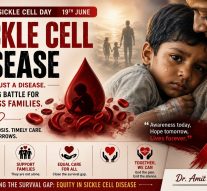
Every year on 19th June, the world observes World Sickle Cell Day- a United Nations-recognized event dedicated to raising awareness about one of the most common inherited blood disorders affecting millions of people worldwide. Here are some frequently asked questions to help close the survival gap.
A Silent Public Health Challenge
Sickle Cell Disease (SCD) is among the most common genetic disorders in the world. Every year, more than 300,000 babies are born with the condition globally, and India carries one of the highest burdens of the disease.
The disorder is especially prevalent among tribal populations and certain communities in Maharashtra, Madhya Pradesh, Chhattisgarh, Odisha, Gujarat, Jharkhand, Rajasthan, Telangana, Andhra Pradesh, and parts of Karnataka. Many affected families live in remote areas where access to healthcare remains limited, resulting in delayed diagnosis and treatment.
Recognizing the magnitude of the problem, the Government of India launched the National Sickle Cell Anaemia Elimination Mission in 2023 with the ambitious goal of eliminating Sickle Cell Disease as a public health problem by 2047, the centenary year of India’s independence.
What Exactly Is Sickle Cell Disease?
Our blood contains red blood cells that carry oxygen to every part of the body. Normally, these cells are round, flexible, and move easily through blood vessels.
In Sickle Cell Disease, a genetic change affects haemoglobin—the protein that carries oxygen in red blood cells. Under certain conditions, the red blood cells become rigid and take on a characteristic sickle or crescent shape. These abnormal cells can block small blood vessels, reducing blood flow and oxygen delivery to tissues and organs.
Imagine trying to push curved, rigid objects through narrow pipes. They get stuck, creating blockages. This is essentially what happens within the body, leading to pain and organ damage.
Frequently Asked Questions
How is Sickle Cell Disease inherited?
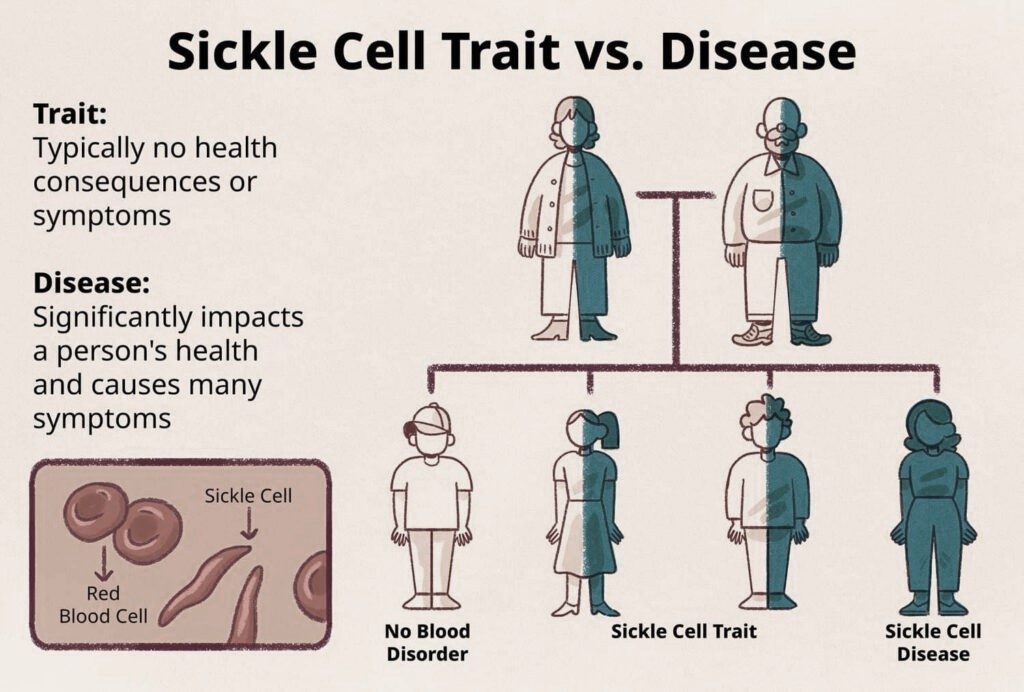
A child develops Sickle Cell Disease when both parents pass on an abnormal sickle cell gene.
People who inherit only one abnormal gene have what is known as the Sickle Cell Trait. They are usually healthy and may never develop symptoms, but they can pass the gene to their children. This is why screening and genetic counselling are so important.
What are the symptoms?
Symptoms often begin during infancy or early childhood and may include:
• Recurrent episodes of severe pain (pain crises)
• Chronic anaemia causing fatigue and weakness
• Swelling of hands and feet
• Frequent infections
• Jaundice
• Delayed growth and puberty
• Breathlessness
• Stroke and other serious complications in severe cases
The severity varies from person to person.
Why do patients experience severe pain?
Pain crises occur when sickle-shaped cells block small blood vessels. Reduced blood flow deprives tissues of oxygen, resulting in sudden and often intense pain.
How is Sickle Cell Disease diagnosed?
Diagnosis is made through simple blood tests, including:
• Sickle cell screening tests
• Haemoglobin electrophoresis
• High-performance liquid chromatography (HPLC)
• Newborn screening where available
Early diagnosis is critical because it allows timely treatment, prevents complications, and improves survival.
Can Sickle Cell Disease be cured?
At present, the only established cure is a bone marrow or stem cell transplant. However, this option is suitable for only a limited number of patients because of donor availability, risks, and cost. The good news is that modern treatments can dramatically improve quality of life and reduce complications.
What treatments are available?
Treatment may include:
Pain management
Folic acid supplementation
Preventive antibiotics in children
Vaccinations
Blood transfusions when needed
Hydroxyurea therapy to reduce painful crises
Regular medical monitoring
Recent advances in gene therapy have generated tremendous excitement and may transform care in the future. However, these treatments remain expensive and are not yet widely accessible.
Can people with Sickle Cell Disease live normal lives?
Absolutely !! Early diagnosis, appropriate treatment, regular follow-up, good nutrition, and adequate hydration, many individuals with Sickle Cell Disease can pursue education, employment, family life, and successful careers.
The key is continuous care and support.
India’s Response: The National Mission
India’s National Sickle Cell Anaemia Elimination Mission represents one of the largest public health efforts directed at a genetic disorder.
The mission aims to:
• Screen nearly seven crore people in affected areas
• Identify carriers and affected individuals early
• Provide genetic counselling
• Strengthen diagnosis and treatment services
• Raise awareness in communities
• Reduce stigma associated with the disease
A major component of the programme is the issuance of Sickle Cell Cards to facilitate follow-up and continuity of care.
The initiative places special emphasis on tribal communities, who carry a disproportionate burden of the disease.
Living Well with Sickle Cell Disease
Although SCD is a lifelong condition, many complications can be reduced through healthy practices.
Individuals living with SCD should:
— Drink adequate water daily
— Avoid dehydration and extreme temperatures
— Take prescribed medicines regularly
— Stay up to date with vaccinations
— Seek medical attention promptly when ill
— Maintain a balanced diet
— Attend regular health check-ups
Simple preventive measures can make a substantial difference.
One of the most effective ways to reduce future cases of Sickle Cell Disease is through screening and genetic counselling.
If both partners carry the sickle cell trait, each pregnancy carries:
• A 25% chance of a child with Sickle Cell Disease
• A 50% chance of a child with Sickle Cell Trait
• A 25% chance of a child without the abnormal gene
Screening is not about discrimination; it is about awareness, choice, and prevention.
Closing the Survival Gap
The theme for this year’s observance reminds us that where a child is born should not determine whether they survive or thrive.
Too often, children living in underserved communities are diagnosed late, receive inadequate treatment, or face unnecessary stigma because of poor awareness. The result is avoidable suffering and preventable deaths.
Closing the survival gap requires:
• Universal access to screening
• Early diagnosis
• Affordable treatment
• Strong healthcare systems
• Community awareness
• Continued research and innovation
Healthcare equity means ensuring that every child, regardless of geography, income, or social background, has access to life-saving care.
A Final Message
Sickle Cell Disease is more than a medical condition. It is a social, economic, and public health challenge that affects individuals, families, and communities.
On this World Sickle Cell Day, let us encourage screening, support affected families, combat stigma, and strengthen access to care.
Know Your Status. Get Screened. Seek Care Early. Save Lives.
 LETTER TO THE EDITOR FOR ISSUE DATED SEPTEMBER 26, 2026
 DIVIDED EVEN IN DEATH!By Rajan Narayan
 IF YOU CLAIM THE CREDIT, TAKE THE RESPONSIBILITY!By Joquim Goes
 8 EMAILS IN 7 DAYS, BUT VALID GOA VOTERS STILL LEFT OUT: EC’S FLAWED SYSTEM!By Ritika Chopra
 MAKE IN INDIA: UNITED PAYMENTS INTERFACE India’s digital local leap to global benchmark…By Arvind Pinto
 BRING BACK THE FLATBREADS OF INDIA!
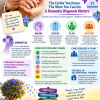 EARLIER YOU KNOW, THE MORE YOU CAN DO Dementia diagnosis matters… By Dr Vailanki Nazira Raposo
 YOUNG LOVE IS A CRIME IN BIHAR!
 THE BOAT BECKONS, THE UNICORN WATCHES! By Prema Viswanathan
 WEEKEND UPDATES
 LETTER TO THE EDITOR FOR ISSUE DATED SEPTEMBER 19, 2026
 ELEVATED HIGHWAY TO HELL!
 MEDICAL DEVICES LOOT!By GS Mudur
 HOSTILE ACT BY PAKISTAN: `PNS HUNAIN’ TRIED TO DISRUPT OUR NAVAL SURVEILLANCE! By Dr Olav Albuquerque & Deborah Albuquerque
 BLACK MONEY IN POLITIAL PARTIES: ADR’s Alarming Revelations By Arvind Pinto
Goa is abuzz with excitement as vintage bike and car owners, users, collectors and fans are decking […]