Goa is abuzz with excitement as vintage bike and car owners, users, collectors and fans are decking […]
Old is Gold
October 4, 2016
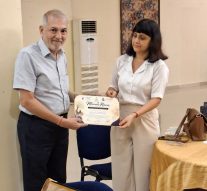
For three days, the ManavNama conclave, organised by Ganga Zuari Academy, sought answers to the existentially profound questions confronting humanity in an increasingly algorithm-driven world…
THERE was little clarity among the participants about what the ManavNama conclave — translating to ‘edicts of humanity’ — was all about when they arrived at the International Centre Goa (ICG) on July 24, but one desire ran through them all. That yearning was the willingness to go beyond prevailing knowledge to explore and learn more about how to awaken human consciousness within themselves.
“Do not ask what I will learn. Ask who I will become. Together, let us rediscover the art of becoming deeply, consciously and beautifully human,” said Ranadhir Mukhopadhyay, general secretary of the cultural organisation Ganga Zuari Academy, which organised the three-day event, as he opened the floor for interactive discussion.
With that, Mukhopadhyay set everyone on an inward journey of self-discovery. Arijit Choudhuri, an avid geologist who curated the first session — Who Am I Beneath My Roles? — lit up the room with probing questions about the Self, prodding participants to look beyond their professional and societal roles and identities. He sought to answer what it takes to “truly be human in a world increasingly shaped by speed, ambition and greed.”
Choudhuri then turned the question over to the participants, encouraging them to explore the distinction between merely existing, consciously living, and fully becoming aware of one’s own existence.
Intensive dialogue, introspection and reflection revealed that scientific and technological progress had substantially diminished the historical causes of conflict arising from the scarcity of food, shelter and other basic necessities, and that today’s crises stemmed less from material deprivation than from an innate desire to dominate, compete and subjugate.
He then steered the discussion towards the three interconnected themes of the ManavNama philosophy: the distinction between success and fulfilment, personal and societal transformation, and the practice of daily inner evolution. Choudhuri’s session concluded with the understanding that genuine fulfilment is achieved through the harmonisation of external accomplishments with inner wisdom, ethical conduct, compassion, and a sincere commitment to the well-being of others.
VAZ urged participants to recognise the “true purpose of education,” which extends beyond preparing students for employment to fostering their holistic development by awakening human potential, cultivating wisdom, and inspiring a lifelong commitment to learning and service.
She emphasised the importance of imagination and collaborative learning as antidotes to an education system that prioritises conformity and unhealthy competition, burdening students with undue pressure and unrealistic expectations.
The deliberations then turned to the rising incidence of student suicides, stress, anxiety, and substance abuse. Participants observed that the crisis stemmed from “the unrealistic expectations placed on young people by society, educational institutions, and even parents, many of whom equate academic performance with personal worth and future success”.
SEVERAL examples of individuals who achieved success despite poor academic performance were cited to reinforce the view that examination results are “only one chapter in life, and that character, resilience, imagination, and perseverance ultimately shape a meaningful and successful life.”
Day 2 commenced with a session by Manguirish Pai Raikar — an industrial leader and part-time relationship counsellor — on the universally relevant theme of relationships.
He illustrated his message through the story of two farmers whose friendship was strained by a misunderstanding that erected a wall of silence between them. After a prolonged period of estrangement, one of the farmers chose to make the first move by building a bridge instead of a fence between their farms. The gesture prompted the other farmer to cross the bridge, rekindling their friendship and demonstrating the transformative power of forgiveness, reconciliation, and trust.
“Relationships grow stronger when we build bridges instead of walls,” said Raikar.
According to him, the four pillars of a healthy relationship are trust, respect, communication, and commitment. He observed that the challenges confronting modern relationships—including stress, financial pressures, family responsibilities, and differing opinions—can become opportunities for personal growth when approached with patience, teamwork, empathy, and mutual support.
Participants echoed the view that social harmony is rooted in healthy interpersonal relationships and that “a compassionate civilisation can emerge only when individuals build bridges instead of walls.”
A major takeaway from Manguirish’s session was that “enduring relationships are built not on perfection but on the daily choices of understanding, forgiveness, and kindness”.
The second half of Day 2 delved into a deeper exploration of consciousness through a session curated by H. K. Kaul and Mukhopadhyay. Building on the earlier discussions on the self, education, and relationships, the session encouraged participants to “focus on inner awakening by integrating the power of the mind with the wisdom of the heart.”
It focused on the question, Is Liberty of Mind Essential to Attain Consciousness? The deliberations explored the barriers to inner freedom, the distinction between knowledge, intelligence, and wisdom, and whether institutions can truly function without individuals with wisdom, among other thought-provoking themes.
The session reflected on how intelligence without compassion can become destructive and how “knowledge transforms into wisdom when it changes character and conduct.” One of the insights it offered was that “science expands our understanding of the external world, philosophy sharpens critical inquiry, and spirituality deepens self-awareness; together, these paths offer complementary routes to truth.”
The session concluded with the understanding that “consciousness is not merely awareness but an ongoing process of inner liberation.” Participants departed with the conviction that true transformation begins within and radiates outward into society.
On the final day, Mukhopadhyay posed the existentially profound question: What Kind of Human Being Does the Future Need? The inquiry arose from the dilemma confronting humanity as technology, particularly artificial intelligence (AI), increasingly begins to assume attributes traditionally associated with human beings.
THE discussion on AI’s growing influence over every aspect of human life raised the pertinent question of how much control people should relinquish to technology. Participants unanimously agreed that AI should be used to enhance human lives while cautioning against “allowing technology to diminish the very qualities that define our humanity.” They called for the conscious preservation of compassion, empathy, clarity of mind, moral courage, creativity, collaboration, liberty, and love in an increasingly algorithm-driven world.
Participants left the conclave with a renewed sense of purpose and the understanding that the future of civilisation depends not only on scientific and technological advancement but also on the continual evolution of human consciousness and character.
 LETTER TO THE EDITOR FOR ISSUE DATED SEPTEMBER 19, 2026
 ELEVATED HIGHWAY TO HELL!
 MEDICAL DEVICES LOOT!By GS Mudur
 HOSTILE ACT BY PAKISTAN: `PNS HUNAIN’ TRIED TO DISRUPT OUR NAVAL SURVEILLANCE! By Dr Olav Albuquerque & Deborah Albuquerque
 BLACK MONEY IN POLITIAL PARTIES: ADR’s Alarming Revelations By Arvind Pinto
 `KHANDVI MILLE-FEUILLE’ AT BRICS ALL VEG BUFFET!
 SATYA NIKETAN TRAGEDY: HOW GLOBAL STUDENT HOUSING MODELS COULD HELP INDIA FIX A BROKEN SYSTEM!By Sneha Swaminathan
 GANESH PANDALS HIJACKED BY ADANI, AMBANI
 WHY DOES A DEMENTIA DIAGNOSIS MATTER? By Dr Amit Dias
 WEEKEND UPDATES
 LETTERS TO THE EDITOR FOR ISSUE DATED SEPTEMBER 12, 2026
 GOAN TEACHERS ARE CONTRACT LABOR!
 THE COLOUR IS PRESTIGIOUS! THE PROCESS MUST BE EQUALLY SO!
 DOGS ATTACK GOANS, OWNERS GET ACQUITTED!By Dr Olav Albuquerque & Deborah Cordeiro
 CYBER FRAUD: A THREAT TO FINANCIAL SECURITY & MENTAL WELL-BEING! By Adv Vinayak (Mama) D Porob
Goa is abuzz with excitement as vintage bike and car owners, users, collectors and fans are decking […]