Goa is abuzz with excitement as vintage bike and car owners, users, collectors and fans are decking […]
Old is Gold
October 4, 2016
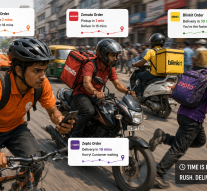
INDIA’S gig economy has surged to over 1.2 crore workers by 2025, with Goa showing one of the highest penetrations relative to population — about 25% of its workforce engaged in gig or flexi roles, especially in tourism, hospitality, construction, and delivery services. A gig worker is one who earns income through short term, flexible task-based jobs rather that the traditional long term salaried employment. Gig workers are usually free lancers or independent contractors who are contracted via digital platforms. While this expansion of this sector offers flexibility and job creation, nearly 40% of gig workers nationally earn below Rs15,000 per month, highlighting income volatility and lack of social security. Goa’s seasonal tourism dependence makes its gig workforce particularly vulnerable.
THE NATIONAL OVERVIEW
IN tandem with our population growth, the gig workforce has grown. It was 77 lakh in financial year 2021, and has in FY 2025 touch 1.2 crore, accounting for 2% of the total workforce. Statistical projections suggest that the gig workforce would grow to 6.7% of the total workforce and will contribute to a substantial 2.35 lakh crore to the gross domestic product. What are the dominant sectors in which gig workers operate? On a Sunday, if we should wish to have a snack, cafreal chicken or bebinca, we would pull out our phone, select something from an app, pay by our mobile, and wait. Within less that 15 minutes the door bell sounds. Lo and behold your chicken or bebinca is at your door! The delivery boy, who you more than often do not even tip, is a gig worker. Statistics have it that almost 65% of the gig workers are engaged in delivery and ride hailing services. E-commerce and allied delivery platforms employ 37 lakh gig workers in India. The others sectors for gig workers is logistics, banking, financial services and insurance, manufacturing and retail services.
These gig workers, looked at by society as boys that bring you what you require are indeed drivers of economic growth. Gig workers reply on mobile communication and the smart phone penetration among them is over 80 crore users. Further their income is credited into directly into their bank account with UPI transactions over 15 billion transactions monthly.
Gig workers however face several challenges. Unlike the organized sectors, where income is regulated, gig workers face income volatility. Their income depends on the hours that they clock, where the day one does not work, there is no money to take home. Around 40% of these workers earn below Rs15,000 per month; while those who are willing to put in long hours and work all days of the week, can make Rs35,000 to Rs40,000 a month. With no firm pay slips, gig workers face limited credit access, especially with regard to a CIBIL score, when they approach a bank for a loan. Besides gig workers are not backed by institutional guarantees such as insurance gratuity and pension plans. Further, their long hours and drive to earn more, tends to see many of them burn out faster than those in regular employment.
However, the concept of a gig worker is not only confined to those boys who zip around on scooters, delivering pizzas or your daily groceries. There are highly paid gig workers, such as healthcare workers, medical specialists, IT technicians.
Let’s look at the gig community in Goa. Goa, being a tourist destination, there are many opportunities for the gig workforce, in terms of numbers, 25% of the labour are gig workers – among the highest in the country. Sector wise, the hospitality industry engages 35% of these type of workers, followed by the construction and real estate sector engaging around 25% of such workers. With the developing IT growth in Goa, 18% of the gig workers are engaged in this well-paid sector and around 15 to 18% of gig workers are in the e-commerce/retail business.
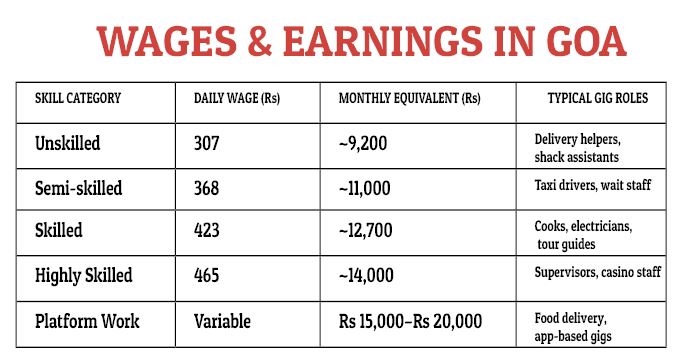
In terms of job opportunities the gig sector has added 25,000 jobs and it is projected to grow to 30,000 during the year 2026. Thus, there is a growing opportunity for gig workers with the increasing economic growth in Goa. However, with specialization, many employers believe that these workers lack skill sets necessary for the industry that these workers are employed in. Another progressive feature is the increasing participation of women, especially in the night shifts, as also in delivery roles.
BEING a small state, gig workers in Goa, face certain risks and vulnerabilities. In the first place the tourism season in Goa is seasonal. The high season is between November and February and tends to lessen during the summer and rainy seasons. Thus, there is demand during the peak seasons, which makes gig workers vulnerable to layoffs during the slack months. Further the Gulf uncertainties, has reduced overseas opportunities for locals, increasing the return from abroad and the resultant increasing unemployment in Goa.
Further, allied to the gulf situation and the increase in import costs of fuel, there is growing inflation that has eroded real wages, in a state where wages are perennially low. With a saturated job market and the lack of permanent contracts make gig workers face pay cuts and irregular payments from employers.
Sadly the gig market both in Goa as also the rest of India is not well regulated. There is little social security, insurance of pension plans for these workers. Thus, while they do enjoy a fairly good revenue package if there is a sufficient demand for their services, they are quickly laid off during the period of slack demand. While the nature of the job, offers flexibility of timings many of the lowly paid gig workers receive a minimum wage. In the Goan context, “The shack waiter earns his bread by the tide—plenty when tourists come, little when they don’t.”
INDIA’S gig economy is a structural shift reshaping employment, with Goa as a microcosm of both opportunity and vulnerability. While digital platforms and tourism drive job creation, the fragility of wages, seasonality, and lack of social security expose workers to vulnerability and risk. For Goa, integrating vocational training, sustainable tourism practices, and social protection frameworks will be critical to ensuring that gig work evolves from survival wages to sustainable livelihoods.
 LETTER TO THE EDITOR FOR ISSUE DATED SEPTEMBER 26, 2026
 DIVIDED EVEN IN DEATH!By Rajan Narayan
 IF YOU CLAIM THE CREDIT, TAKE THE RESPONSIBILITY!By Joquim Goes
 8 EMAILS IN 7 DAYS, BUT VALID GOA VOTERS STILL LEFT OUT: EC’S FLAWED SYSTEM!By Ritika Chopra
 MAKE IN INDIA: UNITED PAYMENTS INTERFACE India’s digital local leap to global benchmark…By Arvind Pinto
 BRING BACK THE FLATBREADS OF INDIA!
 EARLIER YOU KNOW, THE MORE YOU CAN DO Dementia diagnosis matters… By Dr Vailanki Nazira Raposo
 YOUNG LOVE IS A CRIME IN BIHAR!
 THE BOAT BECKONS, THE UNICORN WATCHES! By Prema Viswanathan
 WEEKEND UPDATES
 LETTER TO THE EDITOR FOR ISSUE DATED SEPTEMBER 19, 2026
 ELEVATED HIGHWAY TO HELL!
 MEDICAL DEVICES LOOT!By GS Mudur
 HOSTILE ACT BY PAKISTAN: `PNS HUNAIN’ TRIED TO DISRUPT OUR NAVAL SURVEILLANCE! By Dr Olav Albuquerque & Deborah Albuquerque
 BLACK MONEY IN POLITIAL PARTIES: ADR’s Alarming Revelations By Arvind Pinto
Goa is abuzz with excitement as vintage bike and car owners, users, collectors and fans are decking […]