Goa is abuzz with excitement as vintage bike and car owners, users, collectors and fans are decking […]
Old is Gold
October 4, 2016
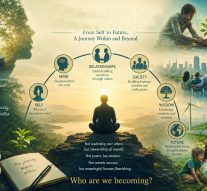
IN an era of rapid technological advancement and constant connectivity, humanity faces a paradox. We have access to vast amounts of information, yet many feel disconnected from themselves, others, and life’s deeper purpose. While we achieve success and digital connectivity, we must ask: Are we truly fulfilled? Have we learned to understand ourselves? These pressing questions demand our attention.
Modern education prepares us to become professionals. Society trains us to become consumers. Institutions encourage us to become productive citizens. Yet very few spaces exist where individuals can pause and examine who they are beneath their titles, professions, achievements, and social identities.
It is precisely in this context that ManavNama emerges as a timely and necessary initiative to be held for the first time in Goa from 24 to 26 July, under the aegis of Ganga Zuari Academy. Conceived as a reflective journey into the essence of human existence, ManavNama is not another leadership workshop, management seminar, or motivational programme. It is something far more fundamental. It is an invitation to rediscover the art of being human.
CONTEMPORARY CONFLICTS
MANAV-NAMA seeks to create such a space. The initiative recognises that many of the crises confronting contemporary society polarisation, intolerance, ecological degradation, loneliness, anxiety, and ethical decline — cannot be solved solely through technology, policy, or economic growth. They also require inner transformation. The quality of our institutions ultimately reflect the quality of our consciousness. At its heart lies a simple yet profound question: What does it mean to be human?
The journey begins with the self.
PARTICIPANTS are encouraged to ask questions that are rarely discussed in everyday life: Who am I beyond my professional role? What is the difference between success and fulfilment? What is the relationship between self-awareness and happiness? Is there a deeper dimension to existence beyond ambition and achievement?
Such inquiries are not exercises in abstraction. They help individuals understand how personal choices shape collective realities. A society can only become more humane when human beings themselves become more conscious, compassionate, and reflective.
From the self, the exploration moves to the mind.
HUMAN behaviour is profoundly shaped by desire, fear, conditioning, and habit. Modern civilisation often celebrates freedom, yet many people remain prisoners of their impulses, anxieties, and social expectations. ManavNama encourages participants to examine the inner landscape that influences decisions, relationships, and public life.
True freedom, the programme suggests, begins within. Recognising truth is relatively easy; living according to truth is considerably harder. It demands courage, discipline, and honesty.
The journey then expands to relationships.
Human beings understand themselves through their interactions with others. Relationships function as mirrors that reveal strengths, vulnerabilities, assumptions, and fears. In a world increasingly marked by division and mistrust, the values of empathy, listening, compassion, and mutual respect become indispensable.
ManavNama views relationships not merely as social arrangements but as opportunities for self-discovery and human growth. It asks participants to consider whether love liberates or possesses, whether communication heals or divides, and whether conflict can become a teacher rather than an enemy.
The conversation naturally extends to society and civilisation.
Modern civilisation has delivered extraordinary material progress. Yet important questions remain. Are our educational systems nurturing wisdom or simply producing employable individuals? Are technological innovations making us more human or merely more efficient? Does economic growth automatically lead to human flourishing?
ManavNama invites participants to critically evaluate the structures that shape contemporary life — education, governance, economics, media, and culture. It challenges the assumption that progress can be measured only through material indicators.
The initiative argues that imagination, ethics, creativity, and responsibility are equally important markers of a healthy society.
Another distinctive feature of ManavNama is its emphasis on wisdom.
The 21st century is often described as the information age. However, information is not the same as knowledge, and knowledge is not the same as wisdom. Humanity today has access to unprecedented quantities of data, yet wisdom remains scarce.
Wisdom emerges when knowledge is combined with reflection, humility, experience, and ethical responsibility. It is the bridge that connects science with humanity, innovation with purpose, and intelligence with compassion.
ManavNama, therefore, creates a dialogue between science, philosophy, spirituality, literature, art, and lived experience. It recognises that no single discipline possesses all the answers. Human understanding grows when different perspectives meet in conversation.
Perhaps the most compelling aspect of ManavNama is its focus on the future.
Humanity has entered what many scholars call the Anthropocene — the age in which human activity significantly influences the planet’s ecological systems. Climate change, biodiversity loss, technological disruption, demographic transitions, and social fragmentation pose challenges that previous generations never encountered.
What kind of human beings will be needed to navigate this future?
The answer may not lie solely in technical expertise. The future will require individuals capable of ethical judgment, ecological responsibility, cultural sensitivity, emotional intelligence, and collective thinking.
The future will require not merely smarter people, but wiser people.
ManavNama concludes with an invitation rather than a prescription. It does not seek to impose a doctrine or ideology. Instead, it encourages participants to undertake a personal journey of inquiry and responsibility. The emphasis is on dialogue rather than dogma, reflection rather than instruction, and transformation rather than performance.
In many ways, ManavNama represents a quiet rebellion against the culture of speed. It invites individuals to slow down, listen deeply, question assumptions, and reconnect with what truly matters.
Its significance extends beyond the participants who attend its sessions. At a time when societies across the world are searching for new models of development, governance, education, and coexistence, initiatives like ManavNama remind us that sustainable change begins with the human being.
Before we can transform institutions, we must understand ourselves. Before we can build a better society, we must become better human beings. That, ultimately, is the promise of ManavNama—not leadership over others, but stewardship of oneself; not power, but wisdom; not merely success, but meaningful human flourishing.
In a world that increasingly asks us what we do, ManavNama gently returns us to a more important question: Who are we becoming? To join ManavNama, call 9422438821 or visit www.gangazuari.org
 LETTER TO THE EDITOR FOR ISSUE DATED SEPTEMBER 26, 2026
 DIVIDED EVEN IN DEATH!By Rajan Narayan
 IF YOU CLAIM THE CREDIT, TAKE THE RESPONSIBILITY!By Joquim Goes
 8 EMAILS IN 7 DAYS, BUT VALID GOA VOTERS STILL LEFT OUT: EC’S FLAWED SYSTEM!By Ritika Chopra
 MAKE IN INDIA: UNITED PAYMENTS INTERFACE India’s digital local leap to global benchmark…By Arvind Pinto
 BRING BACK THE FLATBREADS OF INDIA!
 EARLIER YOU KNOW, THE MORE YOU CAN DO Dementia diagnosis matters… By Dr Vailanki Nazira Raposo
 YOUNG LOVE IS A CRIME IN BIHAR!
 THE BOAT BECKONS, THE UNICORN WATCHES! By Prema Viswanathan
 WEEKEND UPDATES
 LETTER TO THE EDITOR FOR ISSUE DATED SEPTEMBER 19, 2026
 ELEVATED HIGHWAY TO HELL!
 MEDICAL DEVICES LOOT!By GS Mudur
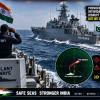 HOSTILE ACT BY PAKISTAN: `PNS HUNAIN’ TRIED TO DISRUPT OUR NAVAL SURVEILLANCE! By Dr Olav Albuquerque & Deborah Albuquerque
 BLACK MONEY IN POLITIAL PARTIES: ADR’s Alarming Revelations By Arvind Pinto
Goa is abuzz with excitement as vintage bike and car owners, users, collectors and fans are decking […]