Goa is abuzz with excitement as vintage bike and car owners, users, collectors and fans are decking […]
Old is Gold
October 4, 2016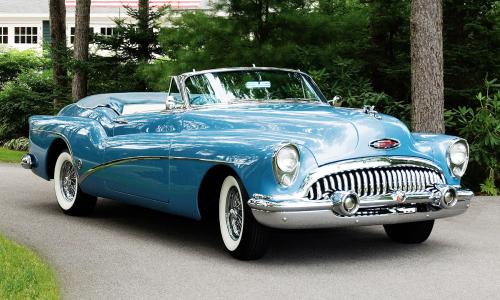

THE environmental battlefront has expanded into a legal showdown over mass deforestation. The Bombay high court at Goa has placed environmental governance under intense scrutiny by reprimanding the state’s Tree Authority. The court criticized the body for acting as a virtual “rubber stamp” after it rushed through permission to fell 2,395 trees for the Verna–Margao bypass road-widening project.
Adding to the tension, the high court pointed out that the Public Works Department (PWD) has failed to plant over 33,000 trees mandated by previous infrastructure permissions. This massive backlog exposes a significant gap between administrative promises of “sustainable development” and actual execution on the ground. While the court has stepped in to order a detailed policy framework for the translocation of 193 young and old trees along the Verna route, public distrust remains exceptionally high.
This scepticism was vividly illustrated this week in Dhavli, where locals woke up to find a revered, 150-year-old banyan tree, drastically pruned at the Ponda-Margao junction. While authorities defended the action as a routine safety trimming of hazardous branches ahead of the monsoon, villagers described it as a “mutilation” that reduced a generations-old landmark to a bare shadow of its former self.
A Dangerous Convergence of Ecological Crises
THESE localized environmental disputes are unfolding against the backdrop of a larger, systemic ecological crisis in the state. Goa is grappling with a severe 60% rainfall deficit early in the season, leaving major reservoirs dry and prompting warnings that the state has only a fortnight’s worth of stable water supply left.
The visible degradation of the landscape has led to a major public pushback. Citizens are pointing out the contradiction of cutting down centuries-old trees — the natural anchors of the local water cycle —while the state simultaneously experiences historic water shortages and heat waves. Public discussions are dominated by demands for an immediate freeze on major hill-cutting and field-filling projects, alongside calls to halt the conversion of non-settlement lands.
Rather than adopting a cohesive conservation policy, the state administration appears to be oscillating between enforcement and deregulation. For instance, while TCP Minister Vishwajit Rane announced that the state will notify the Supreme Court and the Ministry of Environment, Forest and Climate Change (MoEFCC) regarding its decision to place 554 survey numbers under a strict “No Development Zone” (NDZ) to protect paddy fields and salt pans, critics label the gesture as contradictory. They argue that protecting isolated patches of land do little to offset the sweeping powers of deregulation granted by Section 39A.
The Way Forward
AS Goa moves further into 2026, the ongoing protests in village squares, legal battles in the high court, and intensifying arguments over land use reveal a deep ideological divide. The current administration continues to push a model of development heavily reliant on rapid infrastructure expansion, highway widening, and real estate growth.
However, the escalating water crisis, the failure of compensatory afforestation, and widespread civic resistance show that Goans are no longer willing to accept environmental destruction as the price of progress. For the state government, the path forward requires a fundamental shift: it must move away from top-down land conversions and embrace transparent, community-led ecological governance before the very elements that define Goa are permanently lost.
 LETTER TO THE EDITOR FOR ISSUE DATED SEPTEMBER 26, 2026
 DIVIDED EVEN IN DEATH!By Rajan Narayan
 IF YOU CLAIM THE CREDIT, TAKE THE RESPONSIBILITY!By Joquim Goes
 8 EMAILS IN 7 DAYS, BUT VALID GOA VOTERS STILL LEFT OUT: EC’S FLAWED SYSTEM!By Ritika Chopra
 MAKE IN INDIA: UNITED PAYMENTS INTERFACE India’s digital local leap to global benchmark…By Arvind Pinto
 BRING BACK THE FLATBREADS OF INDIA!
 EARLIER YOU KNOW, THE MORE YOU CAN DO Dementia diagnosis matters… By Dr Vailanki Nazira Raposo
 YOUNG LOVE IS A CRIME IN BIHAR!
 THE BOAT BECKONS, THE UNICORN WATCHES! By Prema Viswanathan
 WEEKEND UPDATES
 LETTER TO THE EDITOR FOR ISSUE DATED SEPTEMBER 19, 2026
 ELEVATED HIGHWAY TO HELL!
 MEDICAL DEVICES LOOT!By GS Mudur
 HOSTILE ACT BY PAKISTAN: `PNS HUNAIN’ TRIED TO DISRUPT OUR NAVAL SURVEILLANCE! By Dr Olav Albuquerque & Deborah Albuquerque
 BLACK MONEY IN POLITIAL PARTIES: ADR’s Alarming Revelations By Arvind Pinto
Goa is abuzz with excitement as vintage bike and car owners, users, collectors and fans are decking […]