Goa is abuzz with excitement as vintage bike and car owners, users, collectors and fans are decking […]
Old is Gold
October 4, 2016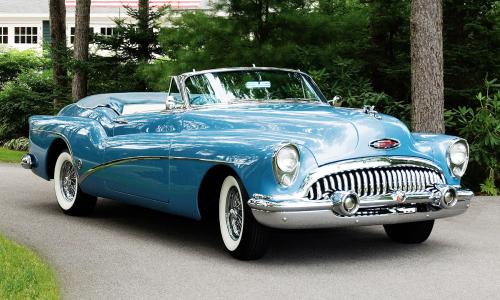
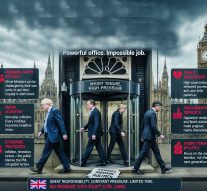
THERE was a time when British prime ministers seemed almost permanent fixtures of national life. Margaret Thatcher governed for more than a decade. Tony Blair lasted 10 years. Even their departures felt like the end of eras rather than changes of management.
Today, Downing Street resembles a short-term rental.
If Andy Burnham succeeds Keir Starmer, Britain will have cycled through seven prime ministers in just ten years, a pace of political turnover more commonly associated with fragile democracies than one of the world’s oldest parliamentary systems. The question is no longer why individual leaders fail. The more intriguing question is why the office itself appears unable to hold them.
The decline began, fittingly, with a gamble.
DAVID Cameron entered the 2016 Brexit referendum expecting to settle a long-running argument inside the Conservative Party. Instead, he detonated the foundations of British politics. The vote to leave the European Union exposed fractures that had been quietly widening for years: between cities and towns, graduates and non-graduates, younger and older voters, globalists and nationalists. Britain did not merely vote on Europe. It revealed that it no longer agreed on what kind of country it wanted to be.
Every prime minister since has governed in the shadow of that moment.
THERESA May inherited an impossible brief, attempting to deliver Brexit while reconciling mutually incompatible demands. Boris Johnson succeeded where she failed, pushing Britain out of the European Union and winning a commanding parliamentary majority. Yet even his triumph proved temporary. Scandal overwhelmed authority. Liz Truss lasted only weeks before financial markets effectively delivered a vote of no confidence in her economic experiment. Rishi Sunak restored stability but not public faith. Starmer arrived promising renewal and soon found himself confronting the same forces that had exhausted his predecessors.
Different personalities. Different ideologies. The same ending.
PART of the explanation lies in the transformation of politics itself. Modern leaders operate inside a relentless feedback loop of opinion polls, social media outrage and round-the-clock news coverage. Political mistakes that once might have faded over months now become existential crises within days. Authority has become more fragile because scrutiny has become constant.
At the same time, voters have become less loyal and more restless. Traditional party identities that once anchored British politics have weakened considerably. Millions of voters now move between parties with an ease that would have seemed extraordinary a generation ago. For MPs, that volatility creates panic. A bad poll is no longer dismissed as a temporary setback; it is treated as an early warning of electoral extinction.
The rise of Nigel Farage’s Reform UK has intensified those anxieties. What began as a protest vehicle has evolved into a genuine political threat, feeding on public frustration over immigration, economic stagnation and a widespread belief that Britain’s governing class has lost touch with everyday concerns. For nervous politicians, leadership changes increasingly appear to be the quickest available remedy, even when the underlying problems remain stubbornly unchanged.
There is also a deeper irony at work. Britain retains a parliamentary system, yet its politics has become increasingly presidential. Elections revolve around leaders. Public expectations focus on individuals. Prime ministers are expected to solve structural problems that have accumulated over decades. When those problems inevitably persist, disappointment becomes personal.
Replacing the leader offers the illusion of renewal.
THAT may now be the opportunity confronting Andy Burnham. His supporters view him as a politician with a stronger connection to voters outside Westminster and a clearer understanding of the frustrations reshaping modern Britain. If he reaches No. 10, he will arrive carrying the hopes that accompanied nearly every recent successor.
But Britain’s recent history offers a cautionary lesson. The turbulence consuming its leaders is not merely a matter of personality or competence. It reflects a political system struggling to adapt to an era of fragmentation, distrust and perpetual disruption.
The revolving door at Downing Street may therefore be less a story about prime ministers than about the country they are trying, and increasingly failing, to govern. Until Britain resolves the deeper tensions exposed a decade ago, the occupants of No10 may continue to come and go with remarkable speed, while the instability that unseated them remains firmly in place.

 LETTER TO THE EDITOR FOR ISSUE DATED SEPTEMBER 26, 2026
 DIVIDED EVEN IN DEATH!By Rajan Narayan
 IF YOU CLAIM THE CREDIT, TAKE THE RESPONSIBILITY!By Joquim Goes
 8 EMAILS IN 7 DAYS, BUT VALID GOA VOTERS STILL LEFT OUT: EC’S FLAWED SYSTEM!By Ritika Chopra
 MAKE IN INDIA: UNITED PAYMENTS INTERFACE India’s digital local leap to global benchmark…By Arvind Pinto
 BRING BACK THE FLATBREADS OF INDIA!
 EARLIER YOU KNOW, THE MORE YOU CAN DO Dementia diagnosis matters… By Dr Vailanki Nazira Raposo
 YOUNG LOVE IS A CRIME IN BIHAR!
 THE BOAT BECKONS, THE UNICORN WATCHES! By Prema Viswanathan
 WEEKEND UPDATES
 LETTER TO THE EDITOR FOR ISSUE DATED SEPTEMBER 19, 2026
 ELEVATED HIGHWAY TO HELL!
 MEDICAL DEVICES LOOT!By GS Mudur
 HOSTILE ACT BY PAKISTAN: `PNS HUNAIN’ TRIED TO DISRUPT OUR NAVAL SURVEILLANCE! By Dr Olav Albuquerque & Deborah Albuquerque
 BLACK MONEY IN POLITIAL PARTIES: ADR’s Alarming Revelations By Arvind Pinto
Goa is abuzz with excitement as vintage bike and car owners, users, collectors and fans are decking […]