Goa is abuzz with excitement as vintage bike and car owners, users, collectors and fans are decking […]
Old is Gold
October 4, 2016
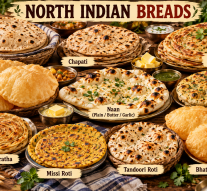
IT’S a fact that in Goa at least the flatbreads take a second place to baked bread! Over 500 years of Portuguese colonial rule the Portuguese made sure baked bread loaves of various dimension could go places but far more older than bread the government of Goa is unable to make the traditional flatbreads of most Hindu homes available at their doorstep like the poder’s leavened baked loaves. Call it Portuguese or English European bread if you like, the staff of life for countries of the West and today indeed, available in various versions across South Asia and the countries they colonized in South East Asia….in the process of taking a shine to soft and not so soft wholesome baked bread loaves, alas, the traditional unleavened flatbreads of local native homes gave way to “English double-roti.” Most anywhere you go you go you will half-a-dozen versions of leavened baked bread from industrial factories to local bakeries — but look for the glorious spectrum of traditional home unleavened flatbreads of either wheat or millet or rice or gram flour and you’ll be looking high and low.
Call them loosely “roti” or “chappati” if you wish and of course there is the historical mitti ka tandoor in many upmarket eateries, which do turn out crisp hot tandoori wheat flour roti which may come austerely plain – just tandoori-baked crisp rounds of hot flatbread buttered or butter-garlic laced. Then there’re the fancy white naan, the gossamer slim roomali, stuffed kulcha and Malabar paratha and some more versions made from yeasted refined wheat flour doughs. Ask for a makki-di- roti (cornmeal roti) or even a mildly savory crusty missi roti of gram flour or roasted gram flour called sattu ….you may find these flatbreads at the heritage eatery of Sher-i-Punjab down 18 June road.
But harder to find are the millet flatbreads of ragi or jowar or bajra flour, or if you do find them by lucky chance it may be at some really niche community cuisine kitchen upmarket eatery or restaurant…a solo bhakri/roti/chappati will arrive at an exorbitant price! Depending how these varied flatbreads are made they may be thick bhakri style or much thinner softer style and of course laced with shudh ghee if you ask for it. Wheat flour chappati may be slightly robust with ghee laced in while binding the dough…then the millet flours too may be steam cooked before rolled out into softer chappati, or even the finest phulka…the last is not to be found easily unless you’re in a really in some good north Indian kitchen. Say a Gujarati kitchen where they do the divine superfine mal mal “rotli” — eaten usually with the day’s veggie “shaak” or curry “tuver-ni-dal.”
Or depending on a special occasion find freshly extracted ripe mango ras or pistachio and almond and cardamom or nutmeg spiked sweet curd “shrikhand.” Who doesn’t recognize shrikhand? Say it’s a flavored dairy “jam” for many Indians to savor with flatbreads. We also have the puran poli Guju or Maharashtrian or southern style. Lots of variety amongst the sweet flatbreads of north and south India!
Then think of the much loved fryum “puri” (finer “luchi”of West Bengal made of pure maida) and my mother used to make the most scrumptious “masala puri” dotted with ajwain (thymol seeds)…utter delights for the senses, usually an evening meal of masala-ni-puri and sweet spicy shredded sun-cooked “chundo” pickle. But these are fryum flatbreads?
Other flatbreads? I would say include Rajasthan’s “bhati” which are crusty balls of wheat flour balls cooked in woodsy or coal fires, you have to dunk them in ghee and crumble them into a choora to enjoy with a thick aromatic dal….a real eating experience of rich savory sweet blend, later comes the sweeter “choorma” (which is just further pounded fine bhati but the usual combo is “dal-bhati,” hard to find the real version although at some of the Goan festival fairs a dozen odd Rajasthani traditional cooks turn up to present Rajasthani fare for visitors who flock in for shopping this, that and the other for their households.
BUT to stay with the glorious range of flatbreads of India, they offer better nutrition values because they are mostly made of wholegrain flour be it of cereals or millets. Cereal grains tend to be acidic in nature while the millets are considered as alkaline fare and offer more fiber which we know now is an incredible gut keeper or so to speak. Without enough fiber in your meals you would be fighting constipation more often than not.
Of course our main enzyme and fiber needs and also vitamin C (which is destroyed upon heating) comes from salad veggies, sprouts, and now micro-sprouts…lots of lettuce, cucumber, tomato, radish, carrot, beetroot…all best served up in various curd-based raita or in various tangy dressings (my favorite is usually sea salt, grated black pepper, lemon juice, honey, dash of good olive oil maybe).
Oh yes, a lot of flatbreads may be served wrapped around a salad filling a la “kachumbar” and appreciated. Most kachumbar are our very own finely diced or grated salad side dishes and they may enjoy a mild tempering in oil with mustard seeds, asafetida. At one time I remember I loved to julienne fine cabbage and carrot and temper it in bit oil, sizzle of mustard seeds and asafetida, quick stir-frying before seasoning with sea salt, squeeze of lemon juice. A kind of stir-fried kacha pakka as called “kachumbar” – not totally raw but somewhat softened with stir-frying. In Maharashtra they have all these veggie “thecha” combos of green coriander, green chili, green mango, coconut gratings, garlic, peanuts….yummylicious with any of the flatbreads. Actually, the thecha are making a real comeback!
Most flatbreads would mean you have to chew a bit, sort of work your mouth muscles. But I’ve seen many seniors just crumble a millet flatbread into a bowl of milk, maybe chop in a banana…and appreciate all of it with dentures on or dentures out! It makes for a fine minimal early evening supper meal. One of the millet flatbreads stirred into liquid sustenance.
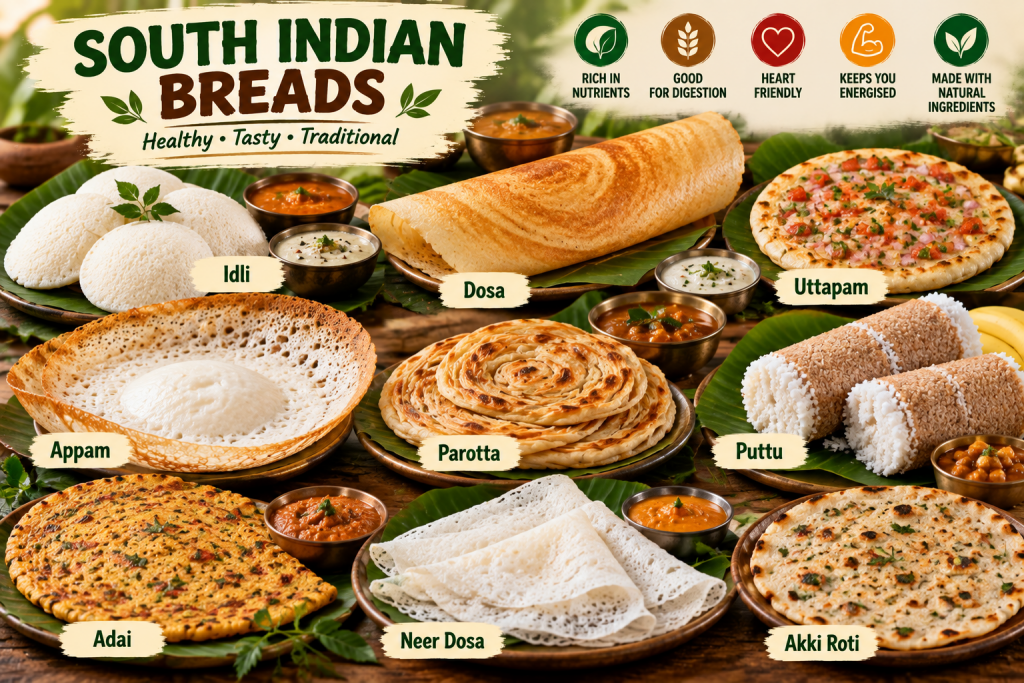
And I haven’t even around to chatting up the steamed flatbreads from fermented batters of rice or millet and pulses…the steam cooked or shallow soft or crisp flatbreads of southern India are familiar the country over – the dosa range, the uttappam range, the appam range. In Goa we have similar fare going by names “amboli” and “polle.” The Gujarati home have their sweet and savory “pudla”…thalipith in Maharashtrian homes. Flatbreads are so much more worth courting and romancing. Don’t know about you but I would shove any baked English bread loaf aside for one of the flatbreads of my country! Needless to tell you today’s breads don’t offer as much nutrition values as most of our flatbreads still do (this discounting the flatbreads made of refined wheat flour, maida)…
If you have forgotten, start to make your own flatbreads at home or learn how to. Most are actually faster to do than baked breads which may entail too much fussing vis-à-vis decorative tidbits! I am biased? Biased for a cause – to revive the consumption of the flatbreads of India…and make them easily available and not restricted to homes or a hand full of upper crust eateries.
 LETTER TO THE EDITOR FOR ISSUE DATED SEPTEMBER 26, 2026
 DIVIDED EVEN IN DEATH!By Rajan Narayan
 IF YOU CLAIM THE CREDIT, TAKE THE RESPONSIBILITY!By Joquim Goes
 8 EMAILS IN 7 DAYS, BUT VALID GOA VOTERS STILL LEFT OUT: EC’S FLAWED SYSTEM!By Ritika Chopra
 MAKE IN INDIA: UNITED PAYMENTS INTERFACE India’s digital local leap to global benchmark…By Arvind Pinto
 EARLIER YOU KNOW, THE MORE YOU CAN DO Dementia diagnosis matters… By Dr Vailanki Nazira Raposo
 YOUNG LOVE IS A CRIME IN BIHAR!
 THE BOAT BECKONS, THE UNICORN WATCHES! By Prema Viswanathan
 WEEKEND UPDATES
 LETTER TO THE EDITOR FOR ISSUE DATED SEPTEMBER 19, 2026
 ELEVATED HIGHWAY TO HELL!
 MEDICAL DEVICES LOOT!By GS Mudur
 HOSTILE ACT BY PAKISTAN: `PNS HUNAIN’ TRIED TO DISRUPT OUR NAVAL SURVEILLANCE! By Dr Olav Albuquerque & Deborah Albuquerque
 BLACK MONEY IN POLITIAL PARTIES: ADR’s Alarming Revelations By Arvind Pinto
 `KHANDVI MILLE-FEUILLE’ AT BRICS ALL VEG BUFFET!
Goa is abuzz with excitement as vintage bike and car owners, users, collectors and fans are decking […]