Goa is abuzz with excitement as vintage bike and car owners, users, collectors and fans are decking […]
Old is Gold
October 4, 2016
A FORGOTTEN name, a missed appointment, difficulty finding familiar words, or repeatedly asking the same question may sometimes be dismissed as a normal part of ageing. But when these changes become persistent or begin to interfere with everyday life, they deserve attention. Recognising the early signs of cognitive decline can be the first step towards timely assessment, appropriate support and better planning.
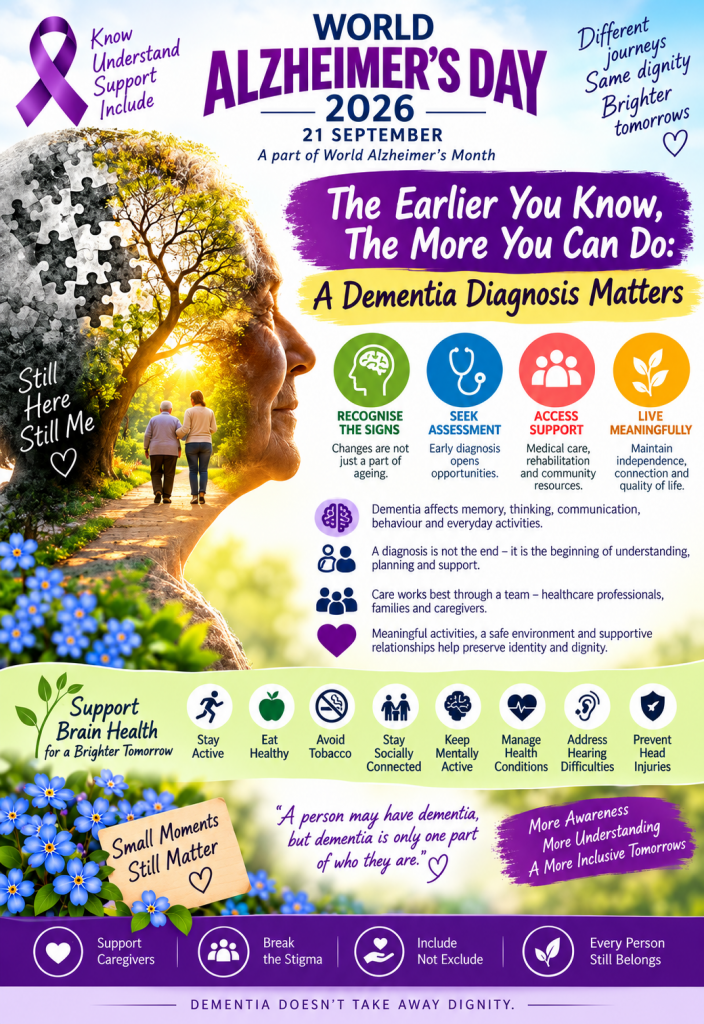
Observed annually on September 21, World Alzheimer’s Day is an important part of World Alzheimer’s Month, which raises awareness about Alzheimer’s disease and other forms of dementia. The 2026 campaign carries a powerful message: “The Earlier You Know, The More You Can Do: A Dementia Diagnosis Matters.”
Dementia is not a single disease but an umbrella term for a group of conditions that affect memory, thinking, communication, behaviour and the ability to perform everyday activities. Alzheimer’s disease is the most common form of dementia. Importantly, dementia is not a normal part of ageing, although the risk increases with age.
As populations age, dementia is becoming an increasingly important public health concern. Its effects extend beyond the individual, influencing families, caregivers, communities and healthcare systems. A person may gradually experience difficulty managing finances, preparing meals, taking medication correctly, travelling independently, maintaining personal care, communicating effectively or participating in familiar social activities.
Why Early Diagnosis Matters
ONE of the greatest challenges is that early symptoms may be overlooked or attributed simply to getting older. Persistent difficulty remembering recent events, managing familiar tasks, planning, finding words, navigating familiar places, making decisions or maintaining usual activities should not be ignored.
A dementia diagnosis is not the end of the journey—it can be the beginning of understanding, planning and appropriate support.
Early assessment can help identify the underlying cause of cognitive changes and allow individuals and families to explore appropriate medical management, rehabilitation, safety strategies, support services and future planning.
A timely diagnosis can also give individuals an opportunity to express their wishes, participate in decisions about their care and plan for the future while they are able to do so.
Dementia Is More Than Memory Loss
MEMORY loss is one of the best-known features of Alzheimer’s disease, but dementia can affect much more than memory. Attention, communication, orientation, judgement, problem-solving, visual perception, mood and behaviour may also be affected.
These changes can interfere with the everyday occupations that give structure and meaning to life — dressing, bathing, preparing meals, shopping, working, maintaining a home, pursuing hobbies and spending time with family and friends.
The goal of dementia care is therefore not simply to manage memory loss, but to help the person remain as independent, safe, engaged and connected as possible.
Care Requires a Team
DEMENTIA care is most effective when healthcare and rehabilitation professionals work together. Depending on individual needs, the multidisciplinary team may include neurologists, geriatricians, psychiatrists, physicians, nurses, rehabilitation physicians, Occupational Therapists, physiotherapists, speech and language therapists, psychologists, dietitians, social workers and other professionals.
Families and caregivers are equally important members of this team.
Each professional contributes a different area of expertise, while the person living with dementia remains at the centre of care. This collaborative approach allows medical, cognitive, physical, emotional, communication, nutritional, safety and social needs to be addressed together.
The Role of Occupational Therapy
Occupational Therapy focuses on helping people continue participating in the activities that are meaningful, necessary and important to them for as long and as safely as possible.
Occupational Therapists assess how changes in cognition, physical abilities, sensory processing, mood and behaviour affect everyday activities. Intervention is then adapted to the individual’s abilities, routines, environment, interests and goals.
Occupational Therapy may support activities such as dressing, grooming, bathing, eating, toileting, household tasks and medication routines. Simplified routines, visual cues, memory aids, environmental prompts and task modification can make activities easier to understand and complete.
Home safety is another important area. Occupational Therapists can identify environmental risks and recommend appropriate modifications to reduce falls, accidents and confusion while preserving as much independence as possible.
Rather than simply taking activities away because a person has dementia, Occupational Therapy looks for ways to adapt the activity or environment so that the person can continue participating safely.
Cognitive strategies may support attention, orientation, sequencing, problem-solving and memory. Meaningful activities such as music, gardening, art, cooking, reading and familiar household tasks can also be incorporated according to the individual’s interests and abilities.
Preserving Identity Through Meaningful Activities
DEMENTIA may gradually change what a person can do, but it does not erase their identity, history, preferences or emotional needs.
A person who enjoyed gardening may still find meaning in watering plants or arranging flowers. Someone who loved cooking may participate in simple meal preparation. A grandparent may continue sharing music, stories and familiar family traditions.
These activities may appear simple, but they can provide purpose, familiarity, connection and a sense of belonging.
Occupational Therapy therefore looks beyond the diagnosis and asks a fundamental question:
“What matters to this person, and how can we help them continue doing it?”
This approach reflects the growing recognition that rehabilitation has an important place in dementia care. Maintaining function, independence and participation can remain meaningful goals even as a condition progresses.
Supporting the Caregiver
DEMENTIA affects the entire family. As abilities change, caregivers may experience physical exhaustion, emotional stress, social isolation and financial challenges.
Supporting caregivers is therefore an essential part of dementia care. Education, appropriate communication strategies, respite opportunities, community resources and professional guidance can help families provide effective support while also protecting their own health and well-being.
A person living with dementia needs care, but the person providing that care needs support too. \
Protecting Brain Health
NOT every case of dementia can be prevented, but several risk factors can be modified. Regular physical activity, a healthy diet, avoiding tobacco, limiting harmful alcohol use, maintaining social engagement, staying mentally active and managing conditions such as hypertension, diabetes and high cholesterol can contribute to healthier brain ageing.
Addressing hearing difficulties, preventing head injuries and maintaining meaningful social connections are also important aspects of lifelong brain health.
Brain health is not something we should think about only in old age—it is a lifelong responsibility.
Moving Beyond Stigma
ONE of the greatest challenges faced by people living with dementia is stigma. A diagnosis should never become a reason to exclude someone from family decisions, social activities, community life or meaningful relationships.
A person may have dementia, but dementia is only one part of who that person is.
FAMILIES and communities can make a significant difference by communicating patiently, creating supportive environments, encouraging participation and treating people living with dementia with dignity and respect.
The Earlier You Know, The More You Can Do
WORLD Alzheimer’s Day 2026 reminds us that recognising changes early and seeking appropriate assessment can open important opportunities.
The earlier a diagnosis is understood, the earlier individuals and families can begin planning, accessing support, adapting routines and making informed choices about care and everyday life.
Medical care, rehabilitation, caregiver education, environmental modification and community support can work together to help individuals maintain function and participation for as long as possible.
Occupational Therapy has an important role within this journey — not simply by focusing on what a person has lost, but by identifying what remains possible and finding meaningful ways to support continued participation.
Dementia may change a person’s abilities, but it should never take away their dignity, identity or right to participate.
The earlier you know, the more you can do—and every opportunity to preserve independence, connection, purpose and quality of life is an opportunity worth taking.
(© September 2026 Dr. Vailanki Nazira Raposo (OT). All rights reserved. No part of this article may be reproduced, distributed, or copied without permission from the author.)
(Dr Vailanki Nazira Raposo (OT) is an Occupational Therapist at Occupational Therapy OPD 17, Department of Orthopaedic Surgery, Goa Medical College & Hospital, Bambolim)
 LETTER TO THE EDITOR FOR ISSUE DATED SEPTEMBER 26, 2026
 DIVIDED EVEN IN DEATH!By Rajan Narayan
 IF YOU CLAIM THE CREDIT, TAKE THE RESPONSIBILITY!By Joquim Goes
 8 EMAILS IN 7 DAYS, BUT VALID GOA VOTERS STILL LEFT OUT: EC’S FLAWED SYSTEM!By Ritika Chopra
 MAKE IN INDIA: UNITED PAYMENTS INTERFACE India’s digital local leap to global benchmark…By Arvind Pinto
 BRING BACK THE FLATBREADS OF INDIA!
 YOUNG LOVE IS A CRIME IN BIHAR!
 THE BOAT BECKONS, THE UNICORN WATCHES! By Prema Viswanathan
 WEEKEND UPDATES
 LETTER TO THE EDITOR FOR ISSUE DATED SEPTEMBER 19, 2026
 ELEVATED HIGHWAY TO HELL!
 MEDICAL DEVICES LOOT!By GS Mudur
 HOSTILE ACT BY PAKISTAN: `PNS HUNAIN’ TRIED TO DISRUPT OUR NAVAL SURVEILLANCE! By Dr Olav Albuquerque & Deborah Albuquerque
 BLACK MONEY IN POLITIAL PARTIES: ADR’s Alarming Revelations By Arvind Pinto
 `KHANDVI MILLE-FEUILLE’ AT BRICS ALL VEG BUFFET!
Goa is abuzz with excitement as vintage bike and car owners, users, collectors and fans are decking […]