Goa is abuzz with excitement as vintage bike and car owners, users, collectors and fans are decking […]
Old is Gold
October 4, 2016
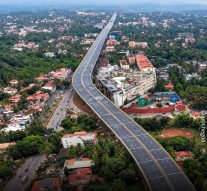
None of the political bosses ranging from Nitin Ghadkari to Chief Minister Pramod Sawant, PWD MInister Digambar Kamat and Rohan Khaunte who took credit for the Rs650crore elevated corridor are willing to take responsibility for rushing the inaugration and the design faults.
FOR a few glorious days, the Porvorim elevated corridor was a monument to achievement. It belonged to everyone in government. There were speeches, photographs, pre-opening drive-throughs, selfies and congratulations. The Rs641-crore corridor was presented as a triumph of infrastructure, a project that would finally lift Porvorim above the congestion that had tormented it for years. Ministers stood together to celebrate, a dream that had finally come through.
Then the cameras left. Within days of opening, two people were dead after an accident, sometime later, more accidents, and then more. Restrictions were imposed and commuters were again struggling with congestion and confusion. Now ministers are back on the road, inspecting, meeting and searching for solutions to problems that should have been anticipated long before the ribbon was cut.
SOME years ago, I lived in Japan. What stays with me is not simply the extraordinary infrastructure, but the patience that preceded it. Before a road was widened, a bridge built or a neighbourhood disturbed, people met. Then they met again. Engineers worried about gradients and drainage. Planners studied traffic flows. Administrators considered pedestrians, access to homes and businesses, emergency vehicles and what a project would mean twenty years later. Communities were listened to because people who live in a place know things that cannot always be seen on a drawing in a government office.
At times, the deliberation seemed excessive.
Only later did I understand its wisdom. By the time the excavator arrived, most of the thinking had already been done.
There was another lesson. Public infrastructure did not require big banners, giant cut-outs of politicians congratulating themselves for spending taxpayers’ money. There were no faces towering above citizens who had paid for the bridge beneath them. Government did not need to transform every public work into political theatre. The achievement was not the ceremony. The achievement was that it worked.
GOA increasingly appears to have reversed that philosophy. Announce. Celebrate. Build. Inaugurate. Discover the problems. Call new experts and apply some band- aid, hoping that the wound will heal.
Between the foundation stone and the ribbon-cutting lies the least glamorous part of governance: supervision. There are no garlands for checking drainage plans. No television cameras at the tenth technical meeting. No social-media reels celebrating the engineer who spots a design flaw before concrete is poured. But that is where good government happens.
Now there are allegations by the former PWD minister that the original Porvorim plans were altered. If so, Goans deserve facts, not another round of finger-pointing. What changed? Who requested it? Who authorised it? What technical advice supported it? Were traffic consequences modelled? Were local representatives and independent traffic experts consulted?
These questions should have been exhausted before the first excavator arrived. Instead, Rs641 crore later, we are asking them now. And Porvorim is not an aberration.
Consider Unity Mall. The Centre agreed in principle to provide Rs100 crore. Goa proceeded with a roughly Rs132-crore project at Chimbel despite fierce local opposition. Eventually, the government abandoned the location and began searching for another. By March 2026, Rs7.1 crore had already been disbursed.
HOW much anger, delay and public money might have been saved had villagers, local representatives, planners, environmental scientists and independent experts been brought around a table when Unity Mall was still lines on paper? Too often in Goa, people who know a place best are invited into the conversation only after they begin protesting. That is not consultation. It is damage control.
And there is something troubling about the way Central government grants are discussed, as though money from Delhi somehow costs Goa nothing. There is no such thing as government money. There is only public money. It comes from our GST, our income taxes and taxes embedded in almost everything we buy, including the coffins that take us to our graves. A Central grant is therefore not an invitation to spend. It is an obligation to spend wisely. Every crore wasted through poor planning is a crore unavailable for schools, hospitals, water supply, sewage systems and infrastructure communities actually need.
Panjim’s Smart City works should have taught us this already. Years of excavation, barricades and disruption generated persistent complaints about coordination and planning; the problems became serious enough to draw High Court monitoring.
Yet the choreography remains unchanged. When a project begins, everybody wants the photograph.
When it opens, everybody wants the credit. When something goes wrong, everybody wants an alibi.
The engineer. The consultant. The contractor. The previous minister. The changed plan. Delhi. Somebody else. Government cannot work this way.
AND Porvorkars deserve one more answer. Who was this enormous corridor designed primarily to serve? Local commuters? Airport connectivity? Tourism? Commercial freight? Coal transportation?
Do not give us another speech. Publish the traffic projections, freight studies, original plans and subsequent design changes. Let Goans read them and decide for themselves. Ministers cannot stand shoulder to shoulder beneath the lights when a project opens and scatter when the questions begin. If political credit is collective, political accountability cannot suddenly become somebody else’s department.
Perhaps that is the most important lesson Goa can borrow from Japan. Development is not measured by the size of the grant, the speed with which an excavator arrives, the number of politicians on a stage or the height of their faces on a hoarding. It is measured much later, when the speeches have been forgotten, the ceremonial lamps extinguished, the banners taken down and the cameras have moved on.
Then there is only the road. And the people who must live with it.
If the stage belongs to everyone when credit is being claimed, responsibility cannot belong to no one when things go wrong.
 LETTER TO THE EDITOR FOR ISSUE DATED SEPTEMBER 26, 2026
 DIVIDED EVEN IN DEATH!By Rajan Narayan
 8 EMAILS IN 7 DAYS, BUT VALID GOA VOTERS STILL LEFT OUT: EC’S FLAWED SYSTEM!By Ritika Chopra
 MAKE IN INDIA: UNITED PAYMENTS INTERFACE India’s digital local leap to global benchmark…By Arvind Pinto
 BRING BACK THE FLATBREADS OF INDIA!
 EARLIER YOU KNOW, THE MORE YOU CAN DO Dementia diagnosis matters… By Dr Vailanki Nazira Raposo
 YOUNG LOVE IS A CRIME IN BIHAR!
 THE BOAT BECKONS, THE UNICORN WATCHES! By Prema Viswanathan
 WEEKEND UPDATES
 LETTER TO THE EDITOR FOR ISSUE DATED SEPTEMBER 19, 2026
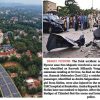 ELEVATED HIGHWAY TO HELL!
 MEDICAL DEVICES LOOT!By GS Mudur
 HOSTILE ACT BY PAKISTAN: `PNS HUNAIN’ TRIED TO DISRUPT OUR NAVAL SURVEILLANCE! By Dr Olav Albuquerque & Deborah Albuquerque
 BLACK MONEY IN POLITIAL PARTIES: ADR’s Alarming Revelations By Arvind Pinto
 `KHANDVI MILLE-FEUILLE’ AT BRICS ALL VEG BUFFET!
Goa is abuzz with excitement as vintage bike and car owners, users, collectors and fans are decking […]