Goa is abuzz with excitement as vintage bike and car owners, users, collectors and fans are decking […]
Old is Gold
October 4, 2016
AND a few stray thoughts for yet another Saturday. For a Saturday following the week when we discovered that the historic British Public School punishment of children still prevails in India. For a Saturday following the week when Hindustan Lever withdrew, or at least changed the name of its most successful fairness cream – “Fair & Lovely.” For a Saturday following the week when social and print media claimed that Bisleri packaged water is unsafe. For a Saturday following the week when the continuing saga of the Porvorim six-lane corridor continued.
HUMILIATING PUNISHMENTS
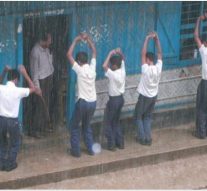
AND a few stray thoughts on the discovery that the historic British Public School punishment of children still prevails in India. In schools in India and in Goa the standard punishment for naughty kids is to make them stand in a corner in the classroom facing the wall. There are other more cruel and humiliating practices. Like making the kid kneel down for a long time. Or standing up on a bench. It is strange that the practice of humiliating children continues in our schools. While most private and aided schools have given up the practice of corporal punishment, government primary schools continue the practice.
This is not new as I remember that 70 years ago when I was in the 6th standard I used to be beaten on the knuckle for my poor marks in maths. Ever since that episode I develop a hatred for maths.
CORPORAL punishment was also very common in schools run by Catholic organizations, particularly the Jesuits. I remember the principal of St Joseph Indian School in Bengaluru actually using a cane to punish the students who came late or scribbled in their textbooks and other minor offenses.
What I am really surprised by is that the practice was carried on even in the Nehru- Indira Gandhi family. Sonia Gandhi reveals that Rajiv Gandhi made Priyanka stand in a corner facing the wall. A defiant Priyanka refused to apologize and was left standing in the corner facing the wall for more than two hours. Among other punishments inflicted by Rajiv Gandhi on Rahul and Priyanka was writing lines as a repetitive punishment, such as “I will do my homework on time.”
Apparently, Indira Gandhi used to force her senior political colleagues, like ND Tiwari, who was the president of the Congress, also stand in a corner facing the wall. Sparing the rod and spoiling the child is no longer relevant, particularly in the digital age.
‘FAIR & LOVELY’ NO MORE
AND a few stray thoughts on Hindustan Lever withdrawing or at least changing the name of its most successful fairness cream – “Fair & Lovely.” I recall writing a cover story on Hindustan Lever way back in 1981 when I was in “Business India.” As part of the investigation into Hindustan Lever, I visited their research centre, which was then located very close to my Andheri (East) residence in Mumbai. The then head of the research centre, Dr S Ganguly, boasted that HL was developing a fairness cream that would be a bestseller. Ganguly later became the chairman of Hindustan Lever.
For many decades, “Fair & Lovely” remained a most popular fairness cream. The heavy promotion of “Fair & Lovely” suggested that lighter skin brought greater social acceptance, employment, and marriage proposals. The prejudice against dark girls persists with parents of fair young 20-year-old sons strongly objecting their association with any dark skin girl from another community.
In Indian tradition, arranged marriage, the color of the bride’s skin is always a major issue. Women’s organisations started a movement insisting that brown and black are also beautiful. Following the protest, Hindustan Lever withdrew two controversial television advertisements. Following the black life matters movement, an international criticism of fairness creams, Lever dropped the word “Fair” and renamed their brand – “Glow & Lovely.” Though the label may have changed from fairness to glamour, the product continues to be the same. There are newer Indian products like “White Tone” which are now aggressively marketed. All fairness creams are primarily bleaching agents. They all contain minute amounts of mercury. Excessive amounts of mercury can even cause kidney failure.
`BISLERI’ WATER UNSAFE?
AND a few stray thoughts on social and print media claims that Bisleri packaged water may be unsafe to drink or use in cooking. This is based on one particular batch of the mineral water collected by not the Food & Drug Administration in Goa, but a food safety organization in Delhi. The FASSI declared that a particular batch of Bisleri drinking water was unsafe. The report did not claim that the product Bisleri as a brand was unsafe.
This is where the Reliance group stepped in with a vicious campaign against Bisleri. Coincidentally, the campaign came just before the launch of Campa Fresh, a packaged water brand recently introduced in the market by Reliance Retail. As with other Reliance products like Reliance SIM cards and phones, initially Campa Sure was priced lower than Bisleri, at Rs15 for a two-liter bottle. Incidentally, Campa Sure is the only mineral water bottle available at currently on at the International Film Festival of India (IFFI) venues. Campa Sure is one of the sponsors of this IFFI.
The Campa brand has an interesting history. When the Janata Dal government achieved power at the centre in 1977, Coca-Cola was thrown out of India by then industries minister, George Fernandes. The Janata government encouraged a local bottling firm managed by the Singh family to launch Campa Cola.
There were also Campa Orange and Campa Lime. The Campa brand never succeeded. The Parle beverages, which were owned by an Indian businessman, P V Chauhan, introduced Thums Up, Limca and Gold Spot which became very popular. When Coco-Cola return in 1990 along with Pepsi, Campa faded out. Though Thums Up continued to dominate the market. In August 2022, Reliance acquired the Campa brand. In March 2023, Reliance re-launched Campa Cola, Campa Lemon and Campa Orange. Parag Hede has posted on social media that Campa Cola tastes like cough syrup. Bisleri has been around for 37 years and there has never been any questions about its quality.
PORVORIM 6-LANE CORRIDOR WOES
AND a few stray thoughts on the continuing saga of the recently arrived Porvorim six-lane corridor. It is now official that two-wheelers have been permanently banned from the Rs700 crore monument to the ego of Rohan Khaunte. The PWD, presided over by Digambar Kamat, has prohibited two-wheeler riders from using the Porvorim flyover.
According to the advisory issued by the executive engineer, commuters travelling towards Panaji on two-wheelers must compulsorily take the exit provided before the Ticlo Diesel Pump. For vehicles proceeding towards Panaji, an entry has been provided after the Ticlo Diesel Pump. All vehicles except two-wheelers are expected to use the elevated corridor. On the Guirim right-hand side, vehicles proceeding towards Mapusa must take the exit from the flyover opposite the RRSM office. Rohan Khaunte had claimed that the flyover has been built for the benefit of Porvorim residents. But the bulk of the residents of Porvorim will not be able to use this six-lane fancy flyover.
DIGITAL TECHNOLOGY FACTS
AND a last stray thought on an ad issue in which the Pramod Sawant government claims that 65,000 students and 442 schools are covered under the CARES coding and robotic scheme. The ad claims that 4,339 coding devises and 2,444 robotics kits have been supplied. The Ayurveda doctor Dr Sawant apparently is not aware that AI has taken over coding which is why thousands of software engineers in companies like TCS and Infosys are out of job. In the age of AI there are no jobs for fresh computer engineers in coding. Coding is yesterday’s technology. Similarly, nobody makes robots mechanically any longer. It is AI all the way. Never mind that there is stiff opposition against the huge data banks which power AI all over the world.
These data banks comprise of hundreds of kms of supercomputers powered by Jensen Huang of Nvidia. Unlike your common computer CPU this super power chips called graphics processing units. The computers heat up very fast because of the load on them. Therefore, they require millions of gallons of water. Millions of megawatts of power are also needed to run the data centre. The earliest form of AI was the cloud, where you could save data as an alternative to your hard disk. Incidentally, the shares of Nvidia, which is the principal supplier of hardware for AI and Anthropic — the AI software company, are falling steeply due to fears of a threat to planet earth. Anthropic has admitted that AI could pose a threat to the human race.
 57th IFFI 2026: IT’S BEEN A YEAR OF RECOGNITION FOR GOAN CINEMA! By Our Special Correspondent
 IFFI 2026 EATING OUT QUITE GRACIOUS!
 WATER QUALITY: UNDERSTANDING DRINKING WATER CHEMISTRY! By Dr Amit Dias
 CONCRETE OVER CANOPY: Goa’s New FAR Rules Risk Regularising Yesterday’s Overreach! By Dr Olav Albuquerque & Deborah Cordeiro
 THE CONTRADICTIONS OF INDIAN CRONY CAPITALISM! By Arvind Pinto
 WEEKEND UPDATES
 LETTER TO THE EDITOR FOR THE ISSUE DATED NOVEMBER 21, 2026
 MY TRYST WITH CINEMA
 ‘AN OCCURRENCE AT OWL CREEK BRIDGE’ MOST OUTSTANDING SUSPENSE FILM
 THE GOAN WEALTH DIVIDE! By Our Special Correspondent
 THE GREAT GOAN PARADOX: CHANGES THAT WE DO NOT NOTICE! By Arvind Pinto
 BALAN NAMBIAR: RITUAL, NATURE & THE ALCHEMY OF FORM! By Prema Viswanathan
 You GUT to GET This Right for Your BRAIN Health! By Dr Amit Dias
 ARE CHILDREN IS UNSAFE IN SCHOOLS?
 GOA’S ONE DAY WINTER SESSION… Sparks debate over executive power and legislative scrutiny!By Dr Olav & Deborah Albuquerque
Goa is abuzz with excitement as vintage bike and car owners, users, collectors and fans are decking […]