Goa is abuzz with excitement as vintage bike and car owners, users, collectors and fans are decking […]
Old is Gold
October 4, 2016
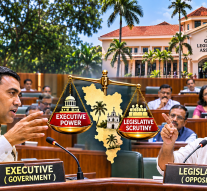
THE Goa state cabinet has approved convening the winter session of the Eighth Goa Legislative Assembly for just a single day on December 16, 2026. Summoned by Goa Governor Pusapati Ashok Gajapathi Raju to meet at 11:30 am at the Assembly Hall in Porvorim, this sitting is expected to be the final legislative session before the state heads into assembly elections in February 2027.
While Chief Minister Pramod Sawant stated that the one-day session is intended to pass a supplementary bill, the decision has drawn sharp criticism from opposition leaders. Beyond the political clash, the truncated schedule raises a fundamental constitutional question: Does the law permit the Governor to summon and prorogue a one-day assembly session? [1]
What the Law Says: Constitutional Authority and Prorogation
FROM a strictly legal standpoint, convening and proroguing a single-day session is completely permissible under Indian constitutional law. But what is legally permissible may not be morally correct.
• No Minimum Duration: Article 174 of the Constitution of India governs the sessions, prorogation, and dissolution of state legislatures. While Article 174(1) mandates that the House must be summoned at least twice a year—and that no more than six months may intervene between the last sitting of one session and the first sitting of the next—it sets no minimum number of sitting days for any given session.
• Power to Prorogue: Under Article 174(2)(a), the Governor holds the explicit constitutional authority to “prorogue the House” (formally terminate a session) from time to time. Similarly, the Rules of Procedure and Conduct of Business of the Goa Legislative Assembly define a “Session” simply as the period between the first meeting upon the Governor’s summons and its prorogation or dissolution, without stipulating a required timeframe.
• Binding Ministerial Advice: Under Article 163 of the Constitution, the Governor does not exercise the power to summon or prorogue independently. As affirmed by the Supreme Court of India in landmark rulings such as Nabam Rebia vs. Deputy Speaker (2016), the Governor is constitutionally bound to act on the aid and advice of the Council of Ministers headed by the Chief Minister. Therefore, once the Goa cabinet advises the Governor to conclude the session after a single day’s business, the Governor is legally empowered—and generally obligated—to issue the prorogation order.
• The Government’s Rationale and Legislative Context
The December 16 sitting comes roughly three-and-a-half months after the previous monsoon session, which took place between August 31 and September 2, 2026—well within the constitutional six-month limit. Following a state cabinet meeting on November 18, Chief Minister Pramod Sawant indicated that the primary legislative business is the passage of a supplementary bill to authorize additional expenditure beyond the annual budget.
With the state administration preparing for the February 2027 assembly polls, the ruling Bharatiya Janata Party (BJP) government has opted for a focused, legally compliant single-day agenda to clear necessary financial business before the Model Code of Conduct comes into effect.
Opposition Criticism: Legal Compliance vs. Democratic Accountability
WHILE the cabinet’s move meets the letter of the law, opposition benches argue it violates the spirit of parliamentary democracy. Leader of the Opposition Yuri Alemao publicly condemned the move as an “insult to democracy” and a “farce of democracy.”
Alemao accused the BJP-led government of deliberately shortening the House’s duration to evade accountability. Echoing these concerns, Congress leader Sunil Kawthankar questioned why the administration would limit legislative time when pressing state matters remain unresolved. Opposition leaders contend that a single sitting — lasting only a few hours —prevents legislators from utilizing vital parliamentary tools like Question Hour, Calling Attention motions, and Private Members’ Resolutions to scrutinize the executive on critical issues:
• Law and Order: Rising crimes against women and children.
• Environment and Infrastructure: The Mhadei River water dispute, hill cutting, land conversions, and coal handling operations.
• Economy and Employment: Mounting public debt, unemployment, and unfulfilled promises regarding government recruitment and household LPG cylinders.
• Governance: Allegations of land grabs, “cash-for-jobs” controversies, and systemic challenges in the education sector.
Looking Ahead to February 2027
The controversy reflects a decade-long trend in Goa’s political landscape: the gradual shrinking of the annual legislative calendar. Critics and civil society groups argue that compressed sessions weaken the legislature’s role as a constitutional check on the executive, allowing bills and grants to pass with minimal debate.
WHEN the House meets at Porvorim on December 16, the legal validity of the one-day session and its subsequent prorogation will not be in doubt. However, the political battle over whether executive efficiency is coming at the cost of democratic scrutiny will serve as a major talking point as Goa heads into the February 2027 elections.
 You GUT to GET This Right for Your BRAIN Health! By Dr Amit Dias
 ARE CHILDREN IS UNSAFE IN SCHOOLS?
 WEEKEND UPDATES
 LETTER TO THE EDITOR FOR THE ISSUE DATED NOVEMBER 14, 2026
 `RAMAYANA’ TURNS `RAVAYANA’?
 THE 10-HEADED RAVANA: WHEN DEMOCRACY LOSES ITS MANY VOICES
 NARKASUR CELEBRATES BAHUJAN SAMAJ CREATIVITY!By Kaustubh Naik
 THE DIGITAL DIVIDE – BRIDGING THE GAP!By Arvind Pinto
 GOA AND MACAU: SHARED HERITAGE, DIFFERENT DESTINIES! By Dr RG Wiseman Pinto
 MUMBAI IS MORE HEALTH CONSCIOUS THAN GOA!
 MORTAL BY DAY, GODDESS BY NIGHT!By Prema Viswanathan
 MAMA MIA ‘UN-COLPO DI FULMINE’… A BOLT OF LIGHTNING!
 The Invisible Pandemic WHEN MEDICINES STOP WORKING Fight Anti-Microbial Resistance! By Dr Amit Dias
 WEEKEND UPDATESLETTER TO THE EDITOR FOR ISSUE DATED NOVEMBER 07, 2026
Goa is abuzz with excitement as vintage bike and car owners, users, collectors and fans are decking […]