Goa is abuzz with excitement as vintage bike and car owners, users, collectors and fans are decking […]
Old is Gold
October 4, 2016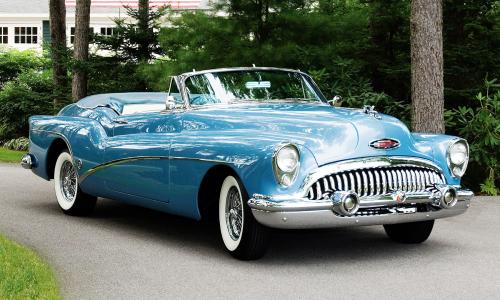
Goa presents a particularly interesting version of India’s billionaire economy. It is a small state with one of the country’s highest per-capita incomes, a powerful property-owning class, established mining and industrial families, and an expanding population of wealthy outsiders investing in land, villas, hotels and hospitality businesses.
Yet the prosperity is not shared equally.
My central argument is that Goa’s wealth divide is not simply between rich and poor. It is between those who own land, property, businesses and financial assets, and those who depend on salaries, daily wages, tourism employment and rented accommodation.
There is also a distinction between the old Goan industrial families and the new wealthy class arriving from Mumbai, Delhi, Bengaluru and overseas.
1. How wealthy is Goa?
Goa’s per-capita income is among the highest in India.
The Goa Economic Survey 2025–26 puts per-capita income at approximately ₹7.09 lakh for 2024–25.
But this is an average, not the income of an ordinary Goan household.
A small number of extremely wealthy property owners, industrialists and business families can push up the average.
The more revealing questions are:
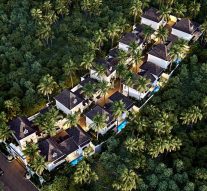
The wealth divide is particularly visible in the contrast between luxury villas in Assagao, Anjuna and Siolim and the modest housing occupied by workers in construction, restaurants and hotels.
2. Who are Goa’s wealthiest business families?
There is no reliable, independently audited ranking of all private Goan family fortunes. Some published estimates are speculative. Nevertheless, several families have established and substantial business interests.
1. Shrinivas Dempo — Dempo Group
Mining, shipping, steel, real estate, education and media. One of Goa’s most established industrial families. A published Hurun-based estimate puts his wealth at approximately ₹1,800 crore, although this should not be confused with an independently audited family balance sheet.
2. Chowgule family
Mining, shipping, shipbuilding, ship repair and education. An important historical industrial house. Family wealth is substantial but not reliably consolidated in public rankings.
3. Dattaraj Salgaocar — Salgaocar family
Mining, shipping, education, healthcare and sports. The family’s business interests extend beyond Goa. Dattaraj is also known for his association with FC Goa.
4. Timblo family
Mining, Fomento Resources, hospitality and property. The family has been an important participant in Goa’s iron-ore economy.
5. Bandekar family
Mining, shipping and associated businesses. One of the established business houses of Goa.
6. Ramnath Kare — DCI Pharmaceuticals
Pharmaceutical manufacturing and business interests, with a long-standing presence in Goa.
Are there Goan dollar billionaires?
These names are not a verified wealth ranking. In particular, published estimates of the Chowgule, Salgaocar, Timblo and Bandekar fortunes should not be treated as established net worth figures.
This is an important distinction.
₹8,000–9,000 crore
Approximate wealth required to qualify as a US-dollar billionaire, depending on the exchange rate.
There is no reliably established Goan-born or Goa-based individual on the major international dollar-billionaire lists that I can substantiate.
Goa has several rupee-billionaire business families, but that is a very different category.
3. The great mining divide
Goa’s traditional industrial wealth was built substantially on mining.
The Dempos, Chowgules, Salgaocars, Timb los and other mining interests benefited from the state’s mineral resources.
Mining generated enormous commercial activity, but the distribution of its rewards deserves examination.
Consider the different participants:
When mining was suspended following the Supreme Court’s 2018 judgment, the economic consequences were felt far beyond the mine owners.
Small contractors, truck operators, workers and associated businesses lost livelihoods.
The larger question is whether the wealth generated during the mining boom was converted into enduring local prosperity or remained concentrated in a relatively small number of business families.
4. The new billionaire invasion: outsiders buying Goa
This may be the most consequential new development in Goa’s wealth divide.
Goa is increasingly a destination for wealthy property buyers from outside the state.
Assagao, Anjuna, Siolim, Vagator, Candolim and parts of South Goa have attracted substantial investment in luxury homes, villas, boutique hotels and hospitality properties.
The consequences include:
There is an important difference between a Goan family owning ancestral land and a wealthy investor purchasing several properties as financial assets.
The first may be protecting an inheritance. The second may be accumulating property as an investment.
Both can benefit from rising land values, but the consequences for the local housing market can be very different.
5. Goa’s hidden poverty
Goa’s economic statistics can conceal significant deprivation.
The 2019–21 National Family Health Survey wealth-index data show that 61.3% of Goa’s population fell into the highest national household-wealth quintile, while only 0.5% fell into the lowest. This reflects relative household assets, not the distribution of income or the share of Goa’s wealth owned by the richest families.
Global Institute for Sikh Studies
There are several economically vulnerable groups:
The distinction between being employed in Goa’s prosperous tourism economy and actually sharing in its wealth is important.
A hotel worker may help generate thousands of rupees in daily revenue for a resort while earning a modest monthly salary.
6. The five questions I would investigate for Goan Observer
| Investigation | What needs to be established |
| Mining fortunes | How much wealth accumulated in the mining boom? |
| Land ownership | Who owns the largest privately held land portfolios? |
| Luxury real estate | How much property is owned by non-Goan investors? |
| Tourism economy | What proportion of tourism revenue reaches workers and local businesses? |
| Wealth and taxation | How much tax revenue does Goa receive from its wealthiest residents and corporations? |
One particularly important subject is the relationship between land conversion, real-estate development and political influence. It deserves a documentary investigation involving land records, company ownership, sale deeds and planning permissions.
7. The central paradox: a wealthy Goa without widespread ownership of wealth
India’s wealth divide is usually discussed through the fortunes of Adani and Ambani.
Goa offers a more intimate version of the same phenomenon.
Its traditional industrial fortunes came from mining, shipping and manufacturing. Its new fortunes are increasingly associated with real estate, luxury hospitality, construction and financial investment.
The state may be prosperous on paper, but prosperity measured through per-capita income is not the same as prosperity measured through household security.
The most important question is whether ordinary Goans can still afford to live, work and own property in the state whose prosperity they helped create.
GOA FOR THE BILLIONAIRES, GOANS FOR THE MARGINS?
From the mining barons of yesterday to the property magnates of today — who really owns Goa’s wealth?
One further investigation would be particularly revealing: a comparison of the Dempo, Chowgule, Salgaocar, Timblo and Bandekar business empires, examining their mining assets, property holdings, corporate interests, employment generation and public disclosures. That would give Goa its first serious, evidence-based picture of its own wealth elite.
 LETTER TO THE EDITOR FOR THE ISSUE DATED NOVEMBER 21, 2026
 MY TRYST WITH CINEMA
 ‘AN OCCURRENCE AT OWL CREEK BRIDGE’ MOST OUTSTANDING SUSPENSE FILM
 THE GREAT GOAN PARADOX: CHANGES THAT WE DO NOT NOTICE! By Arvind Pinto
 BALAN NAMBIAR: RITUAL, NATURE & THE ALCHEMY OF FORM! By Prema Viswanathan
 You GUT to GET This Right for Your BRAIN Health! By Dr Amit Dias
 ARE CHILDREN IS UNSAFE IN SCHOOLS?
 GOA’S ONE DAY WINTER SESSION… Sparks debate over executive power and legislative scrutiny!By Dr Olav & Deborah Albuquerque
 WEEKEND UPDATES
 LETTER TO THE EDITOR FOR THE ISSUE DATED NOVEMBER 14, 2026
 `RAMAYANA’ TURNS `RAVAYANA’?
 THE 10-HEADED RAVANA: WHEN DEMOCRACY LOSES ITS MANY VOICES
 NARKASUR CELEBRATES BAHUJAN SAMAJ CREATIVITY!By Kaustubh Naik
 THE DIGITAL DIVIDE – BRIDGING THE GAP!By Arvind Pinto
 GOA AND MACAU: SHARED HERITAGE, DIFFERENT DESTINIES! By Dr RG Wiseman Pinto
Goa is abuzz with excitement as vintage bike and car owners, users, collectors and fans are decking […]