Goa is abuzz with excitement as vintage bike and car owners, users, collectors and fans are decking […]
Old is Gold
October 4, 2016
FIX
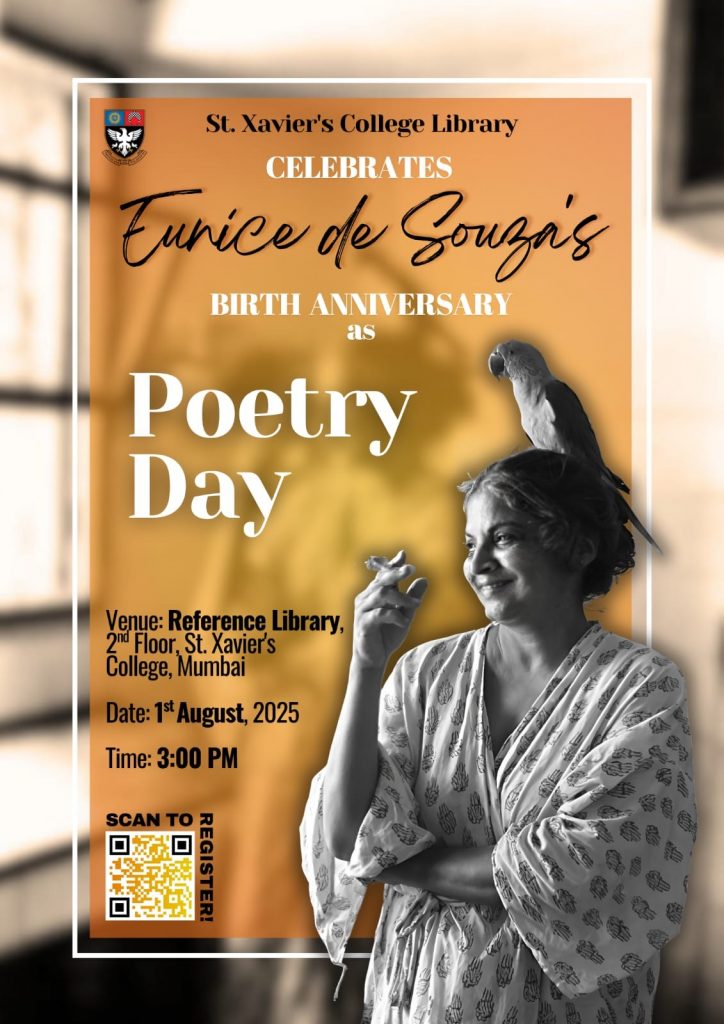
I GOT mine in the FYJC when Eunice de Souza’s collection of poems shook my conventional life. Though I did not read her regular column in “Mumbai Mirror” I could identify with this woman, non-judgmental, say it like it is, unwaveringly stand up for your beliefs. The Xavier’s Library Committee celebrated Poetry Day on August 1. A special corner is reserved for her collection of books, as she spent a substantial part of the day there. Her poems were dramatised and read by students, while tributes spoke of her persona.
While she moulded generations of creative minds by encouraging them to think and read, Eunice was a shadow of herself with the ravages of time. Frail, but exuding the warmth beneath the tough-as-nails exterior she projected. As I heard her verse, my takeaway was to get creative to deal with the trauma of the Buntys and Bablis (a movie that makes light of our reality of con artists) along the path. Writing and visual arts offers you a space to place these specimens in perspective.
K FOR CALLIAN
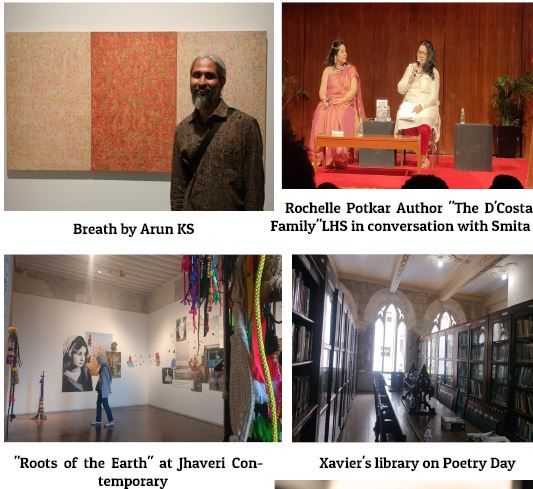
PAGE to Stage at the Little Theatre, NCPA, in collaboration with Usawa Literary Review, carried the promise of a plot centred around a Family Circus show that requires a liberal sprinkling of humour to gulp it down. And it delivered. The lively author, poet, and screenwriter Rochelle Potkar, nee Fernandes, got her family baggage out of her system with the launch of her novel, “The D’Costa Family.” What gets you interested is the cover illustration by Esha Singh.
The novel brings into focus the Goan Catholic diaspora as did Jane Borges’ “Bombay Balcao,” which covers Cavel, Girgaum, an area that most of my father’s generation spent their growing years in. To add flavour to her protagonist is her half origin of a dwindling community, the Anglo Indian.
Her dexterity in conveying the fictionalised reality is rooted in well-honed skills of getting under the skin of her characters, which comes naturally to her. While she engaged the audience with her prolific ability to wield structure and process her novel, she traces generational shifts in geopolitical reality in our subcultures. She captures her years in Kalyan, from 1970-90, which she dubs as “Callien.”
Interestingly, her explanations of how she turned around her hunger pangs into imaginary trips to the kitchen in her writing unfold into a gastronomic fantasy. Get set for savage drooling with her vivid narration as you get swept away with her words. Best of all, the copy is a font size that is eye-friendly.
Strangely enough, my thoughts about immortalising my encounters with Buntys and Bublis, perhaps in short stories or “caricature” sketches, had me grinning from ear to ear. I could identify with her rendition of familial oddballs that she stretched literary license for. The character’s foibles seemed exaggerated, yet her triumph of the use of language brought home that each of us has a potboiler in the wings. Quite inspiring, I say, it has all the elements to make for drama, plot, protagonists each vying for the hotspot, food, and more food talk, and an ability to make it to the funny bone. Seriously unputdownable. Published by Cleve Cocoon.
MAPPING THE TEXTILE FOOTPRINT
THE MAP textile course curated by Mayank is fascinating. Earlier, the work opportunities were limited for students of the fine arts. Notable artists like Manu Parekh used to work for textile promotional and institutional boards, eg, weavers, etc. It brought professionalism to the textile narrative, and decade-long efforts like Vishwakarma were born. The universe of textiles has so much scope for research on the craft and its narrative. The queries that conclude each session indicate the deep interest and that is great news for nurturing our woven legacy.
MAKING ART OF OUR CIRCUS
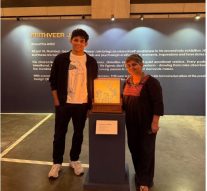
AT 18, Prithveer Jain has a well-spaced out body of work, “Circus” at IF.BE, Ballard Estate. It is his second solo, and he is on point. He is a natural with keen learning that has been honed by Prabhakar Barve, a JJ alumnus, over the last eight years. The story for me is parents acknowledging a gifted child and nourishing talent. This young artist has an exceptional trajectory. His transient captures of moments are born in his visual rooting of “Perception over People.” The note suggests the blurring between becoming and performing, projecting on a stage that this young eye captures.
THIS IS WHO WE ARE
PRABHAKAR Kamble and Akshay Mahajan works titled “Roots of the Earth” at Jhaveri Contemporary are thought-provoking. Bells of all kind evoke the man on the street with his hair dreadlocked, a colourful skirt twirling as he circled to the beat, whip-lashing himself to the sound of his ghungroos and cowbells. He was accompanied by a woman, with a small ochre or yellow wooden house precariously placed on her head, while drumming and dragging the drum hide to achieve a macabre effect.
The hanging installations carry modern material like plastic string and traditional cow bells, cowrie shells, bronze jewellery, and stirrups in the paraphernalia. The narrative is intensely set in our rural reality, in this case, the Deccan and specifically, Kolhapur. It hinges on liberating and retelling rapidly vanishing histories and seeking memory to evoke resistance. The symbols and objects used, like terracotta, are twofold and seek reflection: What is it we choose to remember?
As the curatorial note explains, “Both Mahajan and Kamble are turning the idea of the archive on its head — one that makes space for many kinds of truth, complete with contradictions and dualities. The idea is to create repositories that are not exclusionary by nature but have room for empathy.”
BREATH
GALLERIE Mirchandani and Steinrucke at Ballard Estate have another superlative exhibition. Arun KS re-lives the tradition of Ellora and Ajanta frescos. His drawings on paper are similar to the earthworks, with more pronounced colour. They are centred around consciousness. “Everything was made but nothing was intended — and this is the consciousness the artist has been seeking — of making with presence instead of preconceptions,” explains Mario D’Souza about Arun’s artistic process and outcome.
Until October 15, 2025
 LETTER TO THE EDITOR FOR ISSUE DATED SEPTEMBER 26, 2026
 DIVIDED EVEN IN DEATH!By Rajan Narayan
 IF YOU CLAIM THE CREDIT, TAKE THE RESPONSIBILITY!By Joquim Goes
 8 EMAILS IN 7 DAYS, BUT VALID GOA VOTERS STILL LEFT OUT: EC’S FLAWED SYSTEM!By Ritika Chopra
 MAKE IN INDIA: UNITED PAYMENTS INTERFACE India’s digital local leap to global benchmark…By Arvind Pinto
 BRING BACK THE FLATBREADS OF INDIA!
 EARLIER YOU KNOW, THE MORE YOU CAN DO Dementia diagnosis matters… By Dr Vailanki Nazira Raposo
 YOUNG LOVE IS A CRIME IN BIHAR!
 THE BOAT BECKONS, THE UNICORN WATCHES! By Prema Viswanathan
 WEEKEND UPDATES
 LETTER TO THE EDITOR FOR ISSUE DATED SEPTEMBER 19, 2026
 ELEVATED HIGHWAY TO HELL!
 MEDICAL DEVICES LOOT!By GS Mudur
 HOSTILE ACT BY PAKISTAN: `PNS HUNAIN’ TRIED TO DISRUPT OUR NAVAL SURVEILLANCE! By Dr Olav Albuquerque & Deborah Albuquerque
 BLACK MONEY IN POLITIAL PARTIES: ADR’s Alarming Revelations By Arvind Pinto
Goa is abuzz with excitement as vintage bike and car owners, users, collectors and fans are decking […]