Goa is abuzz with excitement as vintage bike and car owners, users, collectors and fans are decking […]
Old is Gold
October 4, 2016
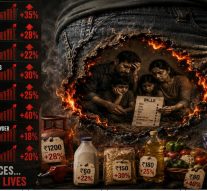
NOW that the elections are over, the government will now look at the economic reality. One crucial decision is the fuel prices. Reports suggest that there will be a 20% hike in petrol and diesel. Last week diesel in Panaji touched Rs 92.43 per liter. Petrol has crossed Rs106 per liter. While a hike in petrol may not cause much of a change in prices; the hike in diesel will definitely have a cascading effect not only on household budgets and prices, but give rise to several economic and monetary effects in the country. For the pain is not only at the pump. Fuel is a hidden cost from the morning milk, to your EMI. For a Rs5 hike per liter in diesel set off a chain reaction that is termed by the RBI as a cascading effect. For in a country where 65% percent of freight still moves by road, fuel is monetary policy, inflation and household budget all rolled into one. Let’s look at the detailed picture
HOUSEHOLD BUDGETS
ALL Goan wives know the tightrope walking they have to do each month to put food on the table, to keep the family expenses within the “salary” that the husband gives her. With a rise in fuel prices, the monthly transport costs of the family motor cycle, scooter will increase by Rs400 to Rs600 per month or car, or should the family have a car the cost will be around Rs 1,500. With inadequate transport in Goa, most Goan families own either a motor cycle, scooter or a car. Now, Goans will have to shell out an additional Rs1,000 per month on transportation costs. What about the taxis, the transport app, like Goa Miles? With the increase in fuel costs, travelling in Goa will become expensive. Further this rise in diesel will also affect Kadamba and the local camiaos as the local bus service is called. With increase in fuel, ticket fares will simultaneously increase. While Goans are proud to tell their neighbors that their children go to premium schools, now they will have to contend with an increased bus fare to ferry their children to their school! Transportation in Goa is generally on road, since the railways are only to carry travelers out of the state.
THE rising fuel costs will also impact the entire food supply chain. To the majority of Goans, fish is a staple diet. The fishing trawlers that set sail from Cabona, Betim or from the River Sal use diesel. This will add to the landed cost of fish. The Goan specialty like “visvonn/isvonn” (kingfish) which costs presently Rs800 per kilo would rise to at least Rs840-Rs850 per kilo. Further fish coming from outside like Kerala will also increase since the additional transport costs will have to be borne by the consumer.
Since most of the goods in Goa are transported by road, the increase in fuel costs has inflationary repercussions. Over the last month prices in Goa the monthly inflation rate in Goa, the figures for March 2026 which are available is 2.21%. With the increase in fuel costs, this inflation in costs would go up further. As again the inflationary trends, the wages in Goa do not rise proportionately. Further a large portion of the gig workers are migrants, where there is no fixed wage.
Mining
ONE of the pillars of the Goan economy has been mining. While the complete ban on mining as mandated by the Supreme Court has come to an end, mining is yet to really pick up. The ore that is evacuated is put into trucks that use diesel to operate. Further, this ore is transported by barges that use diesel. The rise in diesel will increase production cost. The closure of the mines hit not only the mine workers but infrastructural support and other operational staff. Now with the increase in fuel prices, many of these families whose livelihood has suffered will be further impoverished.
CONSTRUCTION ACTIVITY
GOA is in the state of building its infrastructure and housing. If you travel along the coast line or look at our towns, building activity is in full swing. Most of the material used in building infrastructure comes from outside Goa. Rising fuel prices will also increase these costs, leading to higher construction costs because of transportation. This increase will drive up real estate prices in Goa. The rise in prices will make investment by Goans in real estate unaffordability, bringing more outsiders into the state. With our politicians tweaking development zone regulations to bring more areas under residential and commercial zones, Goa will be open for increase in the real estate, with increasing costs.
For tourists coming into Goa, the rise in prices was only of the factors that were taken into account while deciding on whether to revisit Goa. With the rising fuel costs that would trigger a price rise in Goa, many potential tourists would think twice before coming again to Goa. This is now seen in the dramatic fall of foreign tourists, who would prefer visiting Sri Lanka or Bali, since Goa is now beyond their limited budget. This is indeed sad, since during the decades, Goa has built up a fairly good infrastructure of home stays, hotels, cafes, restaurants to cater to tourists, who now do not want to come to Goa any more.
WITH the rising fuel costs, Goa is in danger of losing its touristic attraction. But more than the outsiders, local Goans who had a fairly comfortable economic lifestyle, will not feel the pinch of increased fuel costs. And the traditional Goan housewife, who was able to ensure that the monthly income was sufficient to provide for her family, will need to ensure that the rupees she is given for the month put enough food on the table to feed her family
 LETTER TO THE EDITOR FOR ISSUE DATED SEPTEMBER 19, 2026
 ELEVATED HIGHWAY TO HELL!
 MEDICAL DEVICES LOOT!By GS Mudur
 HOSTILE ACT BY PAKISTAN: `PNS HUNAIN’ TRIED TO DISRUPT OUR NAVAL SURVEILLANCE! By Dr Olav Albuquerque & Deborah Albuquerque
 BLACK MONEY IN POLITIAL PARTIES: ADR’s Alarming Revelations By Arvind Pinto
 `KHANDVI MILLE-FEUILLE’ AT BRICS ALL VEG BUFFET!
 SATYA NIKETAN TRAGEDY: HOW GLOBAL STUDENT HOUSING MODELS COULD HELP INDIA FIX A BROKEN SYSTEM!By Sneha Swaminathan
 GANESH PANDALS HIJACKED BY ADANI, AMBANI
 WHY DOES A DEMENTIA DIAGNOSIS MATTER? By Dr Amit Dias
 WEEKEND UPDATES
 LETTERS TO THE EDITOR FOR ISSUE DATED SEPTEMBER 12, 2026
 GOAN TEACHERS ARE CONTRACT LABOR!
 THE COLOUR IS PRESTIGIOUS! THE PROCESS MUST BE EQUALLY SO!
 DOGS ATTACK GOANS, OWNERS GET ACQUITTED!By Dr Olav Albuquerque & Deborah Cordeiro
 CYBER FRAUD: A THREAT TO FINANCIAL SECURITY & MENTAL WELL-BEING! By Adv Vinayak (Mama) D Porob
Goa is abuzz with excitement as vintage bike and car owners, users, collectors and fans are decking […]