Goa is abuzz with excitement as vintage bike and car owners, users, collectors and fans are decking […]
Old is Gold
October 4, 2016
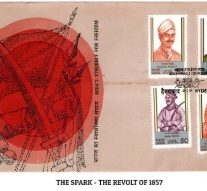
A fascinating glimpse into the life of freedom fighters as celebrated by the Indian Postal Department by issuing stamps in their memory…a perfect summing of India’s freedom struggle in stamps and first day covers!
THIS article traces India’s long and inspiring journey to freedom — from the First War of Independence in 1857 to the final dawn of freedom in 1947. I have also included the integration of Goa with India way back on 19th December, 1961. It celebrates the courage, sacrifice, and vision of the freedom fighters whose legacy continues to inspire every generation.
The Spark – The Revolt of 1857
IN 1857, Indian sepoys rose against the British East India Company, sparking what is known as India’s First War of Independence. The revolt began at Meerut and quickly spread to Delhi, Kanpur and Jhansi, uniting people against foreign rule. This uprising planted the seeds of future freedom movements.
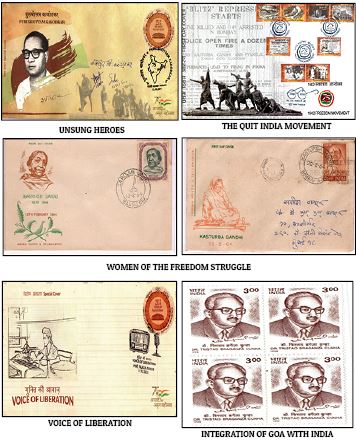
A First Day cover depicting the stamps on revolutionaries such as Mangal Pandey, Tantia Tope, Nana Sahib and Begum Hazrat Mahal.
Heroes of 1857
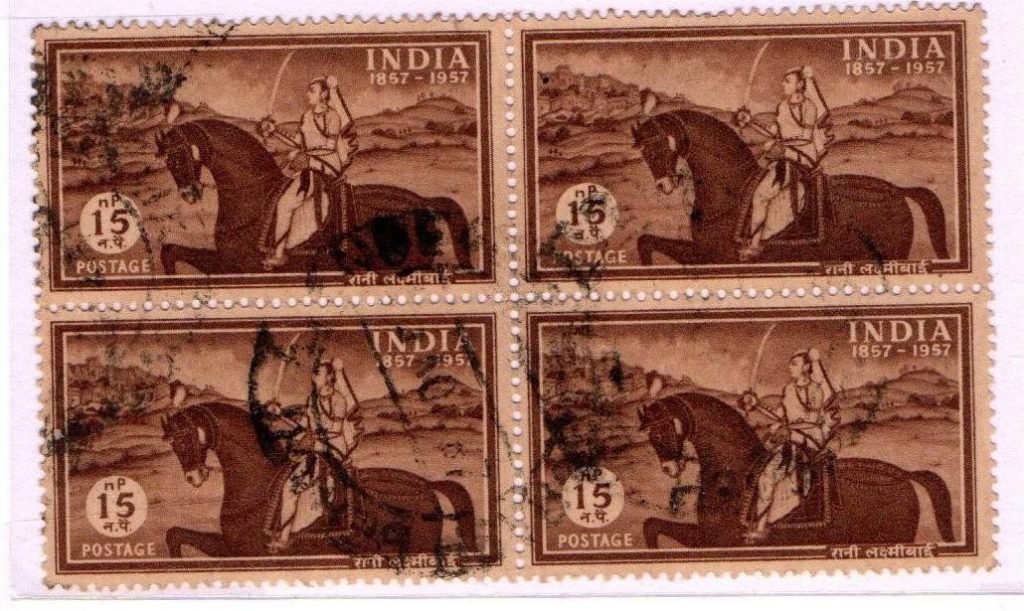
RANI Lakshmibai of Jhansi, Tantia Tope, Nana Sahib, and Bahadur Shah Zafar became immortal symbols of bravery. Their defiance against overwhelming odds laid the foundation for India’s fight for independence.
A block of 4 on Rani Lakshmibai of Jhansi. The Rani of Jhansi, also known as Rani Lakshmibai, was one of the leading figures of the Indian Rebellion of 1857. The queen consort of the princely state of Jhansi from 1843 to 1853, she assumed its leadership after the outbreak of conflict and fought several battles against the British
Aftermath and Awakening
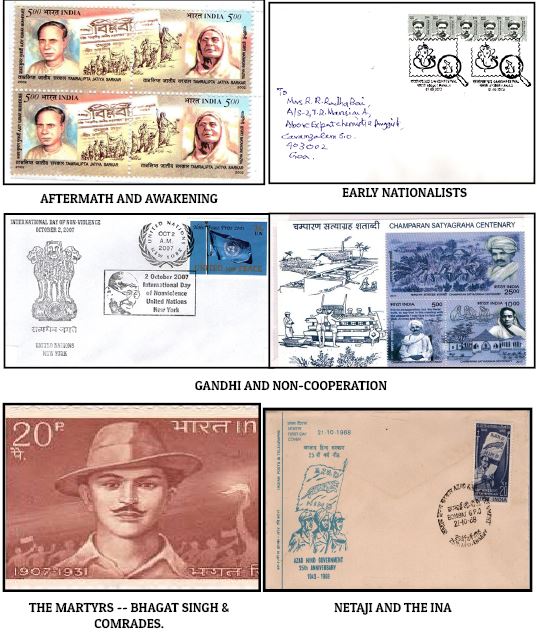
THOUGH the revolt was suppressed, it marked the end of Company rule. The British Crown took direct control in 1858. The harsh lessons of 1857 sparked new ideas of nationalism, sowing the seeds of a pan-India freedom movement.
The Tamralipta Jatiya Sarkar was a parallel government established during the Quit India Movement in the Tamluk and Contai subdivisions of present-day West Bengal. It aimed to create a full-fledged democratic government and was the only parallel government to function autonomously for two years during the British Raj
A se-tenant stamp on Ajoy Kumar Mukherjee and Matagini Hazra who were prominent members of the above Parallel Government.
Early Nationalists
PIONEERS like Dadabhai Naoroji, Gopal Krishna Gokhale, and Bal Gangadhar Tilak laid the groundwork for organized political movements. The formation of the Indian National Congress in 1885 gave people a voice to demand reforms and self-rule.
A definitive stamp on Balgangdhara Tilak with a Ganesh and Panjim place Cancellation depicting the Ganesh Festival of 2021 on a postally used cover. Bal Gangadhar Tilak transformed the worship of Lord Ganesh into a grand, public celebration known as the Sarvajanik Ganesh Utsav in 1893, making it a vital tool for uniting Indians and fostering nationalist sentiments against British rule. He shifted the celebration from private homes to public spaces, creating a platform for people from different social backgrounds to gather, promote unity, and spread awareness of the freedom movement.
Gandhi and Non-Cooperation
MAHATMA Gandhi transformed the struggle by uniting millions through non-violence. The Non-Cooperation and Civil Disobedience movements inspired Indians to boycott British goods, defy unjust laws, and march towards freedom.
International Day of Non-Violence is observed on 2 October, the birthday of Mahatma Gandhi. It was established on June 15, 2007 according to United Nations General Assembly resolution A/RES/61/271 . A miniature sheet depicting the Centenary of the Champaran Satyagraha. The Champaran Satyagraha, initiated in 1917, was Mahatma Gandhi’s first Satyagraha movement in India, focusing on the plight of indigo farmers in the Champaran district of Bihar. The farmers were forced to cultivate indigo under the exploitative ‘Tinkathia system’, leading to widespread discontent and economic hardship.
The Martyrs — Bhagat Singh & Comrades
YOUNG revolutionaries like Bhagat Singh, Rajguru, and Sukhdev ignited a fire among the youth. Their courage and sacrifice awakened a new spirit of fearless resistance.
A Stamp on Bhagat Singh.
Netaji and the INA
Subhas Chandra Bose’s leadership of the Indian National Army (INA) gave a new dimension to India’s freedom struggle. His call of ‘Give me blood and I will give you freedom’ inspired countless Indians to fight for independence.
A First Day cover depicting Netaji and 25th Anniversary of the Azad Hind Government. The Azad Hind Government, also known as the Provisional Government of Free India, was an Indian provisional government established by Subhas Chandra Bose in Japanese-occupied Singapore on October 21, 1943.
Unsung Heroes
FREEDOM was won by countless known and unknown heroes. Alluri Sitarama Raju in Andhra, Veerapandya Kattabomman in Tamil Nadu and Birsa Munda in Jharkhand are among the many who resisted British/Portuguese rule fiercely in their regions.
A special cover on Purushottam Kakodkar, a Freedom Fighter who fought for the liberation of Goa from the Portuguese Colonial rule. He took part in the Quit India Movement and was imprisoned for it. He also took part in the Goa Liberation Movement and the Civil Disobedience Movement launched by Ram Manohar Lohia in Goa in 1946. The Portuguese colonial administration deported him and kept him in detention
Women of the Freedom Struggle
BRAVE women like Sarojini Naidu, Kasturba Gandhi, Aruna Asaf Ali, and Durgabai Deshmukh played pivotal roles. They inspired millions with their courage and leadership during movements like Quit India.
A First Day cover on Sarojini Naidu, Sarojini Naidu was an Indian political activist and poet who served as the first Governor of United Provinces, after India’s independence. She played an important role in the Indian independence movement against the British Raj.
A first day cover on Kasturba Gandhi. Kasturba Mohandas Gandhi was an Indian political activist who was involved in the Indian independence movement during British India. She was married to Mohandas Karamchand Gandhi, commonly known as Mahatma Gandhi.
The Quit India Movement
IN 1942, Gandhiji launched the Quit India Movement with the historic call ‘Do or Die’. Despite severe repression, it shook the foundations of British rule and brought India closer to freedom.
Voice of Liberation
THE freedom struggle relied heavily on secret messages, coded letters, and censored mail. British/Portuguese censorship tried to curb revolutionary activities, but the underground and Radio networks kept hope alive.
Libia “Libby” Lobo Sardesai is an Indian independence activist and lawyer from Goa. Along with Vaman Sardesai, whom she later married, she ran an underground radio station, Voice of Freedom, that transmitted across Portuguese Goa from 1955 to 1961, advocating the cause of the Goan independence movement.
Integration of Goa with India
THE Portuguese established a colony in Goa in 1510 and expanded the colony to its present boundaries during the 17th and 18th centuries. Goa was liberated by India on 19 December 1961. Goa and two other former Portuguese enclaves became the union territory of Goa, Daman and Diu, and Goa was organised into a single district in 1965. On 30 May 1987 Goa attained statehood (while Daman and Diu became a separate union territory), and Goa was reorganised into two districts, North Goa and South Goa.
A BLOCK of 4 stamp on Tristão de Bragança Cunha, better known as T. B. Cunha, was a Portuguese nationalist and anti-colonial activist. Referred to as the “Father of Goan nationalism”, he was the organiser of the first movement to end Portuguese rule in Goa.
Salute & Conclusion
This article is a tribute to the brave souls who gave us freedom. May we always remember that liberty is earned through sacrifice and must be preserved through unity and peace.
(Dr M R Ramesh Kumar was a Chief Scientist, Retd, National Institute of Oceanography, Goa.)
 LETTER TO THE EDITOR FOR ISSUE DATED SEPTEMBER 26, 2026
 DIVIDED EVEN IN DEATH!By Rajan Narayan
 IF YOU CLAIM THE CREDIT, TAKE THE RESPONSIBILITY!By Joquim Goes
 8 EMAILS IN 7 DAYS, BUT VALID GOA VOTERS STILL LEFT OUT: EC’S FLAWED SYSTEM!By Ritika Chopra
 MAKE IN INDIA: UNITED PAYMENTS INTERFACE India’s digital local leap to global benchmark…By Arvind Pinto
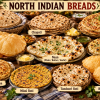 BRING BACK THE FLATBREADS OF INDIA!
 EARLIER YOU KNOW, THE MORE YOU CAN DO Dementia diagnosis matters… By Dr Vailanki Nazira Raposo
 YOUNG LOVE IS A CRIME IN BIHAR!
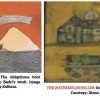 THE BOAT BECKONS, THE UNICORN WATCHES! By Prema Viswanathan
 WEEKEND UPDATES
 LETTER TO THE EDITOR FOR ISSUE DATED SEPTEMBER 19, 2026
 ELEVATED HIGHWAY TO HELL!
 MEDICAL DEVICES LOOT!By GS Mudur
 HOSTILE ACT BY PAKISTAN: `PNS HUNAIN’ TRIED TO DISRUPT OUR NAVAL SURVEILLANCE! By Dr Olav Albuquerque & Deborah Albuquerque
 BLACK MONEY IN POLITIAL PARTIES: ADR’s Alarming Revelations By Arvind Pinto
Goa is abuzz with excitement as vintage bike and car owners, users, collectors and fans are decking […]