Goa is abuzz with excitement as vintage bike and car owners, users, collectors and fans are decking […]
Old is Gold
October 4, 2016
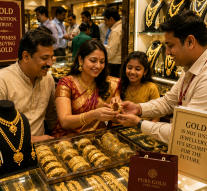
GOLD in India is more than a metal — it is memory, security, and identity. For Goans, it is heirloom and heritage, worn at weddings, pledged in emergencies, and celebrated in festivals. Gold is a store of wealth for all Indian households. For most Indians gold is the measure of a family’s standing, a resource especially at times of need, a part to be given to a daughter, as dowry that ensures her status in the marital house.
Over the years the price of gold has skyrocketed, with today’s prices touching Rs 15.238 per gram and an astronomical figure of Rs1,51238 for 10 grams of this precious metal. Yes, look around the gold shops in Panjim or Margoa. You will find them filled with ordinary people buying for weddings, auspicious occasions or simply for the lure that gold has with Indians.
Cultural Roots of Gold in India
THE world over, gold has been a precious commodity, that reflects a country’s wealth. In India, gold has been seen as a symbol of prosperity. Gold ornaments mark weddings, births, and festivals like Diwali and Akshaya Tritiya. Among Catholic families treasured heirloom chains and bangles are passed down through generations. Hindu Goan households invest in gold during Ganesh Chaturthi and weddings, seeing it as auspicious. Goans working in the Gulf often send money home, which families convert into gold ornaments —both as savings and social prestige.
Gold as Collateral in Goa
IN several villages across Goa, families pledge their families’ heirlooms, their bangles or gold coins to cover school fees, medical bills, or seasonal expenses. In the mining belt in towns such as Bicholim, truck owners would pledge their gold ornaments to expand their fleet of trucks that would carry ore from the mines to the waiting barges. Then again, gold comes handy for shopkeepers in Margao and Panjim, who pledge their gold during off-seasons, redeeming it once tourist inflows resume. Gold in India, as also Goa is a measure of exchange, a store of wealth, as also an indicator of the status of a persons’ position in the Indian class and caste hierarchy. Gold is also an indicator of institutional wealth, where the position of a church or temple is seen by the amount of gold it possesses.
A Governmental Initiative – Gold Bonds
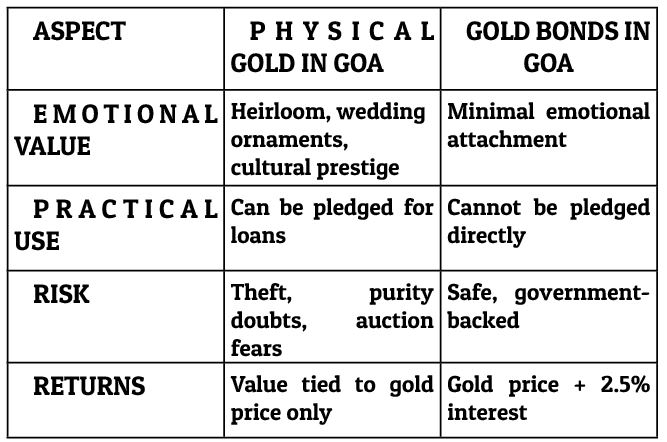
REALIZING the Indian craze for gold, government has instituted a unique scheme termed Sovereign Gold Bonds scheme (SGB) in 2015. It allows investors to buy gold in paper form, which earns interest on this investment, while avoiding the risk of its being stolen or investing in a bank locker to store one’s gold. Middle class Indians have taken to this scheme since it has several advantages. The scheme gives them an annual interest of 2.5% on their investment. Further, they have no worries about theft or purity, since all they have is a paper document. Finally the redemption of these bonds is linked to gold prices, ensuring value appreciation. In Goa, the response to these gold bonds is good. For many urban professionals and NRIs prefer bonds over ornaments, seeing them as smarter investments. Also co-operative banks and financial advisors in Goa increasingly promote SGBs as alternatives to physical gold.
FOR pure investment, Sovereign Gold Bonds (SGBs) are a far better option than physical gold in 2026 — they provide 2.5% annual interest, tax-free capital gains at maturity, and eliminate storage and theft risks. Physical gold remains relevant for jewellery, gifting, and emergency pledging, but as an investment vehicle it underperforms bonds. Thus, for most of the Gen Z, or those who have money to invest, SGBs are a better option, since they earn on the bonds. Physical gold however is a necessity when one uses it in the form of jewellery at auspicious occasions, weddings and as an adornment.
Banks & Gold Loans
GOLD loans are one of the fastest-growing credit products in India today, with banks offering them at interest rates starting around 8.5% per annum — much lower than personal loans. In 2026, outstanding gold loans across banks and NBFCs crossed Rs6.8 lakh crore, making them the second-largest secured retail loan category after home loans.
What is the process of obtaining a gold loan?
REGULAR bank customers can obtain a gold loan by pledging their gold jewellery either 18 to 22 carat or gold coins to obtain a loan for personal or marriage purposes. The bank would then test the gold for its purity and offer a loan up to 80% of its value. Documentation is minimal and the disbursement of the credit is available within two or three working days. Repayment is as per the terms of sanction easy EMI’s or repayment of the credit to one’s account. The gold is stored carefully in the Bank’s safe vault and is returned in original when the loan is fully repaid. Several bank customers make use of this facility in order to obtain credit in times of financial stress where money is required at short notice.
The Glitter That Never Dims
GOLD in Goa is not just wealth — it is woven into the state’s social fabric. Yet, as financial literacy grows, Gold Bonds are reshaping the narrative. They represent a shift from ornamental security to structured investment, from bangles in the cupboard to bonds in the demat account.
For Goans, the choice is no longer between tradition and modernity — it is about balancing both. Physical gold is important, for wearing gold during festivals marriages and auspicious occasions enhances the status of the family among families and friends, while bonds remain only on paper, fetching income as interest and an appreciation at the time of redemption. Whatever is more important. Depending upon need, both physical gold and paper bonds play an equally vital role in the life of the average Goan family
(Arvind Pinto is a Chairman, Citizencredit Cooperative Bank Limited)
 LETTER TO THE EDITOR FOR ISSUE DATED SEPTEMBER 26, 2026
 DIVIDED EVEN IN DEATH!By Rajan Narayan
 IF YOU CLAIM THE CREDIT, TAKE THE RESPONSIBILITY!By Joquim Goes
 8 EMAILS IN 7 DAYS, BUT VALID GOA VOTERS STILL LEFT OUT: EC’S FLAWED SYSTEM!By Ritika Chopra
 MAKE IN INDIA: UNITED PAYMENTS INTERFACE India’s digital local leap to global benchmark…By Arvind Pinto
 BRING BACK THE FLATBREADS OF INDIA!
 EARLIER YOU KNOW, THE MORE YOU CAN DO Dementia diagnosis matters… By Dr Vailanki Nazira Raposo
 YOUNG LOVE IS A CRIME IN BIHAR!
 THE BOAT BECKONS, THE UNICORN WATCHES! By Prema Viswanathan
 WEEKEND UPDATES
 LETTER TO THE EDITOR FOR ISSUE DATED SEPTEMBER 19, 2026
 ELEVATED HIGHWAY TO HELL!
 MEDICAL DEVICES LOOT!By GS Mudur
 HOSTILE ACT BY PAKISTAN: `PNS HUNAIN’ TRIED TO DISRUPT OUR NAVAL SURVEILLANCE! By Dr Olav Albuquerque & Deborah Albuquerque
 BLACK MONEY IN POLITIAL PARTIES: ADR’s Alarming Revelations By Arvind Pinto
Goa is abuzz with excitement as vintage bike and car owners, users, collectors and fans are decking […]