Goa is abuzz with excitement as vintage bike and car owners, users, collectors and fans are decking […]
Old is Gold
October 4, 2016
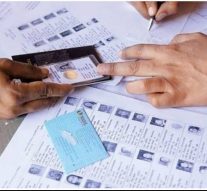
AND a few stray thoughts for yet another Saturday. For a Saturday following the week when we learn there’s a “refuse to sign” section in the Special Intensive Revision (SIR) of the electoral rolls. For a Saturday following the week when a controversial decision was taken by the Madurai Bench of the Tamil Nadu High Court. For a Saturday following the week when a new set of instructions were given to senior bureaucrats by the Union Cabinet Secretary TV Somnathan. For a Saturday following the week when huge losses were incurred by Goa due to cost escalation of bridges and other public projects. For a Saturday following the week when the latest cyclone which has struck Bangladesh and Kerala is interestingly name “Arnab.”
REFUSE TO SIGN
AND a few stray thoughts on the “refuse to sign” section in the Special Intensive Revision (SIR) of the electoral rolls. Under the rules drawn up by the Election Commission for the SIR, those who refuse to sign the duplicate of the enumeration form are deleted from the voters list. The problem is that there is no foolproof evidence that the voter received the form in the first place. Under the prescribed operating procedure, the booth-level officer has to prepare or download the enumeration form. The BLO is expected to partially fill the form from the details of the voter from the earlier electoral roll.
The BLO is supposed to distribute the enumeration form in duplicate, collect the completed form and give the voter an acknowledgment on the second copy. There is no provision in the SIR rule to establish if the BLO actually visited the address of the voter in the electoral roll. There is no record kit by the EC of the name and identity of the person who allegedly refused to sign the duplicate form. The BLO does not have to provide any reason why the concerned voter refused to sign the duplicate form. It is possible that the voter refused to sign because the name or the address or the gender or the age of the concerned voter have been wrongly recorded in the previous electoral roll.
It all boils down to accountability. The EC should be able to explain the factual basis for a classification that could affect the inclusion of a voter in the electoral roll. A computer entry saying “refuse to sign” is not evidence that a classification was recorded. It is not by itself proof that the voter actually refused. If your name has been deleted from the electoral roll on the claim that you have refused to sign, you can demand a copy of the BLO’s report recording the refusal. The evidence relied upon to classify you as having refused to sign. Also, a copy of the relevant electronic record and any supervisory verification. If any of this information is not supplied by the BLO or his superior, you can file a request under the right to information. This becomes very relevant as the biggest category of people whose names have been deleted during the SIR comprise of those who may have shifted their residence or refused to sign. The Election Commission also has to explain why the names of voters were deleted from the electoral roll even when they informed the EC of a change of address. It may be recalled that a case is pending in the Goa Bench of the Bombay High Court over the deletion of the names of family members who had shifted their residence within the same constituency. Instead of accepting their new address, the EC had asked them to fill Form 6, which is meant for new voters.
NON-HINDUS BARRED FROM TEMPLES
AND a few stray thoughts on a controversial decision taken by the Madurai Bench of the Tamil Nadu High Court. A division bench of Justice GR Swaminathan and P Murugan now bars non-Hindus from entering temples. The bench passed the order in the wake of a petition objecting to the entry of TVK MLA Badrudin Mustafa into the Madurai Minakshi Temple for an inspection. The Muslim MLA was part of a team appointed by the government of Tamil Nadu to investigate major breaches by the temple administration.
The Minakshi temple is among the most important temples in the country. The MLA belonging to the Chief Minister Vijay Joseph party claimed that he has the right to inspect the temple if the proper amenities were not provided. MLA Mustafa insisted that the Sanatan Dharma should be eradicated. The BJP has been promoting very intolerant “nafrat ka dukan” under the claim that it was preserving the purity of Hinduism. Indeed, the BJP chief minister of Bengal, Suvendu Adhikari, has barred non-Hindus from participating in the visargan or immersion in water body ceremony which closes the Durga Puja for the year. Many temples in the country have restrictions on the entry of even women.
For instance, the Sabrimalai Temple in Kerala bars all menstruating young women from entering the temple. This is based on the traditional belief that menstruating women pollute holy places. In fact for several hundreds of years and probably even nowadays in remote villages, women during menstruation period are not allowed into the kitchen. Curiously, the Tamil Nadu HC has exempted the Ayappa temple and the Sai Baba shrine from the new order. They have been excluded as people from all communities visit this places of worship.
Perhaps the more secular religion in the country is Sikhism. Everyone can enter a Gurudwara as long as they cover their head. Moreover people from any religion can take the benefit of the “langar” or free meal provided by the Gurudwara.
12 TYPES OF BUREAUCRATS
AND a few stray thoughts on the new set of instructions given to senior bureaucrats by the Union Cabinet Secretary TV Somnathan. To the surprise of senior bureaucrats, the cabinet secretary unveiled the presentation on 12 types of bureaucrats. Among the types listed by Somnathan were officers who ask women colleagues to come a bit too close for comfort. Officers who throw files and speak rudely. Officers who compel the staff to come on Saturdays, which is a holiday for all Central and State government employees. Other entries include officers who call meetings after 7 pm or sit on files or delay decisions. Each of the points made by the cabinet secretary was illustrated by a RK Laxman cartoon. The broader message to the senior bureaucrats was to ensure that they do not abuse their power and performed jobs assigned to them. No more passing the buck as far as this cabinet secretary is concerned.
HUGE LOSSES OF GOA GOVERNMENT
AND a few stray thoughts on the huge losses incurred by the Goa government due to cost escalation of bridges and other public projects. It has been pointed out that all the bridges ended up costing much more than the original estimate. In the case of the Atal Setu the cost went up from Rs385 crore to Rs581 crore. The cost of the Porvorim elevated corridor more than doubled from Rs300 crores to Rs641 crore.
In the case of the new Zuari Bridge the escalation in cost is over Rs500 crore as against the original estimate of Rs200 crore. Similarly, there has been a huge increase in cost in the case of the two new bridges over the Mandovi river. The suspicion is that the increase in cost reflects the additional commission taken by the PWD minister, the executive engineer and all the officials down the line.
HERE COMES ARNAB CYCLONE!
AND a last stray thought on the latest cyclone which has struck Bangladesh and Kerala is interestingly named, Arnab. The name was suggested by someone in Bangladesh which is the worst affected by the cyclone. The joke doing the rounds in political and media circles is that cyclone was thus named after the managing director and editor of Republic channel’s Arnab Goswami.
 DONA PAULA CONVENTION CENTRE!By Our Special Correspondent
 THE SWAN TELECOM–2G SPECTRUM CASE!By Our Special Correspondent
 ALDEIA DE GOA: THE LAND, PLANNING PERMISSIONS AND THE 2022 HIGH COURT JUDGEMENT!By Our Special Correspondent
 RE-DEVELOPMENT DREAMS OR RE-DEVELOPMENT NIGHTMARES?By Arvind Pinto, Our Legal Consultant
 FROM UNIVERSAL ADULT FRANCHISE TO SIR: HAS INDIA’S VOTER REGISTRATION BECOME A POLITICAL WEAPON?
 FOUND! `MILLET UPMA’ AND `NACHNE IDLI’…
 WEEKEND UPDATES
 LETTER TO THE EDITOR FOR THE ISSUE DATED OCTOBER 24, 2026
 THERANOS MULTI-BILLION US PATHOLOGY COMPANY EXPOSED!
 INDIA’S PATHOLOGY LABORATORY SCANDAL! By Our Special Correspondent
 MUKESH, ADANI CONTROL MODI?By Our Special Correspondent
 “FRANCE KE SCHOOL THIK KARO”By Paris Correspondent
 INTEGRITY MUST BE CONDiTION FOR POWER!By Ranadhir Mukhopadhyay
 A PARADIGM SHIFT: POWER MOVES FROM POLITICS TO TECHNOLOGY AND TACTICS! By Arvind Pinto
 HI MUMBAI, MERI JAAN BUT…
Goa is abuzz with excitement as vintage bike and car owners, users, collectors and fans are decking […]