Goa is abuzz with excitement as vintage bike and car owners, users, collectors and fans are decking […]
Old is Gold
October 4, 2016
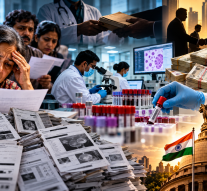
The evidence emerging from India points to a serious problem with diagnostic accountability. The most revealing cases are not necessarily laboratories whose machines fail, but laboratories that issue reports without the claimed supervision of a qualified pathologist.
300+ Mumbai
A pathologists’ association alleged that more than 300 laboratories were operating without appropriate qualified supervision. This was a demand for investigation, not a finding that all had committed fraud.
17 people Karad, Maharashtra
Police registered a case in December 2025 involving alleged pathology reports issued despite the tests not being conducted or supervised as claimed. The report concerned individuals associated with a laboratory, not 17 separate laboratories.
Several districts Maharashtra
A February 2026 complaint alleged that a pathologist’s signature continued to appear on reports after the doctor had died. A separate complaint alleged that a pathologist was signing reports for laboratories across several districts without adequate supervision. These are allegations requiring investigation.
The distinction matters. A laboratory being unaccredited, a laboratory being inadequately supervised and a laboratory committing fraud are three different things. The first two may warrant regulatory action without necessarily establishing criminal wrongdoing.
Routine pathology
Full blood counts, routine biochemistry, urine analysis and other high-volume tests are often best performed in-house where the hospital has functioning equipment, trained staff and sufficient volume.
Microbiology
Culture and sensitivity testing, identification of pathogens and antimicrobial-resistance surveillance are essential to treating infections. A hospital needs microbiological expertise even when certain advanced molecular tests are sent elsewhere.
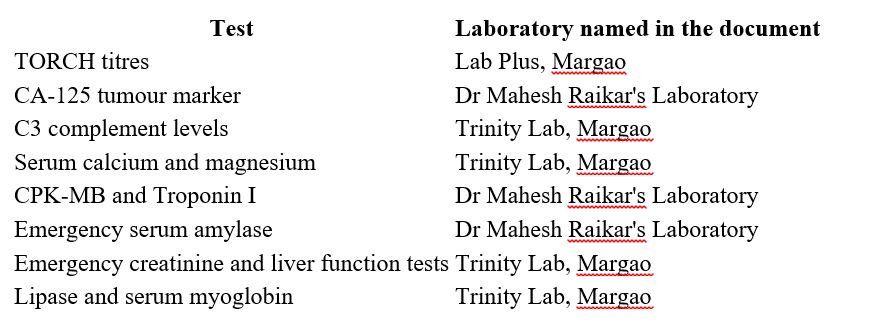
Specialist investigations
Flow cytometry, advanced immunohistochemistry and molecular diagnostics can require expensive equipment, specialised staff and relatively small test volumes. Sending these to a qualified reference laboratory may be more economical than maintaining every capability in-house.
The National Health Mission’s diagnostic guidelines explicitly envisage a mixed model: public hospitals perform high-volume, low-cost tests in-house and outsource expensive, technologically demanding or infrequently required investigations where necessary.
The real question for a government hospital is therefore not whether any outsourcing occurs. It is whether the outsourcing is justified, economical and properly monitored.
If a hospital owns functioning analysers, employs qualified staff and has adequate test volumes, but routinely sends those same tests outside, the government should explain why. If equipment is obsolete, staff are unavailable or quality standards cannot be met, outsourcing may be justified.
The process involves several distinct responsibilities:
 LETTER TO THE EDITOR FOR THE ISSUE DATED OCTOBER 24, 2026
 THERANOS MULTI-BILLION US PATHOLOGY COMPANY EXPOSED!
 MUKESH, ADANI CONTROL MODI?By Our Special Correspondent
 “FRANCE KE SCHOOL THIK KARO”By Paris Correspondent
 INTEGRITY MUST BE CONDiTION FOR POWER!By Ranadhir Mukhopadhyay
 A PARADIGM SHIFT: POWER MOVES FROM POLITICS TO TECHNOLOGY AND TACTICS! By Arvind Pinto
 HI MUMBAI, MERI JAAN BUT…
 VILLAINOUS MUSK, ALTMAN, ZUCKERBERG, HOLMES!
 OPTOGENETICS AND THE RAY OF HOPE: LIGHT MEETS THE BRAIN! By Dr Amit Dias
 WEEKEND UPDATES
 LETTER TO THE EDITOR FOR THE ISSUE DATED OCTOBER 17, 2026
 AZAD MAIDAN NO LONGER FREE!
 AZAD MAIDAN CRACKDOWN! Goa’s crackdown on protesters raises grave questions about democracy! By Our Special Correspondent
 INDIAN WOMEN ARE ON THE STREETS AGAIN. EVERYTHING HAS CHANGED BUT NOTHING HAS CHANGED!By Shilpa Phadke
 RBI TIGHTENS SCREWs ON ECONOMY!By Arvind Pinto
Goa is abuzz with excitement as vintage bike and car owners, users, collectors and fans are decking […]