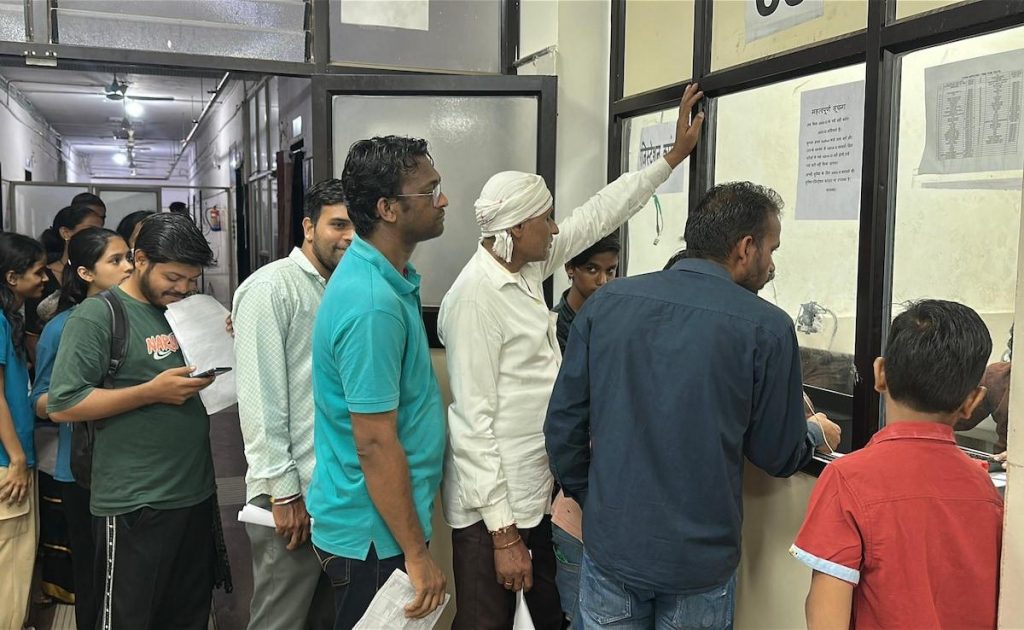
The world, including India, is flooded with thousands of new pathology labs that have collection centres at every street corner. Even hospitals like the Goa Medical College outsourced laboratory tests to Mahesh Raikar, Trinity, and other unknown brands. There have been arrests and prosecution of other little-known brands. Elizabeth Holmes, who founded the $9 billion Theranos, and the Wayve Path Lab, dramatize how risky it is to let unqualified, untrained pathologists, test your blood and other body fluids, with fatal consequences.
THE Elizabeth Holmes scandal was not simply a story of a young entrepreneur who exaggerated her company’s achievements. It was a case study on how Silicon Valley’s cult of innovation, celebrity investors, secrecy and weak scrutiny can combine to put patients at risk. Holmes promised to transform medical testing. Instead of drawing several vials of blood and sending them to conventional laboratories, she claimed that a few drops from a finger prick could produce a wide range of accurate diagnostic results. Her company, Theranos, attracted enormous investment, secured a high-profile retail partnership and became a symbol of American technological ambition. The central deception was breathtaking: the company marketed a revolutionary blood-testing system that did not reliably deliver what it promised. Conventional laboratory equipment was used for many tests, while the capabilities of Theranos’s own machines were substantially overstated.
SCANDAL RELEVANT TO INDIA THE scandal raises questions that are particularly relevant to India: Who verifies claims made by private diagnostic laboratories? How can patients distinguish genuine medical innovation from expensive technological theatre? And what happens when a company’s commercial interests take precedence over the accuracy of a blood report?
The founder who sold a dream
Holmes founded Theranos in 2003, aged 19, after leaving Stanford University. Her ambition was attractive and socially useful: make blood tests cheaper, quicker and less intimidating, and enable people to obtain diagnostic information without repeated venous blood draws.
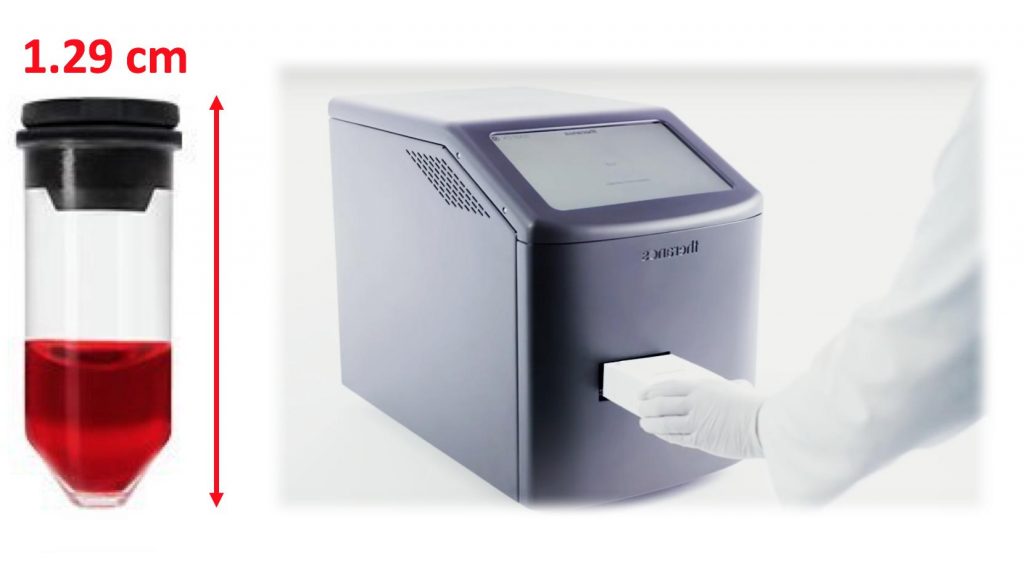
The company developed devices known as Edison and, later, the miniLab. Holmes claimed that a finger prick could supply enough blood for a comprehensive range of tests. The technology, she said, would be faster, cheaper and more accurate than conventional laboratory methods.
The promise was not inherently absurd. Medical science has developed genuine point-of-care testing, microfluidics and methods that require tiny blood samples. The deception lay in presenting a technology that could not reliably do what was advertised as though it had already achieved that breakthrough.
By 2014, Theranos had reached a reported valuation of approximately US$9 billion. Holmes’s paper wealth was estimated at several billion dollars. Investors included wealthy families, venture capital interests and prominent public figures. The company’s board featured influential figures from American politics, diplomacy and business.
Yet the board’s prestige concealed a crucial weakness: eminence in government or business is no substitute for independent expertise in clinical laboratory science.
TRANSFORMING HEALTHCARE? HOLMES cultivated an image of relentless determination. She wore black, spoke in a controlled, unusually deep voice and invoked the ambition of transforming healthcare. Comparisons with Steve Jobs helped turn her into a celebrity entrepreneur. The media, investors and business community helped construct the legend. Too often, the question was how large the business might become, rather than whether its underlying science had been independently validated.
What was actually wrong with the blood tests? The Theranos system suffered from problems involving accuracy, reliability, sample handling and the limitations of its analysers. A finger-prick sample is small. Depending on the test, collecting, processing and analysing that sample can present technical challenges. Some tests can be performed reliably on capillary blood, but that does not mean every test can be transferred to a tiny sample without rigorous validation. Theranos claimed a broad testing capability that its proprietary technology had not achieved. Evidence presented at trial showed that the company’s machines could perform only a limited number of tests reliably and could not compete with conventional analysers across the advertised range. The company consequently relied on commercially available laboratory equipment for much of its testing. THIS was not simply a question of an experimental machine occasionally producing an imperfect result. In medicine, a diagnostic system must demonstrate that its results are sufficiently accurate and reproducible for the particular clinical decision involved.
Consider a few examples: • Cancer screening: A falsely elevated result can cause fear, further investigations and potentially unnecessary procedures. • Pregnancy: An inaccurate hormone result can make a woman believe she is miscarrying when the pregnancy is viable. • Blood-thinning medication: An erroneous measurement can prompt an inappropriate dose adjustment, exposing a patient to avoidable risk. • Electrolytes: Incorrect potassium or sodium measurements can mislead doctors treating potentially serious conditions. These were not merely hypothetical risks. Evidence described during the criminal proceedings included patients receiving misleading prostate-specific antigen results, pregnant women receiving alarming hormone results, and a Theranos employee whose blood-thinning medication was adjusted after unreliable results. Theranos ultimately voided patient results produced using its analyser after determining that the tests had been affected by accuracy concerns. The most important distinction is between a device that is still being developed and one that is sold to patients as clinically dependable. Experimentation is a legitimate part of medical innovation. Concealing the limitations of an experimental product while using it to guide patient care is an
The money: valuation, turnover and the financial deception The Theranos scandal illustrates the difference between the price investors are willing to place on a company and the money that the company actually earns. Peak reported valuation US$9 billion Around 2014 Actual 2014 revenue Just over $100,000 According to the SEC complaint These figures measure different things: valuation is an estimate of a company’s equity value, whereas revenue is money earned from business activities. The financial claims were extraordinary. Investors were told that Theranos expected to generate more than $100 million in revenue in 2014 and approximately $1 billion in 2015. The financial information supplied to prospective investors painted a picture of a company on the brink of explosive commercial growth. The US Securities and Exchange Commission’s 2018 complaint documented the discrepancy. Theranos’s actual 2014 revenue was a little over $100,000, despite projections of more than $100 million. The complaint also described misleading representations concerning future revenue, pharmaceutical relationships and military contracts. The company raised more than $700 million from investors during its expansion. Its paper valuation, however, did not mean it had $9 billion in cash, nor did it represent money available to reimburse patients or shareholders.
Why did sophisticated investors fail to ask tougher questions? FIRST, they were buying into a potentially enormous market. Blood testing is a recurring medical necessity, and a company able to perform hundreds of tests cheaply from a tiny sample would have had considerable commercial appeal. Second, the company controlled access to information. Investors could be shown carefully managed demonstrations and impressive-looking presentations without receiving the independent scientific evidence needed to establish that the technology worked. Third, Theranos invoked endorsements, partnerships and military applications to bolster its credibility. Trial evidence showed that claims concerning pharmaceutical validation and battlefield deployment were misleading. The lesson is uncomfortable: financial sophistication does not guarantee scientific scepticism. A billionaire may understand markets and still fail to recognise a defective medical technology.
How was the scam exposed?
The journalist who challenged Silicon Valley
John Carreyrou of The Wall Street Journal’ played the decisive role in exposing Theranos. His reporting, published from October 2015, drew on confidential sources and employees who challenged the company's claims. His subsequent book,Bad Blood’ reconstructed the deception and the attempts to suppress scrutiny.
The exposure was not the result of a routine inspection suddenly discovering a defective machine. It emerged through a combination of employee disclosures, investigative journalism, laboratory scrutiny and regulatory intervention.
The whistle-blowers mattered enormously. People working inside Theranos knew that its technology was not delivering what the company claimed. Some employees raised concerns about test accuracy and laboratory practices. The company’s culture of secrecy made it difficult to resolve those concerns openly.
Carreyrou’s reporting examined whether Theranos was actually using its own technology for the tests it advertised. His sources helped reveal the gap between the company’s public claims and its internal operations.
One important clue came from the way blood was collected. If the technology could conduct comprehensive testing with a few drops from a finger, why were some customers having conventional quantities of blood drawn from their veins?
That was the kind of elementary question that the company’s elaborate presentation had obscured.
The reporting was followed by regulatory investigations and growing scrutiny of the company’s laboratory practices. In 2016, Theranos voided a large number of test results and faced major restrictions on its laboratory operations.
The US government later brought criminal proceedings. The case demonstrated that investigative journalism can be an essential part of healthcare accountability, particularly when a powerful private company controls the information needed to assess its own claims.
The lesson for journalists is equally important: when a company claims to have overturned established science, interview the scientists, inspect the underlying evidence and speak to employees who have no financial incentive to preserve the company’s reputation.
Who were the victims?
Theranos had two overlapping groups of victims: investors who lost money and patients who received unreliable test results.
Investors: hundreds of millions lost
The SEC alleged that Holmes and Theranos raised more than $700 million while misleading investors about the technology, business relationships and financial prospects.
Investors included sophisticated businesspeople and prominent public figures. The damage was not confined to wealthy individuals: the collapse destroyed the value of investments and undermined confidence in the startup industry.
In 2023, a federal court ordered Holmes and former company president Ramesh “Sunny” Balwani to pay approximately US$452 million in restitution to specified investor victims, jointly and severally.
The amount illustrates the scale of the financial deception, although it does not mean every investor recovered their money.
Patients: the consequences were potentially more serious than financial loss
Patients did not necessarily know that their results had been generated using technology whose reliability was in question.
A false result can trigger additional tests, anxiety, unnecessary treatment or a dangerous delay in treatment. A pregnant woman who fears she is miscarrying experiences a different kind of harm from an investor who loses money, but both have been deceived by the same underlying failure of honesty.
There is an important legal distinction, however. Holmes was convicted of investor fraud, not convicted of the patient-fraud charges brought against her. The jury acquitted her on the patient-related counts it decided. Balwani was separately convicted on all counts at his trial. The seriousness of the clinical consequences should not be confused with the precise scope of each defendant’s criminal conviction.
India: are there Theranos victims here?
This question requires a careful distinction between people directly affected by Theranos and Indian patients harmed by other diagnostic failures.
I found no reliable evidence establishing a substantial, separately identified group of Indian patients who received Theranos tests in India, or a documented Indian startup that was prosecuted as a direct copy of Holmes’s scheme. That is not proof that no Indian investor ever had an indirect financial exposure; it means that a specific Indian victim count cannot responsibly be supplied without evidence.
However, India has had its own serious diagnostic scandals, and they illustrate several of the same structural weaknesses.
Madhya Pradesh: the laboratory procurement controversy
In September 2025, NDTV reported allegations concerning 85 diagnostic laboratories in Madhya Pradesh government hospitals. According to its investigation, the laboratories were billed at rates associated with NABL accreditation despite lacking that certification when the arrangement began.
The report estimated the controversy at between ₹500 crore and ₹700 crore, including at least ₹300 crore in alleged overbilling. It also described patients receiving unreliable results, including a child whose malaria was initially missed. These are reported allegations and estimates, not a final judicial determination that every laboratory or participant committed fraud.
The comparison with Theranos is instructive but not exact. Theranos principally misrepresented the capabilities of its proprietary technology and its business prospects. The Madhya Pradesh controversy concerned laboratory procurement, accreditation and billing, alongside reported concerns about test quality.
Both cases raise a fundamental question: who independently verifies the claims on which patients, doctors and public authorities rely?
Delhi: a laboratory that allegedly produced reports without conducting tests
A 2016 report by Hindustan Times described a fake pathology laboratory near AIIMS in Delhi. According to the report, the laboratory lacked the basic equipment needed to conduct blood tests, yet issued reports carrying a forged signature of a well-known pathologist.
The establishment was sealed and its owner arrested, according to the newspaper. It had reportedly been operating for years and issuing numerous reports daily.
This was not a sophisticated technological fraud on Theranos’s scale. It was something more basic: the appearance of a medical service without the substance of one.
Yet for a patient who trusts a false report, the distinction offers little comfort.
The 2026 allegations over “ghost pathologists”
An October 2026 report by India Today described allegations that some diagnostic centres use doctors’ names or signatures on reports without those doctors actually reviewing the results.
The report noted that the National Medical Commission permits remote authentication when a doctor genuinely reviews the relevant clinical information and investigations. It does not permit laboratories simply to borrow a doctor’s credentials. The allegations, including concerns about some centres linked to government schemes, have not been established as findings against every laboratory concerned.
This exposes another vulnerability in India’s diagnostic system. A report can look professionally legitimate because it bears the name of a qualified specialist. But if that specialist has not examined the evidence or taken responsibility for the result, the signature can become a misleading badge of authority.
Indian imitators: what should investigators look for?
It would be irresponsible to label a named Indian health-technology company a Theranos imitator merely because it advertises rapid tests, uses artificial intelligence or promises testing from a small sample.
There are legitimate companies developing point-of-care diagnostics. The issue is whether a company has demonstrated the performance it claims, not whether its technology looks futuristic.
Nevertheless, the Theranos model provides a useful checklist for investigative journalists, regulators and investors in India.
The most dangerous imitation of Theranos would not necessarily involve an identical machine. It could involve the same business method: make an ambitious claim, cultivate powerful supporters, keep the evidence inaccessible, obtain contracts or investment, and rely on the prestige of the enterprise to discourage questions.
A journalist investigating such a business should request independent validation studies, examine regulatory permissions, speak to laboratory professionals and establish whether the published performance claims match the actual service delivered.
Why was the system so easily fooled?
The Theranos story is ultimately about institutional failure, not just one founder’s personality.
First, investors confused confidence with competence. Holmes’s conviction that she was changing the world was treated as evidence that she could do so.
Second, the board’s prestige substituted for scientific oversight. Famous names created an impression of credibility without necessarily providing the expertise required to evaluate complex laboratory technology.
Third, secrecy was mistaken for commercial sophistication. Protecting genuine intellectual property is legitimate. Preventing independent scrutiny of medical claims is not.
Fourth, the media helped build the legend. Early coverage often emphasised Holmes’s youth, ambition and unusual personality. The more difficult task—checking whether the technology worked—received insufficient attention until investigative reporting challenged the narrative.
Finally, the healthcare market made the promise particularly seductive. Patients dislike needles, waiting and medical costs. Doctors want reliable results quickly. Investors want scalable businesses. A product promising to satisfy all three interests has an enormous advantage in attracting attention.
But medicine is not an industry in which a defective product can simply be corrected after a disappointing launch. An inaccurate blood result can affect a treatment decision before anyone realises that the technology has failed.
The verdict: a warning for India’s digital-health boom
The criminal proceedings delivered a clear message. In January 2022, a jury found Holmes guilty of one conspiracy count and three wire-fraud counts relating to investors. In November 2022, she was sentenced to 135 months—11 years and three months—in prison. Balwani received a separate sentence of 155 months.
Yet the wider lesson extends beyond criminal punishment.
India is expanding digital health, home diagnostics, telemedicine, artificial-intelligence-assisted screening and rapid testing. These technologies can improve access to healthcare, particularly for people living far from specialist centres. They should be encouraged when their claims are supported by evidence.
But the same market creates opportunities for exaggeration. A glossy app, an AI label, an impressive investor list or a photograph of a sophisticated laboratory cannot establish diagnostic accuracy.
The safeguards must be practical:
• Require credible validation before new tests are marketed with sweeping clinical claims.
• Make accreditation and the scope of a laboratory’s certification easy for patients to verify.
• Audit the actual equipment and testing methods used, rather than accepting promotional material.
• Protect laboratory employees who report quality failures.
• Investigate fabricated reports and misuse of professional credentials.
• Make companies disclose limitations and correct affected results promptly.
The ultimate test of a diagnostic company is not how much venture capital it raises, how many influential people attend its launch or how revolutionary its founder sounds.
It is whether the report it hands to a patient is reliable.
Holmes’s greatest deception was not merely that she promised too much. It was that the appearance of a medical revolution was allowed to stand in for the scientific proof on which patient safety depends.
For India, the warning is stark: when a diagnostic report becomes a commercial promise rather than a scientifically verified finding, it is the patient who becomes the experimental subject — and often the last person to know.


 LETTER TO THE EDITOR FOR THE ISSUE DATED OCTOBER 24, 2026
 INDIA’S PATHOLOGY LABORATORY SCANDAL! By Our Special Correspondent
 MUKESH, ADANI CONTROL MODI?By Our Special Correspondent
 “FRANCE KE SCHOOL THIK KARO”By Paris Correspondent
 INTEGRITY MUST BE CONDiTION FOR POWER!By Ranadhir Mukhopadhyay
 A PARADIGM SHIFT: POWER MOVES FROM POLITICS TO TECHNOLOGY AND TACTICS! By Arvind Pinto
 HI MUMBAI, MERI JAAN BUT…
 VILLAINOUS MUSK, ALTMAN, ZUCKERBERG, HOLMES!
 OPTOGENETICS AND THE RAY OF HOPE: LIGHT MEETS THE BRAIN! By Dr Amit Dias
 WEEKEND UPDATES
 LETTER TO THE EDITOR FOR THE ISSUE DATED OCTOBER 17, 2026
 AZAD MAIDAN NO LONGER FREE!
 AZAD MAIDAN CRACKDOWN! Goa’s crackdown on protesters raises grave questions about democracy! By Our Special Correspondent
 INDIAN WOMEN ARE ON THE STREETS AGAIN. EVERYTHING HAS CHANGED BUT NOTHING HAS CHANGED!By Shilpa Phadke
 RBI TIGHTENS SCREWs ON ECONOMY!By Arvind Pinto