Goa is abuzz with excitement as vintage bike and car owners, users, collectors and fans are decking […]
Old is Gold
October 4, 2016

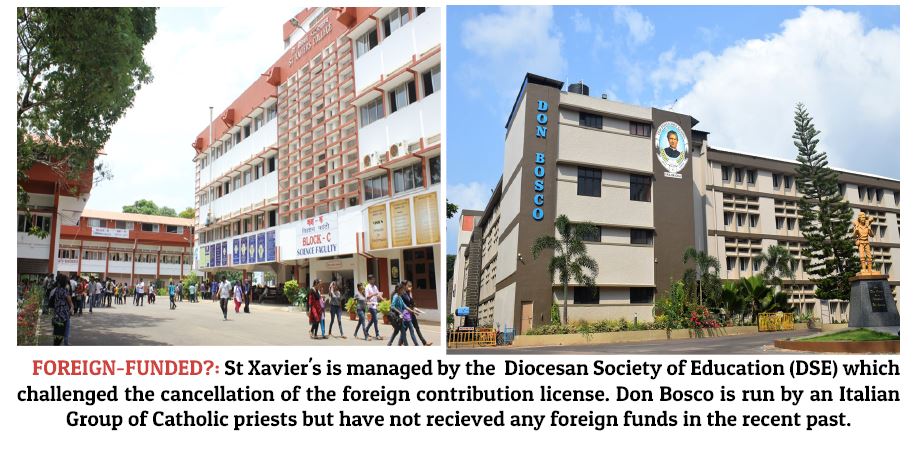
The proposed amendment to the Foreign Contribution Regulation Act would empower the government to take over assets like the St Xavier’s colleges or the Don Bosco institutions that might have received foreign contributions historically. Indeed, the threat extends to all minority institutions, including icons like
IF the Foreign Contributions Regulation Act is passed by the Modi government over 106 church-sponsored high schools, 13 higher secondary schools, 5 colleges, in addition to hundreds of primary and middle schools supported by the church, could be closed down by the double-engine government. Chief Minister Pramod Sawant has revealed that of the 200 Non-Governmental Organisations (NGOs), which historically have received foreign contributions, only 80 continue to be active. The licenses of another 80 NGOS have been cancelled and the licenses of 42 have been deemed as ceased. The Goa bench of the high court has issued show cause notices against the cancellation of the FCRA licenses of the Diocesan Society of Education, which regulates all the Christian schools. It has also challenged the cancellation of the FCRA licenses of the Diocesan Society of Social Action which runs Caritas. Contrary to the general impression there are several NGOs in Goa which have been receiving foreign contributions. The most prominent of them is Sangath, the mental health organization headed by Dr Vikram Patel.The Goa Heritage Action Group by Heta Pandit also receives a large amount of foreign contributions. Other prominent recepients of foreign donation are the Goa Animal Welfare Association and the Chorao Education Society. Curiously, despite heavy backing from the mine owners the Goa Football Association also gets foreign contribution.
The FRCA is not new but was originally passed in 2001. The proposed amendment bill is draconian. The proposed amendment empowers the body designated by the Modi government to take over the properties and assets of institutions which have received foreign contribution. Even if they are currently not receiving any foreign contributions. The Diocesan Society of Education and the Society of Social Action informed the high court that they have not received any foreign contribution in the last three years. That they are funded entirely by fees and donations from local philanthropists. The fear is that the FCRA amendment may be given effect retrospectively. This would hold the Damocles sword of the takeover of church-managed educational institutions,hospitals, old age homes, etcetera by the government both at the state and center. This will affect not only Goa and Kerala but educational institutions and hospitals across the country. According to the Catholic Bishops Conference of India there are over 54,000 church-linked educational institutions in the country catering to over 10 crore students. Moreover there are over 20,000 hospials, clinics and dispensaries which are supported by the church. These figures do not include other Christian organisations such as theSt Stephen’s College in Delhi and the Wilson College in Mumbai which are supported by Protestant Christian organizations. There are larege number of very prestigious education institutions and hospitals which re run by Syrian linked orgnisations in Kerala. Both the Madras Christian College and the prestigious Vellore Medical Complex are funded by church-linked organisations. Indeed, the Vellore Medical facilities were started by an American missionary……The facility which has over 3,000 doctors and 4,600 nurses could face closure at the whim of the designated authority under the FRCA.
The FRCA is not by itself a ban on foreign donations. The amendment bill creates a designated authority which could take custody of the assets built or acquired through foreign contributions. This could happen to institutions which lose their foreign contributions licenses or fails to renew their FCRA registration. These assets could ultimately be transferred to a government body or sold with the proceeds going to the government. The only exception is the places of worship which could retain their religious character even if the assets are transferred to the government. This affects Christian institutions the most as they may have relied on foreign donations to build their schools, colleges, hospitals, orphanages, old age homes and social work centers. The new rules also tighten the specifications of purpose in geographical areas for which FCRA registration can be used. There is a stipulation in the amended rules that churches and madrassas cannot be used for religious conversions.
The proposed amendment which was halted by the Opposition has some parallels with the new law regulting madrassas which are educational institutions run by Muslim organizations. The gobvernmen has recently passed the Regulation of Madrassas Act which enable sit to appoint non-Muslims to the board of madrassas. Under Modi the government has virtually taken over the Wakf boards which control a large amount of resources which fund mosques and madrassas.
The proposed amendment pose a threat to institutional autonomy. If foreign funded organizations have to comply with tighter government controls management may become more dependent on bureaucratic permissions. Collesges, hospitals and schools funded by Christian orgnisations may have accumulated assets and infrastructure build over decades. If the amended law makes the use or transfer of foreign contribution funded assets more restrictive it could affect how these institutions operate. The amendment could have a dispropotianate impact on institutions which have historically received legitimate foreign donations. Small charitable organizations may find the compliance requirements very expensive and difficult. The larger issue is minority rights which are protected under Article 30 of the Constitution. Any change in FCRA indirectly affects the management of such institutions. The fear is that the regulation of foreign contributions will become restriction of the institutions themselves. Fortunately, the amendment bill has been referred to a parliamentary committee . All secular minded individuals and organizations should join together to fight the dilution of the minority rights by the Modi government.
 LETTER TO THE EDITOR FOR ISSUE DATED OCTOBER 03, 2026
 GEN-Z BLOCKED FROM VOTING BY GYANESHWAR MODI!
 THE FORAL OF 1526 Five Hundred Years Later, What Does Goa’s Oldest Village Charter Really Mean?
 20 YEARS IN ‘HERALD’, 43 IN GOA!
 THE DEGRADATION OF JNU – MY ALMA MATER! By Arvind Pinto
 THE WOMEN WHO LOOK BACK! By Prema Viswanathan
 GOA IS CELEBRITY STATE!
 HI MUMBAI MERI JAAN BUT…
 WEEKEND UPDATES
 LETTER TO THE EDITOR FOR ISSUE DATED SEPTEMBER 26, 2026
 DIVIDED EVEN IN DEATH!By Rajan Narayan
 IF YOU CLAIM THE CREDIT, TAKE THE RESPONSIBILITY!By Joquim Goes
 8 EMAILS IN 7 DAYS, BUT VALID GOA VOTERS STILL LEFT OUT: EC’S FLAWED SYSTEM!By Ritika Chopra
 MAKE IN INDIA: UNITED PAYMENTS INTERFACE India’s digital local leap to global benchmark…By Arvind Pinto
 BRING BACK THE FLATBREADS OF INDIA!
Goa is abuzz with excitement as vintage bike and car owners, users, collectors and fans are decking […]