Goa is abuzz with excitement as vintage bike and car owners, users, collectors and fans are decking […]
Old is Gold
October 4, 2016
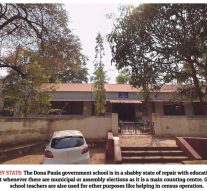
The irony is that unlike in the rest of the country, Goa has over 600 government primary schools. There is no shortage of qualified very well-paid teachers. The majority of government schools have adequate to good infrastructure. But nobody wants to go to government primary schools even though they are free and offer mid-day meals. This is primarily because the overwhelming majority of the government schools in Goa are in the Marathi-medium. And even the Konkani-medium schools use the Devanagiri Konkani script. The 600 schools cater to only about 14,000 students giving student teacher ratio of 13:1 while just 250 aided schools teach over 60,000 students. Expensive private schools like Zee, Sunshine and Sharda Mandir are patronised by over 20,000 students.
THE GOVERNMENT of Goa owns and runs 687 primary schools. However, the number of students studying in these government schools is only 18,000. In sharp contrast the 289 government-aided private schools cater to 51,000 plus students. Ironically, even the private schools which charge huge fees and don’t get any support from the government have been attracting more students (22,000) than government private schools.
There is nothing wrong with the government primary schools in the state. They have very good infrastructure unlike government schools in the rest of the country, the overwhelming majority of them have their own buildings, adequate drinking water and sanitation facilities, and even internet connections for smart boards. Many of them even have separate toilets for girls though their record in providing similar facilities for physically handicapped is poor. The government teachers are among the best paid in the state. The entry level salaries are Rs34,000 per month which can go up to Rs1.5lakh. Unlike private schools all the teachers in government primary schools are qualified and have at least diplomas in education. The parent-teacher ratio is the best in government primary schools. The 1,375 primary school teachers in government cater to only 13 students or less in each class. Whereas the average student-ratio in aided schools is an average of 40 to 50 teachers per student. Every teacher caters to 40 to 50 students. The extraordinary imbalance is dramatized by the fact that the government schools which constitute over 62% of all primary school students cater to only 20.2% of all primary school students. The rest of the 80% of primary school students are catered to by aided private primary schools and exclusively private schools. To clarify the situation schools run by the Diocesan Society of Education with half the teaching staff cater to over 50% of the total primary school students of about a lakh in the Goa. Interestingly, fancy, expensive, hi fi primary schools like Sharada Mandir and the Zee and Sunrise primary school brands are attracting 20,000 plus primary school students in the state.
The elite and the super elite send their children to private primary schools where the fees can range from Rs10,000 to Rs25,000 a month. The middle class and even the poorer sections of society including second generation migrants send their children to government aided private schools offering education in the English medium. The number of students catered to by government primary schools imparting education in the Marathi and Konkani medium have fallen from around 60,000 in 1975 to less than 15,000 in 2026. Never mind that the Pramod Sawant government is keeping the government Marathi medium primary schools even though most of them have less than 20 students per class for a total of 50 to 60 students from Class 1 to 4. There are as many as 300 single teacher government primary schools in Goa. Which means that there is only one teacher for all the four standards from 1 to 4.
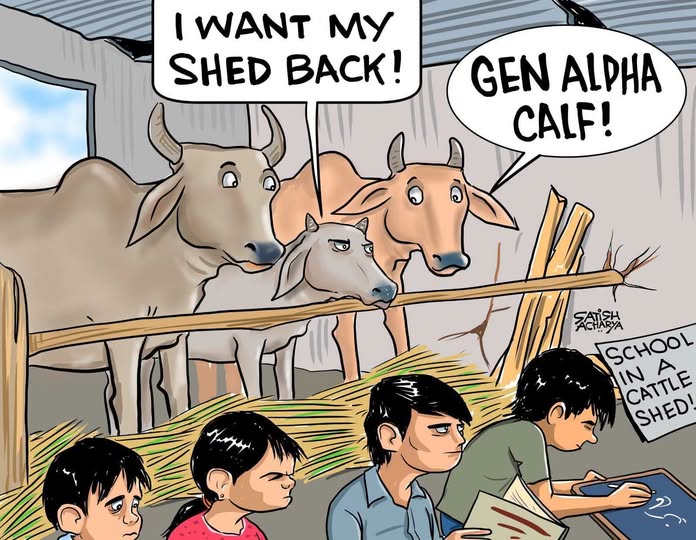
At the time of Liberation the Maharashtrawadi Gomantak Party had a major presence in Goa. The MGP which was created to merge Goa with Maharashtra won the majority of the seats in the first election in 1962 and formed the government. The then chief minister Bhausaheb Bandodkar set up more than 1,000 Marathi medium primary schools within his first term of five years. This of course was a major step towards literacy as prior to Liberation the Portuguese only permitted Portuguese-medium primary schools. Since the MGP was committed to merger with Maharashtra it focused only on Marathi-medium primary schools. Over the years these Marathi medium primary schools as well as the Konkani medium primary schools became irrelevant. Goa is probably the only state in the country which adopted the language of a neighboring state, Maharashtra, as the medium of instruction in the government run primary schools. Even after Konkani was declared the exclusive official language of the state, the government continues to support Marathi medium primary schools. This despite the fact that parents and children are no longer sending their children to Marathi medium government schools.
Ironically, 89.1% of government schools have an internet connection. Over 96% have playgrounds. Over 90% have adequate water and sanitation facilities. The government primary students also have the benefit of the mid-day meal. Despite this in 2024-25, 687 government primary schools had only 18,000 children – an average of just 27 students per school. In contrast, the 289 aided private schools had 51,000 students with an average of 180 pupils for each primary school from class 1 to class 4.
The reasons why parents have been abandoning government primary schools is primarily because of the medium of instruction. Nobody is interested in Marathi or even Konkani medium primary schools. They all want to benefit from the opportunities for upward mobility provided by English medium primary schools. The English medium primary schools run by the Diocesan Society of Education are very affordable as all the fees of the teaching staff is paid by the government. We have known cases of even the second generation migrants who prefer to send their children to the Auxilium or the Babush Monserrate run St Michael School which offer English medium instruction. The hard ground reality is that there are no jobs for those who pass out of Marathi and Konkani medium schools.
The University of Goa offers Master’s degree in Marathi and Konkani but there are no takers as there are no jobs available. The government recently confessed that no candidates are available for translation from Konkani to English, particularly on digital platforms. Unlike in Maharashtra knowledge of Konkani is not mandatory for private sector jobs in Goa. Neither shop assistants nor delivery boys and girls or even autoriksha and taxi drivers in Goa are required to have knowledge of Konkani and Marathi.
The only jobs where knowledge of Konkani is essential and Marathi desirable is in low level government jobs of peons and lower division clerks. For officer level jobs all that is required is minimum working knowledge of Konkani and that is waived on the claim that qualified people are not available.
There are huge vacancies in the university and in the professional colleges including the Goa Medical College and Hospital as there are no Konkani speaking candidates available. Government jobs have reached saturation points. The only jobs that are available to Goan students who have completed their Marathi medium even in the 10th standard are jobs of autoriksha and taxi drivers — not in Goa but in Mumbai.
This is because the Maharashtra government has made it mandatory for taxi and autoriksha drivers to have working knowledge of Marathi. Indeed, there is an ongoing strike by non-Maharashtrian taxi drivers and autowallahs drivers in Mumbai over this stipulation. The Hindi speaking auto and taxi drivers have been threatened with suspension of their license if they do not learn Marathi within one month. Maybe Goa should make it mandatory for drivers of autos and taxies and even motorcycle pilots to have a working knowledge of Konkani for renewal if their licenses.
 LETTER TO THE EDITOR FOR THE ISSUE DATED OCTOBER 10, 2026
 WHEN THE MACHINE OVERRIDES THE LAW!
 HAS GOA BECOME MORE PERMISSIVE? By Special Correspondent
 BILLIONAIRES MULTIPLYING AT THE COST OF THE MIDDLE CLASS!
 THE SHADOW OF VOTE THEFT: WHY CEC GYANESH KUMAR MUST RESIGN!By Dr Olav Albuquerque & Deborah Cordeiro
 ULTRA MODERN ‘MID-DAY’ OFFICE
 HI MUMBAI MERI JAAN BUT…
 TCS INVOLVED IN SIR MATCH FIXING!
 CEREBRAL PALSY: UNDERSTANDING ABILITY, ENABLING INCLUSION! By Dr Amit Dias
 WEEKED UPDATES
 LETTER TO THE EDITOR FOR ISSUE DATED OCTOBER 03, 2026
 GEN-Z BLOCKED FROM VOTING BY GYANESHWAR MODI!
 THE FORAL OF 1526 Five Hundred Years Later, What Does Goa’s Oldest Village Charter Really Mean?
 20 YEARS IN ‘HERALD’, 43 IN GOA!
 THE DEGRADATION OF JNU – MY ALMA MATER! By Arvind Pinto
Goa is abuzz with excitement as vintage bike and car owners, users, collectors and fans are decking […]