Goa is abuzz with excitement as vintage bike and car owners, users, collectors and fans are decking […]
Old is Gold
October 4, 2016
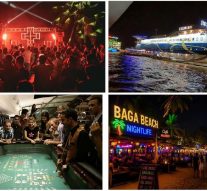
Over the last forty years in Goa I have seen more murders, rapes and molestations. I have seen all the Bhartiya naris from Gujarat and Odisha and Uttar Pradesh shadding their ghoogat and their salwars from hot pants. My recent visit to restaurants I saw more pretty legs than chicken legs. Tourist are in beach wear even at brunches and lobbies of five-star hotels. I was offered sachets of drugs outside the new Majestic hotel. The Old Goa with its gentle casual sosegad atmoshper is gone and has been replaced by sobdom and gommarih.
Goa has always been different.
For decades, its appeal lay not merely in its beaches and churches, its Portuguese architecture or its relaxed pace of life. Goa offered something psychologically more important: freedom. Visitors could dress differently, drink more freely, stay out late, listen to music, meet strangers and escape the restrictions of more conservative parts of India.
But something has changed.
The old Goa of beach shacks, village taverns and hippie travellers has gradually been supplemented—and in some places overshadowed—by an entertainment economy built around casinos, luxury hotels, nightclubs, bars, electronic music, late-night parties and high-spending tourists.
The question is not whether Goa has become immoral. That would be simplistic and unfair.
The more interesting question is:
Has the expansion of the night-time economy made Goa a substantially more permissive society than it was 20 or 30 years ago?
The answer appears to be yes—but with important qualifications.
THE NEW GOA AFTER DARK
The transformation is most visible after sunset.
Traditional Goan nightlife was largely dispersed among local taverns, restaurants, dance halls, village festivals and beach shacks.
Today’s entertainment landscape is considerably more commercial.
There are:
CASINOS — FIVE-STAR HOTELS — NIGHTCLUBS — BARS — LOUNGES — BEACH PARTIES — AFTER-PARTIES
These establishments do not necessarily operate as one coordinated industry. But they increasingly form an interconnected night-time tourism ecosystem.
A tourist may arrive at a luxury hotel, have dinner, visit a casino, move to a nightclub, attend an after-party and return to the hotel in the early hours.
The economic objective is obvious:
Keep the tourist spending for as many hours as possible.
THE CASINO EFFECT
Casinos are perhaps the most visible symbol of the transformation.
Goa’s offshore casinos turned gambling from an activity once associated with discreet circles into a mainstream tourism product.
The casino is no longer necessarily an isolated destination.
It is part of an entertainment package involving:
• hotels
• restaurants
• bars
• entertainment
• luxury transport
• nightlife
• VIP rooms
• high-spending customers.
This has inevitably changed the social atmosphere surrounding tourism.
Gambling itself is not prostitution, and casinos should not automatically be associated with sexual services.
But casinos can contribute to a high-discretionary-spending environment in which alcohol, entertainment and personal services become increasingly commercialised.
That creates opportunities for other informal economies to develop around them.
THE FIVE-STAR HOTEL: A DIFFERENT WORLD
The five-star hotel is another important part of this transformation.
Modern luxury hotels are not simply places to sleep.
They are entertainment complexes.
A large resort can contain:
Restaurants + bars + lounges + spas + swimming pools + conference facilities + wedding venues + night entertainment.
And increasingly, the hotel becomes the meeting point between different categories of visitors.
Business travellers, wealthy tourists, casino customers, partygoers and local residents can occupy the same social space.
This has weakened some of the older boundaries between tourist and local, respectable and unconventional, daytime and night-time society.
NIGHTCLUBS HAVE CHANGED THE CLOCK
One of the biggest cultural changes is temporal.
Goa’s tourism economy increasingly operates long after conventional business hours. A restaurant dinner may begin at 10 pm. A nightclub may become busy after midnight. An entertainment venue may continue until the early morning. The result is a 24-hour consumption culture.
THE OLD TOURISM CLOCK
Breakfast — Beach — Lunch — Siesta — Dinner — Sleep
THE NEW TOURISM CLOCK
Beach— Bar — Restaurant — Casino — Club — After-party — Breakfast
That is not merely a change in tourism.
It is a change in social behaviour.
HAS SEXUAL PERMISSIVENESS INCREASED?
This is the most sensitive question.
There is certainly greater visibility of relationships and sexual behaviour that would once have been regarded as unconventional in Goa.
Tourists arrive without the same social inhibitions they might observe at home.
Hotels and resorts generally provide considerably greater privacy than traditional guest houses.
Dating apps have transformed how strangers meet.
Nightclubs bring together people who may have no prior social connection.
Alcohol reduces inhibitions.
And Goa’s reputation as a place of freedom itself attracts people seeking experiences unavailable—or socially difficult—in their home cities.
But this does not mean that Goa has become a centre of unrestricted prostitution.
The reality is much more complicated.
FROM PROSTITUTION TO THE “GREY ECONOMY”
The most interesting development may be the growth of what could be called the grey economy of companionship.
There is a considerable difference between: formal prostitution and paid companionship, social relationships, transactional relationships and informal sexual arrangements.
A person may receive dinner, accommodation, gifts, employment assistance, introductions or financial support without there being an explicit cash-for-sex transaction. That makes such relationships extremely difficult to measure.
It also explains why official statistics cannot tell the whole story.
THE GREY ZONE
Dating
Companionship
Gifts / financial assistance
Employment or business opportunities
Transactional relationships
Commercial sexual activity
The boundaries between these categories are often blurred.
THE CASINO–NIGHTCLUB CONNECTION
There is another important phenomenon. The clientele of casinos and nightclubs can overlap. Not everyone who visits a casino goes to a nightclub. Not everyone who visits a nightclub gambles.
But both businesses benefit from the same broad tourism ecosystem:
wealth + alcohol + entertainment + anonymity + late-night activity.
That combination inevitably creates a market for additional services.
This is why Goa’s night-time economy deserves to be studied as an ecosystem rather than as separate businesses.

THE “ESCORT” PHENOMENON
The word escort itself has become ambiguous.
An escort may simply mean a companion hired to accompany somebody socially.
But the term is also sometimes used as a euphemism for commercial sexual services.
Online platforms and social media have made this market considerably less visible than the traditional street-based sex trade.
There may be no brothel.
There may be no obvious transaction.
A meeting can be arranged through:
Instagram — WhatsApp —Dating app — Hotel —Restaurant—Private residence
This makes enforcement substantially more difficult.
It also means that the traditional image of prostitution—women standing on a street or operating from a known brothel—is increasingly outdated.
BUT HAS GOA ITSELF BECOME MORE PERMISSIVE?
Yes, in several respects.
BUT THERE IS A DANGER IN BLAMING CASINOS
It would be intellectually dishonest to claim:
Casinos caused prostitution.
There is no basis for such a sweeping conclusion.
Sex work existed in Goa long before the present casino boom.
Similarly, alcohol, extramarital relationships and sexual experimentation are not new.
What has changed is the scale, visibility, commercial infrastructure and technology surrounding nightlife.
The better argument is therefore:
The expansion of casinos, luxury hospitality and nightclubs has created a much larger ecosystem in which permissive behaviour can flourish.
That is considerably different from saying that these establishments themselves promote prostitution.
THE PRICE OF PERMISSIVENESS
Every social transformation has winners and losers.
The winners include:
• hotels
• restaurants
• taxi operators
• entertainment companies
• casino operators
• event organisers
• alcohol retailers
• tourism businesses.
But there are also costs.
Drug abuse
Nightlife can provide a market for illegal drugs.
Sexual exploitation
Young or economically vulnerable people can become targets.
Human trafficking
Tourism destinations are particularly vulnerable to trafficking networks.
Alcohol-related violence
Late-night drinking increases the risk of accidents and assaults.
Exploitation of hospitality workers
Low-paid employees working long hours can become vulnerable to harassment and exploitation.
Noise and disruption
Residential neighbourhoods increasingly coexist with commercial nightlife.
THE MOST VULNERABLE: YOUNG WOMEN
The greatest concern should not be consensual relationships between adults.
It should be coercion and exploitation.
A young woman entering Goa’s hospitality or entertainment economy may encounter pressures that have little to do with her formal employment.
There can be demands for companionship.
There can be sexual harassment.
There can be promises of jobs or promotions.
There can be economic dependence.
And there can be situations where the distinction between voluntary participation and exploitation becomes extremely difficult to establish.
This is where regulation must concentrate.
THE HOTEL ROOM IS NOT THE CRIME
There is also a danger of moral policing. Two consenting adults meeting in a hotel is not evidence of prostitution. A woman travelling alone is not an escort. A man entering a nightclub with a woman is not necessarily her client.
A casino customer is not necessarily involved in illegal activity. A nightclub is not a brothel. A five-star hotel is not a centre of prostitution merely because sexual relationships occur among some guests. Evidence must replace insinuation.
WHAT HAS REALLY CHANGED?
Perhaps the biggest change is not sexual.
It is commercialisation.
Goa increasingly sells experiences that were once incidental to tourism.
Sunset.
Alcohol.
Music.
Gambling.
Luxury.
Adventure.
Romance.
Sexual freedom.
Nightlife.
Everything has become a product.
THE NEW GOAN TOURISM FORMULA
BEACH + ALCOHOL + GAMBLING + MUSIC + NIGHTLIFE + LUXURY + ANONYMITY
That is the Goa being marketed to a new generation.
THE QUESTION GOVERNMENT MUST ANSWER
The issue is not whether Goa should become conservative again.
It cannot—and should not.
Goa’s openness is one of its greatest assets.
The real question is:
Can Goa remain permissive without becoming exploitative?
That requires much stronger regulation of the night-time economy.
There should be:
• strict enforcement of labour laws; • protection against sexual harassment;
• effective monitoring of trafficking;
• protection of minors;
• responsible alcohol regulation;
• proper policing around nightlife zones;
• transparent casino regulation;
• protection of hospitality workers;
• stronger mechanisms for women to report coercion;
• action against organised prostitution and trafficking where evidence exists.
At the same time, consenting adults should not be subjected to arbitrary moral policing.
GOA’S GREAT SOCIAL EXPERIMENT
Goa is conducting a remarkable social experiment.
A small state has become one of India’s most internationally recognised entertainment destinations.
It has combined:
traditional Catholic-Goan culture + liberal social attitudes + mass tourism + luxury hotels + casinos + nightclubs + digital dating + alcohol + international visitors.
The result is bound to produce cultural friction.
The old Goa is still there.
The tavern is still there.
The village feast is still there.
The family restaurant is still there.
But alongside it exists another Goa—one that wakes up when the traditional Goa goes to sleep.
THE FINAL QUESTION
Has Goa become more permissive?
Yes.
But permissiveness itself is not necessarily a social disease.
A society can become more tolerant of adult choice without becoming morally degraded.
The real danger begins when freedom becomes a commodity and vulnerability becomes an opportunity for exploitation.
Goa must therefore decide what kind of liberal society it wants to be.
A Goa where adults are free to drink, dance, gamble, date and enjoy themselves is one thing.
A Goa where poverty, gender inequality, vulnerable workers, trafficking and coercion are exploited to feed an expanding entertainment industry is quite another.
The challenge for Goa is not to turn back the clock.
It is to ensure that freedom does not become a licence for exploitation.
That is the real test of Goa’s new permissiveness.
 LETTER TO THE EDITOR FOR THE ISSUE DATED OCTOBER 10, 2026
 WHEN THE MACHINE OVERRIDES THE LAW!
 BILLIONAIRES MULTIPLYING AT THE COST OF THE MIDDLE CLASS!
 THE SHADOW OF VOTE THEFT: WHY CEC GYANESH KUMAR MUST RESIGN!By Dr Olav Albuquerque & Deborah Cordeiro
 ULTRA MODERN ‘MID-DAY’ OFFICE
 HI MUMBAI MERI JAAN BUT…
 TCS INVOLVED IN SIR MATCH FIXING!
 CEREBRAL PALSY: UNDERSTANDING ABILITY, ENABLING INCLUSION! By Dr Amit Dias
 WEEKED UPDATES
 LETTER TO THE EDITOR FOR ISSUE DATED OCTOBER 03, 2026
 GEN-Z BLOCKED FROM VOTING BY GYANESHWAR MODI!
 THE FORAL OF 1526 Five Hundred Years Later, What Does Goa’s Oldest Village Charter Really Mean?
 20 YEARS IN ‘HERALD’, 43 IN GOA!
 THE DEGRADATION OF JNU – MY ALMA MATER! By Arvind Pinto
 THE WOMEN WHO LOOK BACK! By Prema Viswanathan
Goa is abuzz with excitement as vintage bike and car owners, users, collectors and fans are decking […]