Goa is abuzz with excitement as vintage bike and car owners, users, collectors and fans are decking […]
Old is Gold
October 4, 2016
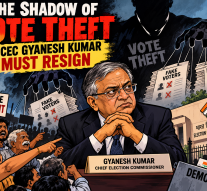
Chief Election Commissioner Gyanesh Kumar finds himself at the center of a major national storm that strikes at the very heart of India’s electoral system. Massive protests have erupted across the country following a series of startling revelations regarding the manipulation of Form 6—the statutory document used by citizens seeking new voter enrollment.
The controversy, which involves unapproved changes to electoral protocols and a subsequent rebuke from the Supreme Court of India, has culminated in Rahul Gandhi and his sister, Priyanka Vadra, courting arrest in Delhi. Both the siblings who are MPs, led a march to meet Gyanesh Kumar while TV channels supporting the ruling party, in the guise of nationalism, have painted the Gandhi siblings as misleading the people. In Goa, this alleged manipulation threatens to disenfranchise nearly 300,000, Goemkars, triggering local resistance.
The Anatomy of Form 6 Manipulation
The crisis erupted when the EC , led by Gyanesh Kumar, rolled out a sweeping Election Commission of India (ECI)Special Intensive Revision (SIR) of electoral rolls. According to unverified information, an additional declaration was introduced to the online version of Form 6 via the ECI’s portal. Opposition parties quickly flagged that this unauthorized modification added stringent bureaucratic hurdles designed to suppress specific voter demographics.
Senior political leaders have accused the Chief Election Commissioner of deliberately orchestrating these hurdles. Critics argue the modification specifically targeted younger, newly eligible voters, creating structural barriers to keep them off the rolls. While the ECI defended its actions by claiming the statutory form itself was unchanged and that it had merely introduced an “addendum,” the logistical reality resulted in widespread voter exclusion. Across various states, the rushed and covert implementation of the SIR has resulted in the deletion of tens of lakhs of names from the electoral registers.
Caught in a Deception: The Supreme Court Rebuttal
What turned a bureaucratic dispute into a severe institutional crisis was the ECI’s attempt to shield its actions using the judiciary. Through a press release, the Election Commission asserted that the modified Form 6 protocol had been formally approved and upheld by the Supreme Court.
However, this defence fell apart in open court. The Supreme Court strongly rejected the ECI’s narrative. The Chief Justice of India clarified the apex court had never approved any modification to Form 6. Demanding that the commission produce its internal records, the Court sought to establish exactly who authorized the changes without legal sanction. By exposing the fact that the head of India’s premier electoral body had misrepresented judicial orders to push through unauthorized changes, the Supreme Court’s intervention stripped the CEC of his institutional defense.
The Crisis Hits Close to Home: The Threat to Goa
For Goa, the implications of this engineered revision are catastrophic. A delegation from the Goa Congress, led by local leadership, met with the Chief Electoral Officer of Goa to register a fierce protest against the ongoing SIR process. The numbers are staggering: initial assessments indicate that nearly 2.9 lakh Goan voters are at risk of being arbitrarily struck off the electoral rolls.
The Supreme Court has asserted that no individual’s name can be deleted from a voter list without a proper show-cause notice and a fair opportunity to respond. In Goa, this mandate has been ignored in favor of a hurried, opaque schedule. Aggrieved citizens, civil rights groups, and opposition leaders have rallied across South Goa, warning this represents a direct assault on the democratic rights of Goans. The fear of calculated voter suppression has transformed a local administrative issue into a broader movement to protect regional political representation.
A Nationwide Call for Accountability
The backlash against Gyanesh Kumar extends far beyond the borders of Goa. Across India, a broad coalition of opposition parties, regional outfits, and civil society organizations have united under a simple slogan: “Gyanesh Hatao, Democracy Bachao” (Remove Gyanesh, Save Democracy). From the streets of Guwahati to demonstrations in New Delhi, the demands remain steadfast:
• Immediate Resignation: Gyanesh Kumar must step down for undermining his office and misrepresenting the judiciary.
• Halt the SIR: The flawed Special Intensive Revision must be paused immediately across all states.
• Restore Deleted Names: All legitimately registered citizens who were purged during this process must have their voting rights restored.
• Independent Inquiry: A high-level, independent investigation must be launched to determine criminal liability for the unilateral changes to the voting infrastructure.
Prominent national figures have pointed out that according to the EC’s own data, voter lists in specific regions could shrink by as much as 30%. Regional parties like the Biju Janata Dal (BJD) in Odisha have noted that over 27.5 lakh people were deleted from their state’s rolls alone, prompting former Chief Minister Naveen Patnaik to join the call for the CEC’s removal. With several crucial state elections fast approaching, the stakes could not be higher.
Preserving the Sanctity of the Ballot
The Election Commission of India was conceived by the architects of the Constitution as an independent, fearless holder of elections. When the leadership of such an institution is caught making unauthorized alterations to voter registration forms and using the Supreme Court’s name to justify it, the people’s trust vested in such democratic institutions is annihilated.
Gyanesh Kumar’s continued presence at the helm of the ECI compromises the neutrality of the upcoming elections. For democracy to function smoothly, the referee must be beyond reproach. If the Chief Election Commissioner refuses to step down voluntarily and refuses to accept moral responsibility for this institutional failure, the President and the judiciary must step in to restore public trust. Goans, alongside citizens across India, deserve a transparent, uncorrupted electoral roll, and an election authority that respects the law of the land.
 LETTER TO THE EDITOR FOR THE ISSUE DATED OCTOBER 10, 2026
 WHEN THE MACHINE OVERRIDES THE LAW!
 HAS GOA BECOME MORE PERMISSIVE? By Special Correspondent
 BILLIONAIRES MULTIPLYING AT THE COST OF THE MIDDLE CLASS!
 ULTRA MODERN ‘MID-DAY’ OFFICE
 HI MUMBAI MERI JAAN BUT…
 TCS INVOLVED IN SIR MATCH FIXING!
 CEREBRAL PALSY: UNDERSTANDING ABILITY, ENABLING INCLUSION! By Dr Amit Dias
 WEEKED UPDATES
 LETTER TO THE EDITOR FOR ISSUE DATED OCTOBER 03, 2026
 GEN-Z BLOCKED FROM VOTING BY GYANESHWAR MODI!
 THE FORAL OF 1526 Five Hundred Years Later, What Does Goa’s Oldest Village Charter Really Mean?
 20 YEARS IN ‘HERALD’, 43 IN GOA!
 THE DEGRADATION OF JNU – MY ALMA MATER! By Arvind Pinto
 THE WOMEN WHO LOOK BACK! By Prema Viswanathan
Goa is abuzz with excitement as vintage bike and car owners, users, collectors and fans are decking […]