Goa is abuzz with excitement as vintage bike and car owners, users, collectors and fans are decking […]
Old is Gold
October 4, 2016
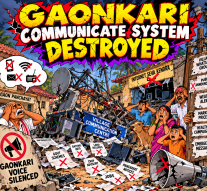
Unlike Rane Portuguese respected rights of Gaonkars. They mandated that Gaunkars could not sell communicate land to outsiders. Successive governments have destroyed the Gaonkari system. A historical review on 500 anniversary of FORAL ACT
On September 16, 1526, a document was issued in Goa which would acquire an importance far greater than its modest size might suggest. Known as the Foral dos Usos e Costumes dos Gaocares e Lavradores das Ilhas de Goa e Outros anexas a Ela, or simply the Foral of 1526, it recorded the rights, customs, obligations and functioning of the village communities under early Portuguese rule.
Five hundred years later, the Foral remains at the centre of an enduring question: what exactly did it establish, and what, if anything, does it mean for Goa today?
The question matters because the Comunidades are not merely an historical curiosity. They remain legally recognised institutions, possess property and income, and continue to be governed by the Code of Comunidades. The Government of India’s India Code continues to list the Code of Comunidades of 1961 as the governing law for the comunidades or gauncarias of Goa.
But the modern debate frequently starts with a proposition that requires qualification: that the Foral was the original grant by the Portuguese of all village lands to the gaunkars.
The historical evidence is considerably more complicated.
What was the Foral?
The document was issued under the authority of King João III of Portugal through Afonso Mexia, the royal Comptroller of the Exchequer in Portuguese India. It concerned principally the Ilhas of Goa — the islands around Tiswadi that constituted the principal Portuguese possession at the time. It was not a charter covering the whole territory that constitutes the modern State of Goa.
The distinction is important. Portugal had conquered Goa in 1510, but in 1526 its territorial control was still much narrower than the Goa of today. The Foral initially applied to the village communities of the islands; its operation was subsequently extended to other territories as Portuguese possessions expanded. Historical scholarship therefore cautions against simply equating the territory covered by the 1526 document with the present-day State of Goa.
The document contains 49 clauses. They deal with taxation, cultivation, inheritance, village administration, property, obligations to the ruler and the rights and responsibilities of gaunkars and cultivators.
Its opening declaration is particularly revealing.
The King states that, following investigation and scrutiny, the administration had established what the inhabitants were obliged to pay from their hereditary property, rents and other charges — and what they had previously paid to the kings and lords of the land before the territory became Portuguese. The Goa government’s archival reproduction preserves the beginning of the English translation of this declaration.
This is the key to understanding the document.
The Portuguese were not announcing: “We have created a new village system.”
They were saying, in effect: we have investigated the existing system, established what was customarily owed to the previous rulers, and are now defining the obligations under the new sovereign.
That makes the Foral simultaneously a document of recognition and conquest.
The gaunkars existed before the Foral
The first clause gives an account of the origin and status of the gaunkars. The historical text describes village founders who established cultivation on previously uncultivated land, created settlements and acquired a position of authority over the resulting village community.
The term gancar is explained as carrying meanings associated with governor, administrator and benefactor. The founders and their descendants acquired hereditary rights, while others who cultivated the land had obligations towards the village institution.
An early English translation published from the Portuguese text describes the gaunkars as the original cultivators and organisers whose work produced settled village communities.
This is crucial.
The Comunidade was therefore not simply a Portuguese invention. There was already a gaunkari system of village organisation, involving hereditary membership, cultivation, revenue collection and collective management.
The Portuguese Crown took that institution and placed it inside its own political and fiscal structure.
Modern historian Rochelle Pinto has described the Foral as a legal document which embedded the Portuguese Crown within the administration of the existing gaunkaria. Her interpretation is particularly useful because it avoids two opposite simplifications: that the Portuguese invented the Comunidade, and that the Foral represented an agreement between two fully equal sovereign powers.
The Foral was therefore an instrument through which an existing indigenous institution was recognised, regulated and subordinated to the authority of the new sovereign.
Was the Foral a land grant?
This is perhaps the most important question for contemporary Goa.
The answer is: not in the simple sense in which the expression “land grant” is sometimes used today.
The Foral recognised different interests in land. It recognised hereditary rights, cultivation rights, village rights and the fiscal claims of the Crown. It regulated transactions and imposed obligations. It did not simply transfer absolute, unrestricted private ownership of every acre of village territory to individual gaunkars.
The distinction between individual ownership and collective institutional rights is fundamental.
The village community possessed powers over land and resources. The gaunkars enjoyed hereditary status within the institution. Cultivators had defined rights. The Crown retained sovereignty and fiscal claims.
Indeed, the provisions governing transactions show that land could not simply be treated as an ordinary commodity that any individual could sell without reference to the community.
The system therefore resembled a form of collective village property administration, with different layers of rights rather than the modern concept of a single individual holding an unrestricted freehold title.
This is one reason why the Foral has remained so important to the history of Comunidade property.
The village was an economic institution
The Foral was much more than a document about fields.
The village community was an economic organisation. It dealt with cultivation, irrigation, village works, taxation and services. Land was connected to the functioning of the village as a whole.
Certain lands could be assigned for services essential to village life. Village functionaries — including occupational groups providing services to the community — could receive rights connected to their services.
The arrangement demonstrates an important characteristic of the old Goan village: land was not merely an asset; it was part of a social and economic system.
The community needed cultivators. It needed artisans. It needed people maintaining water systems and other common facilities. It needed revenue to meet its obligations to the sovereign.
The land system therefore had an institutional purpose.
This is very different from the modern conception of land primarily as a saleable commodity whose highest value is determined by the real-estate market.
The Portuguese interest was also fiscal
There is another side to the Foral which should not be romanticised.
The Portuguese Crown was building a colonial state.
The Foral helped determine what the inhabitants owed to the new ruler. Its concern with revenue was not incidental. Scholarship on the document points out that the Portuguese administration was interested in identifying land and bringing revenue-producing property within an organised fiscal system.
Thus, the Foral was not simply a charter of liberty granted by the Portuguese to the gaunkars.
It was also an instrument of state formation and taxation.
The village community survived, but it survived within a new sovereign order.
This explains the unusual character of the document. It simultaneously preserved an indigenous institution and incorporated it into colonial administration.
Why did the Foral become a “Magna Carta”?
Over subsequent centuries the historical meaning of the Foral changed.
Whenever the authorities attempted to alter revenue arrangements or interfere with customary village rights, gaunkars could invoke the Foral as evidence of the obligations and limits accepted by the Portuguese Crown.
The document therefore gradually acquired the character of a foundational pact.
Rochelle Pinto’s research shows how repeated complaints and disputes transformed the Foral’s significance. What began as a colonial administrative document increasingly came to be invoked as evidence of a relationship between the state and the village communities.
This is an important historical phenomenon.
A document can acquire a meaning beyond the intention of its original authors.
For the Portuguese administration in 1526, the Foral was an instrument for defining revenue and governance.
For later gaunkars, it could become a guarantee of customary rights.
For modern historians, it is evidence of the interaction between an indigenous village institution and a colonial state.
For present-day Goa, it is part of the legal and historical ancestry of the Comunidade system.
All four interpretations can coexist.
The Foral and the 1961 Code
The most important bridge between 1526 and present-day Goa is not the Foral itself but the Code of Comunidades.
The Code of Comunidades of 1961 expressly provides that the comunidades or gauncarias existing in Goa are governed by its provisions and, where the Code is silent, by the general law.
This is the modern legal framework.
The Code also preserves the institutional character of the Comunidade. Its explanatory material describes the comunidade as an agricultural association of the village possessing property in common, with income accruing for its members. It defines gauncarias as associations of gauncares.
This continuity is enormously important.
It means that the contemporary legal existence of Comunidades does not depend upon treating the 1526 Foral as though it were itself a modern title deed.
The legal institution has passed through centuries of legislation, regulations and administrative changes.
The Foral is the historical foundation; the modern Code is the operative legal framework.
That distinction should be kept firmly in mind.
What happened after Liberation?
When Goa became part of India in 1961, the legal transition did not simply erase the Comunidade system.
The Code of Comunidades remained part of the legal framework governing the institutions. The present India Code continues to recognise the 1961 Code, and the Goa government’s own legislation portal continues to list the Code of Comunidades among the state’s laws.
That continuity is remarkable.
Goa changed sovereign power, political system and constitutional status. Yet an institution whose documentary history reaches back five centuries survived.
The survival does not mean that every provision of the 1526 Foral automatically remains law.
Nor does it mean that every modern dispute over a piece of Comunidade land can be decided simply by producing a copy of the Foral.
It means something more subtle — and potentially more important.
The modern Comunidade is a legally recognised institution with a historical identity extending back to the village communities recorded by the Foral.
What does the Foral mean for land today?
This is where historical romance must give way to legal precision.
Suppose there is a dispute in 2026 over whether a particular plot belongs to a Comunidade, whether it can be leased, whether it can be transferred, whether a construction permission can be issued, or whether a particular person possesses rights over it.
The Foral by itself cannot answer all those questions.
The answer may depend on:
• the relevant Comunidade’s records;
• the tombo or land register;
• the Code of Comunidades;
• subsequent Portuguese legislation;
• post-Liberation legislation;
• land records and survey documents;
• specific grants or leases;
• court decisions;
• planning and environmental laws; and
• the facts of the individual property.
The Foral provides historical context and evidence of the institutional origin of the rights, but it is not a substitute for the modern legal title and statutory framework.
This distinction is essential in a state where land values have risen dramatically.
Yet its relevance may be greater than ever
There is another sense in which the Foral has become extraordinarily relevant.
Goa’s contemporary land crisis is partly a crisis of land-use philosophy.
For centuries, the village system treated land, water, agriculture and common resources as interconnected.
Modern development has tended to treat land primarily as a private economic asset.
The difference is profound.
The old village system was based on collective responsibilities. The modern property market is based largely on individual rights and commercial value.
The Comunidade therefore represents an alternative institutional memory: the idea that certain resources have a community function that cannot be reduced to their sale price.
That does not mean that every Comunidade should be preserved unchanged. The institutions themselves have historical inequalities and complicated membership structures, and their administration has often been criticised.
Nor does it mean that every piece of Comunidade land must remain undeveloped forever.
But the historical principle deserves attention: land can possess a social function beyond private ownership.
That principle is hardly irrelevant in contemporary Goa.
The environmental dimension
The relevance becomes even clearer when one considers Goa’s environmental problems.
Paddy fields, wetlands, khazans, water channels, village commons and other ecological systems cannot always be understood as isolated parcels of private land.
They function as systems.
The historical village institutions developed mechanisms for managing common resources because village survival depended upon them.
Modern Goa faces flooding, groundwater depletion, loss of agricultural land, hill cutting, construction pressure and rapid conversion of rural landscapes.
The Foral cannot solve these problems.
But it can remind us that Goa once possessed institutions in which economic use and collective stewardship were connected.
That is a valuable lesson for contemporary land policy.
But we should not turn the Foral into a political myth
There is a danger in celebrating the Foral without understanding its historical context.
It was issued by a colonial power following conquest.
It did not establish democratic government in the modern sense.
It did not create equality between all inhabitants.
The village institution itself was hierarchical and hereditary.
The gaunkars were not simply “the people of Goa” in a modern democratic sense. Membership was connected to particular lineages and village structures.
Nor did the Foral cover all communities and all territory that we now call Goa.
Recent scholarship has therefore questioned descriptions of the document as literally “Goa’s first constitution”. The argument is not that the Foral is unimportant; rather, its historical territory, political circumstances and institutional character must not be projected backwards into the modern State of Goa.
That caution is healthy.
The Foral deserves respect precisely because it is a historical document, not because we need to turn it into something it was not.
Five hundred years of continuity
Perhaps the most remarkable fact about the Foral is not any individual clause.
It is the survival of the institution behind it.
The Portuguese came and went.
The Bijapur Sultanate before them had come and gone.
Portuguese sovereignty eventually ended.
India replaced Portuguese rule.
Goa became a Union Territory and subsequently a state.
Property law changed. Administrative law changed. Revenue systems changed.
Yet the Comunidade remained.
The modern Code still begins from the proposition that the comunidades or gauncarias existing in Goa are governed by a special legal regime.
That is a remarkable example of institutional continuity.
The real lesson of 1526
The Foral should therefore be read neither as a Portuguese gift nor as an uncomplicated ancient title deed.
It was a colonial legal instrument that recorded, regulated and incorporated an existing Goan village institution into a new sovereign order.
Its importance lies precisely in that intersection.
It tells us that the Portuguese did not encounter an empty landscape waiting to be administratively organised. They encountered villages with their own systems of land management, hereditary rights, obligations, agricultural practices and community institutions.
The Portuguese Crown preserved enough of that system to make it useful to colonial administration, while imposing its own sovereignty and fiscal requirements.
Over the centuries, the gaunkars in turn used the Foral as a documentary foundation for defending their customary rights.
That is why the document survived in legal memory.
What should Goa do with the Foral in 2026?
The 500th anniversary should not be merely an occasion for speeches, ceremonies and nostalgic celebration.
It should be an opportunity to read the original document again.
The first requirement is scholarly: the Portuguese original should be made easily accessible alongside reliable English and Konkani translations.
The second is legal: the relationship between the Foral, successive Comunidade legislation and the present Code should be explained clearly to the public.
The third is administrative: the historical records of Comunidades — tombo records, property registers, decisions and maps — deserve systematic preservation and digitisation.
The fourth is environmental: the collective-resource principles embodied in the village system deserve consideration in contemporary policy on wetlands, paddy fields, water systems and common land.
And finally, there should be an honest recognition that the Comunidade system was neither a perfect golden age nor merely a colonial relic.
It was an evolving institution.
Its history contains cooperation and conflict, collective management and hierarchy, community rights and state taxation, continuity and adaptation.
That complexity is precisely what makes it valuable.
A document that refuses to disappear
The Foral of 1526 is five hundred years old.
Yet its central question remains remarkably modern:
Who has the right to control land, and for whose benefit should land be used?
The men who negotiated the Foral could not have imagined modern Goa’s tourism industry, apartment towers, highways, airports or land prices.
But they understood something that modern societies sometimes forget: land is not merely soil with a market value. It supports communities, agriculture, water systems, livelihoods and institutions.
The Foral’s historical significance therefore lies not in providing ready-made answers to today’s property disputes.
Its significance is that it records a different conception of the relationship between land, community and government.
It reminds Goa that its village institutions did not begin with a modern statute, a planning department or a property market.
They were already there when the Portuguese arrived.
The Foral of 1526 recorded that reality, subjected it to colonial authority and gave it a documentary life that has lasted half a millennium.
The task for Goa in 2026 is not to live in 1526.
It is to understand what survived from 1526 — what remains legally protected, what has disappeared, what should be preserved, and what lessons the old village system may still offer a rapidly changing Goa.
Five hundred years later, the most important words in the Foral may therefore be neither Portuguese nor colonial.
They are the underlying idea that a village is more than a collection of privately owned plots of land.
That is an idea worth examining before Goa decides what it wants its land to become in the next five hundred years.
Sources: The original archival reproduction of the 1526 Charter published by the Directorate of Archives and Archaeology, Government of Goa; the Code of Comunidades of 1961 as reproduced in India Code; and modern historical scholarship on the Foral and Comunidade system.
 LETTER TO THE EDITOR FOR ISSUE DATED OCTOBER 03, 2026
 GEN-Z BLOCKED FROM VOTING BY GYANESHWAR MODI!
 20 YEARS IN ‘HERALD’, 43 IN GOA!
 THE DEGRADATION OF JNU – MY ALMA MATER! By Arvind Pinto
 THE WOMEN WHO LOOK BACK! By Prema Viswanathan
 GOA IS CELEBRITY STATE!
 HI MUMBAI MERI JAAN BUT…
 WEEKEND UPDATES
 LETTER TO THE EDITOR FOR ISSUE DATED SEPTEMBER 26, 2026
 DIVIDED EVEN IN DEATH!By Rajan Narayan
 IF YOU CLAIM THE CREDIT, TAKE THE RESPONSIBILITY!By Joquim Goes
 8 EMAILS IN 7 DAYS, BUT VALID GOA VOTERS STILL LEFT OUT: EC’S FLAWED SYSTEM!By Ritika Chopra
 MAKE IN INDIA: UNITED PAYMENTS INTERFACE India’s digital local leap to global benchmark…By Arvind Pinto
 BRING BACK THE FLATBREADS OF INDIA!
 EARLIER YOU KNOW, THE MORE YOU CAN DO Dementia diagnosis matters… By Dr Vailanki Nazira Raposo
Goa is abuzz with excitement as vintage bike and car owners, users, collectors and fans are decking […]