Goa is abuzz with excitement as vintage bike and car owners, users, collectors and fans are decking […]
Old is Gold
October 4, 2016
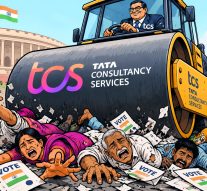
There are moments when a court hearing becomes larger than the dispute placed before it.
The proceedings before the Goa Bench of the Bombay High Court over the Special Intensive Revision (SIR) of electoral rolls have reached precisely such a moment.
What began as the grievance of a family whose names disappeared from the electoral rolls has developed into a much more fundamental confrontation between law and technology, statutory rights and software architecture, and the constitutional responsibility of the Election Commission of India (ECI) and the mechanics through which that responsibility is discharged.
The central question is deceptively simple:
Can an election official be prevented by software from doing something which the law permits or requires him to do?
The Goa Bench has repeatedly demanded an answer.
And the answer matters far beyond the six members of the Salgaonkar family whose case brought the issue before the court. The Court has questioned the ECI over the deletion of their names after they had submitted Form 8, the prescribed form for shifting residence or correcting entries in an existing electoral roll. Goa’s own Chief Electoral Officer describes Form 8 precisely in those terms. Form 6, by contrast, is the application for new registration.
That distinction is not clerical trivia. It goes to the heart of the controversy. If a person is already a registered voter and merely shifts residence, why should that person be treated as a new voter? And if an existing voter is deleted before his or her application for change of address is properly dealt with, what happens to the statutory remedy? The Court has described the resulting predicament as a “Catch-22”. That phrase deserves attention.
The six voters who exposed the larger problem The Goa case concerns six members of one family from Santa Cruz who approached the High Court after their names disappeared from the electoral rolls during SIR despite their having submitted Form 8 applications relating to change of address. The ECI’s position and the mechanics of the system became the subject of increasingly pointed questioning from the Bench.
The Court asked, in substance, why a Form 8 application could not simply have been kept pending rather than rejected, particularly when the applicants were already voters. Then came the more disturbing question. If the voters had been removed from the existing roll, and the system thereafter told them that Form 8 was no longer available to them, what meaningful remedy remained? They could apparently be directed towards Form 6. But Form 6 is for new registration.
That creates an extraordinary bureaucratic paradox: a citizen who says, “I am already a voter; I have merely changed my residence,” can be told, in effect, “You are no longer a voter, so apply to become one.” That is the Catch-22. The voter cannot use Form 8 because his name has disappeared. He is pushed towards Form 6 because his name has disappeared. But Form 6 requires him to make a declaration appropriate to a person seeking fresh inclusion. The petitioner has reportedly objected to making what he regards as a false declaration merely to escape an administrative trap. This is where an apparently technical dispute becomes a constitutional one.
The Court’s most explosive observation On October 1, the Bench of Justices Valmiki Menezes and Amit Jamsandekar expressed deep concern over the manner in which SIR was operating. The Court’s reported words were extraordinary: it questioned whether SIR had effectively suspended statutory provisions and whether officials were being told, in effect, to “follow the software” instead of the law.
That is not an accusation which should be casually converted into a finding against the ECI. It is, however, an extraordinarily serious judicial question. Because software is not law. A computer programme does not possess constitutional authority. An algorithm cannot repeal a statute. A database cannot extinguish a statutory remedy. And a menu option on a government portal cannot determine the legal jurisdiction of an officer if Parliament has already conferred that jurisdiction upon him. If the software does not permit an officer to perform a lawful function, the obvious question is not whether the law must be changed to accommodate the software. The question is: Why has the software been designed that way?
Rule 21: the provision that refuses to disappear The Court has specifically drawn attention to Rule 21 of the Registration of Electors Rules, 1960. Rule 21 deals with names inadvertently omitted from the roll. It provides a mechanism under which the registration officer prepares a list of omitted electors, gives notice, considers objections and decides whether the names should be included. The actual rule refers to the roll and establishes a process for rectifying inadvertent omission. The Goa Bench has reportedly stressed that everything must be considered with reference to the existing roll, not merely the draft roll, because otherwise a voter can be left without an effective route back into the system. That observation strikes at the architecture of the SIR controversy. The electoral roll is not merely a spreadsheet. It is a legal instrument. Every name represents a citizen’s entitlement to participate in the electoral process, subject to the constitutional and statutory qualifications. Every deletion therefore has consequences. The burden of maintaining an accurate roll is unquestionably important. Nobody disputes the need to eliminate duplicate, deceased, shifted or otherwise ineligible entries. But accuracy has two sides.
An electoral roll containing an ineligible person is defective. An electoral roll from which an eligible citizen has been wrongly excluded is also defective. The first error may facilitate an invalid vote. The second can silence a valid one. A serious electoral system must guard against both.
SIR cannot become a deletion machine The ECI has constitutional and statutory responsibilities to maintain electoral rolls. The Commission’s October 2025 directions for SIR in Goa expressly invoked Article 324 of the Constitution, Section 21 of the Representation of the People Act, 1950 and the Registration of Electors Rules, 1960. The instructions also contemplated lists of voters whose names were not included in the draft roll, together with probable reasons such as “Absent”, “Shifted”, “Death” or “Duplicate”, being displayed and made accessible. That is important. It demonstrates that the process was not conceived merely as an invisible deletion exercise. There are supposed to be procedures, notices and opportunities for scrutiny.
The citizen must have some way of discovering what has happened and challenging it. The danger arises when the practical operation of the system becomes more restrictive than the legal framework. Suppose a citizen has shifted from one part of a constituency to another. Suppose the citizen has properly filed Form 8. Suppose the citizen remains an Indian citizen and remains ordinarily resident in the constituency. Suppose the system nevertheless removes the name. Suppose the same system then prevents the officer from processing the Form 8 because the voter has disappeared from the roll. What exactly is the citizen supposed to do? That is not merely a computer problem. It is a due-process problem.
The dangerous supremacy of the digital screen India has digitised almost every interaction between citizen and government. That has brought enormous benefits. But digitisation carries a hidden danger. When a citizen approaches a government office, there was traditionally an official exercising judgment. When a citizen approaches a digital portal, the available choices are predetermined. The computer may offer:
Yes.
No.
Form 6, Form 7,Form 8 unavailable.
But the law may contain another possibility: The officer has a statutory power to examine the circumstances and decide. What happens when the last option has not been programmed? The Goa High Court has effectively asked that question. And it is a question India cannot afford to evade. A government officer must not become a prisoner of a software workflow created for administrative convenience. The technology should implement the law. It cannot become a substitute for the law.
The Form 6 paradox The Form 6 issue makes the problem even sharper. The official Goa election website describes Form 6 as the form for new voters, while Form 8 is expressly for shifting residence, correction of entries and related purposes. So imagine the citizen who has voted for years. He moves house. He follows the prescribed procedure. His Form 8 is rejected or becomes incapable of being processed after his name disappears from the roll. He is then told to use Form 6. What does he say? “I am not a new voter.” That is precisely the difficulty raised before the High Court. An administrative system should not force a citizen into a legally inappropriate category simply because its database has placed him there. If the citizen must make a declaration that is not factually correct in order to regain a right he already possessed, the system has ceased to be merely inconvenient. It has become coercive.
Who programmed the Catch-22? This is where accountability must begin. Not with political accusation. Not with conspiracy theories. With documentation. The ECI should be able to answer simple questions: Who designed the workflow? Who approved it? What legal instructions were supplied to the software designers? Which statutory provisions were mapped into the system? Who tested the Form 8-to-SIR workflow? Was the possibility of a voter being deleted while a Form 8 application was pending anticipated? What happens in the software when a lawful application conflicts with the SIR status of the voter? Can an ERO override the software? If not, why not? If yes, how? Where is the override recorded? Who audits those overrides? These are not partisan questions. They are questions of administrative accountability. And they become more important as election administration becomes increasingly dependent on digital infrastructure.
The Court is not saying SIR itself is illegal This distinction must be maintained. The Goa Bench has not declared the entire SIR exercise illegal. Nor has it finally determined that the Election Commission deliberately violated the law. The observations have arisen during hearings concerning the specific dispute and the operation of the electoral-roll revision process. That distinction matters. But judicial observations can nevertheless expose structural questions which deserve public scrutiny. The Court’s concern is not that computers exist. It is whether the computerised process has displaced legal safeguards. That is a legitimate constitutional concern.
Citizenship versus address The Court has also drawn attention to what it sees as the fundamental purpose of SIR. The Bench asked the ECI, in substance, what the purpose of SIR would be if legitimate citizens were being excluded. The reported observation was that the exercise is not simply about establishing whether a person is physically present at a particular address; it must also address whether the person is an eligible Indian citizen. That distinction is vital. A person can move. A person can temporarily live elsewhere. A person can work in another city. A person can change residence without ceasing to be an Indian citizen. The electoral law itself recognises the importance of ordinary residence rather than crude physical presence at a particular moment. The Goa CEO’s FAQ, for example, explains that an elector’s ordinary residence determines where the person should be enrolled.
Therefore, absence from a particular house is not automatically equivalent to loss of citizenship or electoral eligibility. That sounds obvious. Yet any mass verification exercise must be designed around precisely that distinction. The paradox of “purification” There is an understandable desire to “clean” electoral rolls. Dead voters should not remain. Duplicates should be removed. People who have permanently shifted should be transferred. Ineligible persons should not be enrolled. But there is an inherent danger in a purification exercise. If the administrative system becomes obsessed with removing doubtful names, it may treat the legitimate voter as the problem rather than the anomaly. That is why every deletion mechanism requires a strong restoration mechanism. The easier it becomes to remove a name, the easier it must be for an eligible citizen to challenge the removal. Otherwise the system becomes asymmetrical:
Deletion — one click.
Restoration — months of bureaucracy. That cannot be the standard for a mature democracy.
Democracy does not end at the polling booth There is a tendency to regard the right to vote as something that comes alive only on election day. That is mistaken. The right is also embedded in the administrative process that precedes election day. A citizen’s name on the electoral roll is the gateway. If the name is missing, the voting machine is irrelevant. If the citizen discovers the omission after the remedy has effectively closed, constitutional democracy has already failed that citizen. This is why electoral-roll administration is not routine clerical work. It is democratic infrastructure. Roads carry citizens to polling stations. Electoral rolls carry citizens into the electoral process. Both must work.
The Supreme Court shadow The Goa proceedings are also taking place against a rapidly developing national legal backdrop. The Supreme Court is examining broader challenges concerning SIR and the functioning of the Election Commission. Recent proceedings have raised questions concerning the legality of Commission decisions and the procedures adopted in connection with the revision exercise. That does not mean the Goa case automatically disappears into the Supreme Court proceedings. Nor does it mean every observation made in Goa becomes a nationwide judicial ruling. But the cases inevitably intersect around a common constitutional concern:
How far can an election administration alter established procedures while conducting an intensive revision of the electoral roll? The answer will have consequences for the relationship between administrative instructions, statutory rules and technology.
The hidden constitutional issue There is another principle beneath the controversy. The Constitution gives the Election Commission enormous responsibility. Article 324 entrusts it with the superintendence, direction and control of elections. That power is not a licence to create a parallel legal system. It is a responsibility to administer elections within the constitutional and statutory framework. The stronger the Commission, the stronger must be the safeguards against administrative arbitrariness. And the more technologically sophisticated the machinery becomes, the greater the need for transparency. The citizen should not have to fight an invisible algorithm. He should be able to identify the decision-maker. He should know the reason for the decision. He should know the legal provision under which the decision was taken. He should have an opportunity to challenge it. And there must be a human authority capable of correcting an erroneous digital decision.
The real test for ECINET and ERONET The controversy therefore should not be reduced to whether a particular software platform has a “glitch”. A glitch is something that crashes a programme. The much more serious possibility is a design failure. A system may work exactly as programmed and still produce an unlawful or unjust result. That distinction is fundamental. If software consistently prevents an ERO from accepting a particular lawful application, that is not necessarily a glitch. It may be a policy embedded in software. And if a policy has legal consequences, somebody must take responsibility for it. The question is not whether the computer “made a mistake”. The question is: Who decided what the computer should permit?
The ECI owes the public an explanation The Election Commission should therefore publish, in accessible language, the rules governing the interaction between SIR and Forms 6, 7 and 8. It should explain precisely what happens when an existing elector changes residence during SIR. It should explain how pending applications are treated. It should explain what happens when a voter is omitted from a draft roll. It should explain how Rule 21 is operationalised. It should identify the human authority empowered to correct a software-generated result. And, crucially, it should publish an audit trail showing that statutory safeguards have not been disabled by software design. This is not asking the ECI to reveal cybersecurity secrets. It is asking for administrative transparency.
The Goa High Court has opened the door The importance of the Goa proceedings lies therefore not merely in whether six names are restored. Those six names have become a window into a much bigger system. Behind them are potentially thousands of citizens who may encounter the same problem but lack the resources, legal knowledge or persistence to approach a High Court. For every citizen who files a writ petition, how many simply give up? That is the uncomfortable question. A democracy cannot measure the success of its electoral system merely by counting how many millions vote. It must also ask: How many eligible citizens were prevented from voting? And: How many never discovered that their names had disappeared? The second number may never be known. That is precisely why safeguards matter.
Do not allow “software” to become the new bureaucratic excuse For decades, citizens have heard familiar explanations from government offices: “File is missing.” “Officer is transferred.” “System is down.” “Come tomorrow.” The digital age has produced a new version: “The software does not permit it.” That phrase must never become a substitute for law. If the law permits an action and the software does not, the software must be corrected. If the law does not permit an action, the software should prevent it. That is the proper hierarchy.
Law first. Technology second. Not the other way around. The larger warning The Goa Bench has therefore raised an issue that reaches far beyond SIR. Today it is the electoral roll. Tomorrow it may be welfare eligibility, land records, pensions, taxation, banking or identity verification. Everywhere, government is becoming software-mediated. Citizens increasingly confront government through screens rather than officials. The danger is that an automated refusal begins to acquire the appearance of law. It is not law. A computer cannot exercise constitutional sovereignty. A database cannot hear a citizen. An algorithm cannot substitute for statutory discretion unless the law expressly authorises such automation and appropriate safeguards exist. And a portal cannot extinguish a remedy simply because a programmer failed to provide a button for it. That is the fundamental lesson of the Goa hearings.
The Election Commission must choose its answer carefully The ECI has every right to defend SIR. It has every right to explain why names were deleted. It has every right to demonstrate that the process is necessary to maintain accurate electoral rolls. But it must answer the central question raised by the Court: When the software conflicts with the law, which one wins? There can only be one legitimate answer. The law. The citizen cannot be expected to understand the architecture of ECINET or ERONET. The citizen cannot be expected to know which database has deleted his name. The citizen cannot be expected to diagnose a workflow problem. The citizen is entitled to expect that the institution responsible for elections will provide a lawful, intelligible and accessible route to exercise his electoral rights. That is not a favour. It is the minimum expected of a constitutional democracy. The Goa High Court has done something important by refusing to allow the controversy to remain buried inside technical jargon about forms, databases and software. It has brought the issue back to first principles.
Who is the citizen? Who has the authority to remove his name? What procedure must be followed? What remedy does he have? And finally: Who is accountable when the machine says “no” but the law says “yes”? The answer to that last question may ultimately determine the significance of the entire Goa SIR controversy. Because elections are supposed to be conducted by institutions using technology. They are not supposed to be conducted by technology using institutions. The distinction is not semantic. It is the difference between a democracy administered through computers and a democracy administered by computers. The former is inevitable. The latter would be unacceptable. And the Goa High Court, in its searching questions over SIR, has reminded the Election Commission of precisely where that line must remain. Law must command the machine. The machine must never command the law
 LETTER TO THE EDITOR FOR THE ISSUE DATED OCTOBER 10, 2026
 HAS GOA BECOME MORE PERMISSIVE? By Special Correspondent
 BILLIONAIRES MULTIPLYING AT THE COST OF THE MIDDLE CLASS!
 THE SHADOW OF VOTE THEFT: WHY CEC GYANESH KUMAR MUST RESIGN!By Dr Olav Albuquerque & Deborah Cordeiro
 ULTRA MODERN ‘MID-DAY’ OFFICE
 HI MUMBAI MERI JAAN BUT…
 TCS INVOLVED IN SIR MATCH FIXING!
 CEREBRAL PALSY: UNDERSTANDING ABILITY, ENABLING INCLUSION! By Dr Amit Dias
 WEEKED UPDATES
 LETTER TO THE EDITOR FOR ISSUE DATED OCTOBER 03, 2026
 GEN-Z BLOCKED FROM VOTING BY GYANESHWAR MODI!
 THE FORAL OF 1526 Five Hundred Years Later, What Does Goa’s Oldest Village Charter Really Mean?
 20 YEARS IN ‘HERALD’, 43 IN GOA!
 THE DEGRADATION OF JNU – MY ALMA MATER! By Arvind Pinto
 THE WOMEN WHO LOOK BACK! By Prema Viswanathan
Goa is abuzz with excitement as vintage bike and car owners, users, collectors and fans are decking […]