Goa is abuzz with excitement as vintage bike and car owners, users, collectors and fans are decking […]
Old is Gold
October 4, 2016

`PAKLOS’ WANT TO RETURN

JUST as in France there are widespread protests in Portugal. The protests in Portugal are not only against inflation. It’s a conflict over who can afford to live in the major cities in the country, whether workers get adequate wages, and whether the government is protecting tenants and property owners.
Ever since the centre-right government led by Prime Minister Luis Montenegro (another Modi), housing has become a major flashpoint. The rents for new houses are now double what they were ten years ago. Portugal is being invaded, like Goa is being invaded, by outsiders investing in property at increasing prices (so difficult for most Goans to match).
Tourism and short-term rentals compete with long-term residential housing in popular areas. Construction and the supply of affordable houses have not kept up sufficiently with demand. Locals’ salaries are often too low to sustain the rents being charged. The proposed tenancy law has become a symbol of the conflict. So much so that all the Goan “paklos” in Portugal now want to come back to Goa!
FEAR OF MUSLIC FANATISM

AMONG the major fear driving other fears in France is the fear that the Muslims are taking over the country. A large number of Muslims in France are from Morocco, a Muslim country which was once under the control of France. The problem with Islam, unlike other religions, is that it is an intolerant religion. It may be recalled that a well-known French cartoonist Charlie Hebdo was murdered by Islamic militants, they said the cartoon desecrated their Holy Quran.
Extremist groups in Iran, Iraq and Gaza, not to mention the Gulf countries, have encouraged and financed Islamic terrorism. Anger against Muslims has increased since the 11-09-2001 crashing of commercial aircraft into the World Trade Centre. France follows a very strict policy of secularism and does not allow the use of any religious symbols in schools and workplaces, including crosses and any kind of religious symbol.
RAJDEEP QUESTIONED HIGH COURT
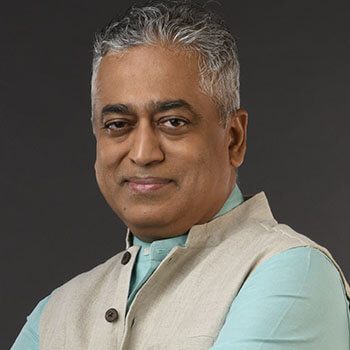
THE veteran journalist Rajdeep Sardesai of Goan origin has challenged a judge of the Delhi High Court. The judge reportedly insisted that Saurav Das and Ashutosh Ranka did not belong to Gen Z. Rajdeep has pointed out that the present agitation is for the removal of Chief Election Commission Gyanesh Kumar and not match-fixing in exams. The ground reality is that Saurav Das was born in January 2000 and very much belongs to Gen Z. Ashutosh Ranka is 31, just a year older.
Rajdeep, who very recently celebrated the wedding of his doctor son to his childhood sweetheart, pointed out that his family is truly national. Rajdeep is from Goa, his wife Sagarika is Bengali; his son-in-law is Muslim and his daughter-in-law is Madrasi.
MIGRANTS TAKEOVER TOURISM
A REPORT carried by The Print edited by Shekar Gupta published on December 12, 2025 has reported that 90% of the nightclubs in Goa are owned by non-Goans. It was also revealed that 76% of the hotels in Assagao and Siolim are owned by people from Delhi and Gurgaon. Over 80% of the employees and particular the cooks in the shacks of Goa are from Kerala, Nagaland or Karnataka. The migrant population of Goa has seen a huge increase with the opening of the casinos which prefer employ particularly girls from the North-Eastern states.
WATER, LIVELIHOOD, COMMUNITY DISCUSSED AT SADBHAV MAHOOTSAV 2026
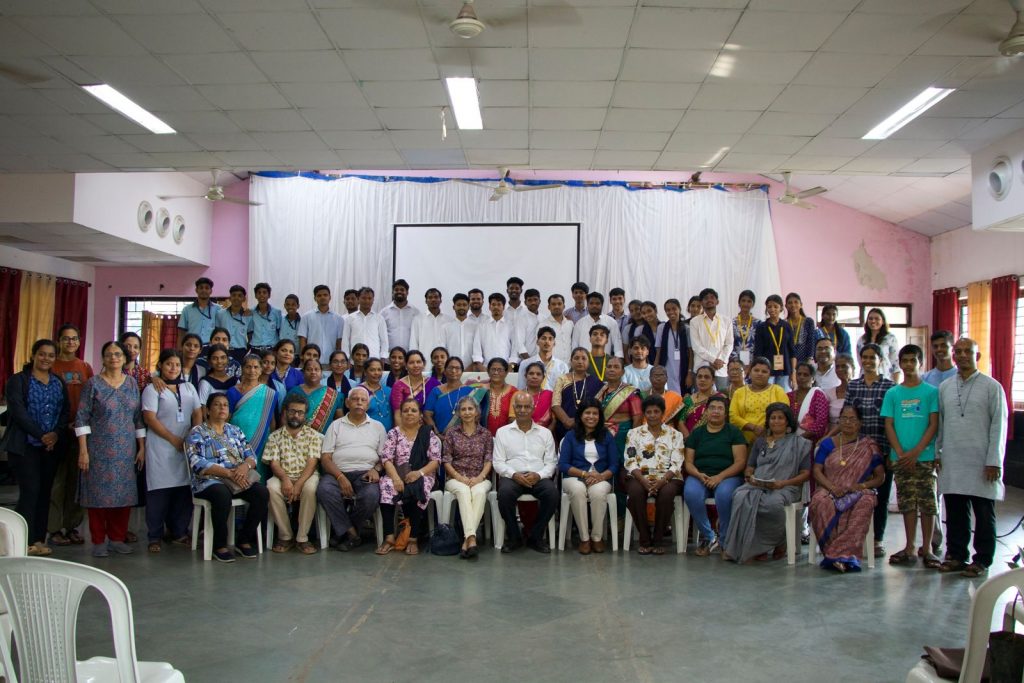
THE Society of Pilar, Goa organised Sadbhav Mahotsav 2026 recently at the Batim Village Panchayat Hall, under the theme “Valuing Water, Securing Tomorrow.” The event was organised in collaboration with Fr Agnel College of Arts and Commerce, Pilar; Tambdi Mati Foundation; Syamantak’s University of Life; Goa College of Agriculture; Directorate of Agriculture, Government of Goa; and the Zonal Agriculture Office, Tiswadi. The program brought together school students, teachers, college students, farmers and villagers to promote environmental awareness, water conservation, sustainable livelihoods and community harmony.
The program began at the outer premises of Batim Church with the arrival of the students and a welcome by Fr Elvis Fernandes, who introduced them to the day’s program and facilitators. Ar Tallulah D’Silva then conducted an orientation session, introducing the theme of water conservation through an engaging interaction with the students.
This was followed by an experiential learning session at Batim Lake, facilitated by Tallulah D’Silva, Ahana Rao, Sachin Desai and Kaushal Joshi. The nature walk encouraged students to observe the lake ecosystem closely, including its plants, birds, insects and other forms of life. On returning to the Batim Village Panchayat Hall, the students shared their observations and reflections. Their discussions touched upon global warming, water conservation, biodiversity, pollution, waste management and the need to protect natural habitats. While appreciating the beauty and biodiversity of Batim Lake, several students also expressed concern about the garbage and pollution found in and around water bodies.
The morning session concluded with the Sadbhav Pledge led by architect Tallulah D’Silva, with the students and teachers joining in the recitation. A special highlight was a community lunch featuring traditional Goan delicacies, served to students, facilitators, farmers and villagers from the seven village panchayats on eco-friendly plates, reflecting the Mahotsav’s commitment to environmental sustainability.
The post-lunch session began with a presentation and short film on Dhamapur Lake by Kaushal Joshi, a young musician and experiential-education practitioner associated with the University of Life and president of Kokan Routes. His presentation highlighted the importance of lake conservation, sustainable environmental practices and the relationship between local ecosystems and livelihoods. The session was moderated by Nevil Alphonso (former director, Directorate of Agriculture, government of Goa).
An interactive session followed on the ecological and economic value of ecosystems and policymaking by Kiran Dhingra, IAS (Retd). The program concluded on a vibrant note, with fugdi, the traditional Goan folk dance, presented by the villagers of Moulla, Batim. The performance brought a strong community dimension to the event, connecting environmental concerns with local culture and collective participation. Mementos were presented to resource persons as well as to farmers in a gesture of appreciation. There was a vote of thanks, tea and fellowship.
Sadbhav Mahotsav 2026 provided a platform for students and community as also brought together educational institutions, government agricultural bodies, community organisations and local residents. It reinforced the message of “Valuing Water, Securing Tomorrow” and highlighted the close relationship between environmental conservation, sustainable livelihoods, local culture and collective responsibility towards a sustainable future.
“AADHAR CARD SHOULD HAVE BEEN LINKED TO VOTER ID.”
— RS SHARMA, FORMER DG OF AADHAR
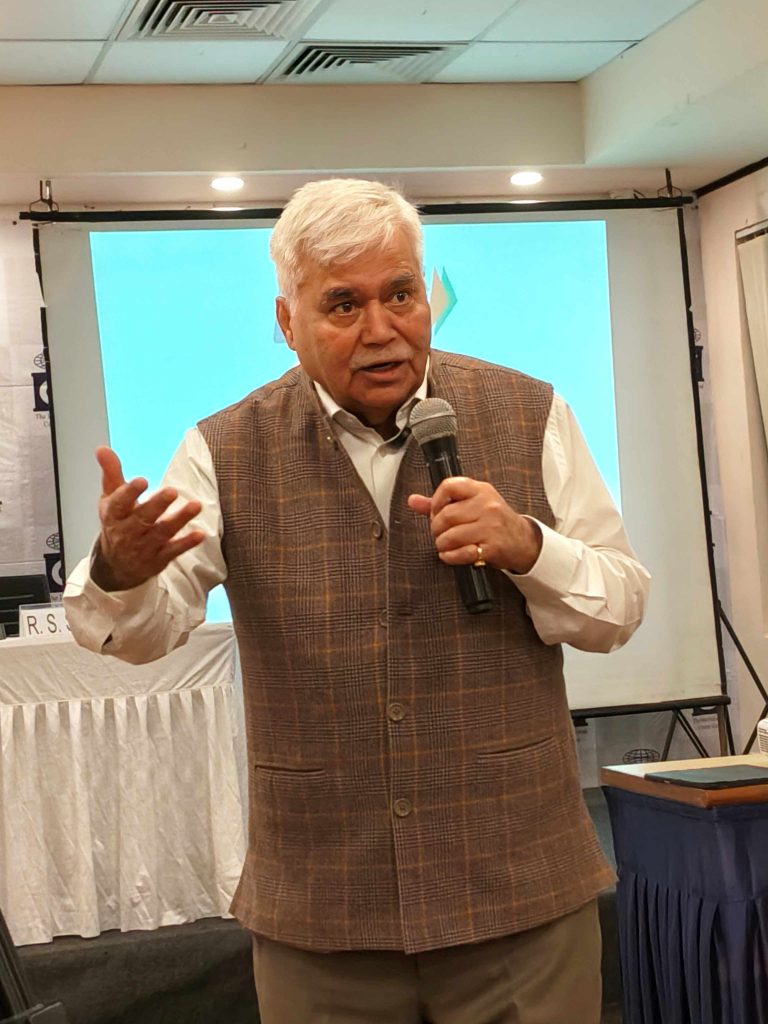
ON Saturday, Oct 17, 2026 former Director General of the Unique Identification Authority of India (UIDAI) RS Sharma categorically stated that the Aadhar card should have ideally been linked to Voter ID in India.
Sharma was delivering a talk titled “Building for a billion” at the International Centre Goa (ICG) and said this idea of linking Aadhar with the Voting ID had been actively mooted and discussed as early as 2012 and 2013, but could not be implemented for various reasons.
According to Sharma, if the Aadhar card had been linked to the Voter ID, most of the problems that we are facing with the special intensive revision (SIR) initiated by the Election
Commission of India would not have arisen.
“The Aadhar card accurately establishes individual identity and if we had successfully linked Aadhar with voter ID, we could have eliminated the problem of duplicity also,” Sharma said.
Sharma said that in a country as diverse as India, where as many as 300 million people moving across the country constantly for jobs and employment, potability via the Aadhar card would have been the best solution. “Ideally, having an Aadhar card should have been enough for any Indian citizen to exercise her/his franchise anywhere in the country. Hence, even if you hail from a village in Bihar, but are working in Goa as a labourer, you should have been allowed to vote in Goa. This would have eliminated all the problems we are facing today,” Sharma said.
Sharma said that the government had spent a mere, INR 8,000 crores to set up the Aadhar
card system across India. According to him, in comparison a whopping INR 12,000 crore was spent on SIR survey with no significant gains. Criticising the SIR exercise, Sharma said the names of his wife and himself had also been struck of the voting lists under the SIR survey.
He added, “If the government had to identify illegal immigrants, the entire population should not have been subjected to this laborious and time-consuming exercise. The government has spent far too much money, time and resources and upset large sections of their citizens with this failed exercise.”
 VILLAINOUS MUSK, ALTMAN, ZUCKERBERG, HOLMES!
 OPTOGENETICS AND THE RAY OF HOPE: LIGHT MEETS THE BRAIN! By Dr Amit Dias
 LETTER TO THE EDITOR FOR THE ISSUE DATED OCTOBER 17, 2026
 AZAD MAIDAN NO LONGER FREE!
 AZAD MAIDAN CRACKDOWN! Goa’s crackdown on protesters raises grave questions about democracy! By Our Special Correspondent
 INDIAN WOMEN ARE ON THE STREETS AGAIN. EVERYTHING HAS CHANGED BUT NOTHING HAS CHANGED!By Shilpa Phadke
 RBI TIGHTENS SCREWs ON ECONOMY!By Arvind Pinto
 SSR OVERRULED SIR IN GOA!
 HI MUMBAI MERI JAAN BUT…
 RAJENDRA ARLEKAR WILL REPLACE PRAMOD SAWANT?
 MENTAL HEALTH ACROSS THE LIFESPAN! By Dr Amit Dias
 WEEKEND UPDATES
 LETTER TO THE EDITOR FOR THE ISSUE DATED OCTOBER 10, 2026
 WHEN THE MACHINE OVERRIDES THE LAW!
 HAS GOA BECOME MORE PERMISSIVE? By Special Correspondent
Goa is abuzz with excitement as vintage bike and car owners, users, collectors and fans are decking […]