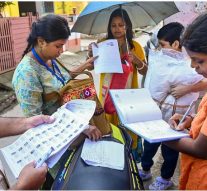
An explainer on the difference between Special Summary Revision and Special Intensive Revision of electoral rolls, the controversy over voter deletions, and why the distinction matters for democracy.
The distinction between Special Summary Revision (SSR) and Special Intensive Revision (SIR) is not merely administrative. It goes to the heart of a fundamental democratic question: who gets to vote, who decides whether a citizen remains on the electoral roll, and what safeguards exist when the Election Commission of India (ECI) questions a person’s eligibility?
The controversy is particularly important in Goa, where litigation has raised questions about the treatment of existing voters, the rejection of Form 8 applications and the use of electronic electoral-roll systems. The issue is whether a voter already on the rolls can be required to establish eligibility all over again under an intensive exercise, or whether the Commission must follow procedures that preserve existing enrolment unless there is a legally valid reason to change it.
SSR and SIR have the same broad objective: to maintain accurate electoral rolls. But they differ significantly in the method, intensity and practical consequences of the exercise.
And that is where the political and constitutional controversy begins.
- The basic difference: SSR updates; SIR rebuilds
SSR — Special Summary Revision
The existing electoral roll is the starting point. Officials update it by adding eligible voters, correcting details and processing claims and objections. It is a revision of an existing list, rather than a complete fresh enumeration.
SIR — Special Intensive Revision
Officials undertake a more extensive verification and enumeration exercise. The electoral roll is prepared afresh, and existing voters may need to complete the prescribed enumeration process to appear on the new draft roll.
The Election Commission’s own revision framework distinguishes the two approaches. SSR works from existing records, whereas SIR involves a more comprehensive enumeration exercise.
The distinction is consequential. Under SSR, an existing voter generally starts from the position that their entry is already on the roll, subject to lawful verification and revision. Under SIR, failure to complete the prescribed enumeration process can mean that the name does not appear in the new draft list, even if it appeared in the previous electoral roll.
That difference does not, by itself, establish that SIR is unlawful. But it makes the safeguards around enumeration, notice, objections and restoration particularly important.
- What has happened on October 15–16, 2026?
The immediate political context is significant. On October 15, the Election Commission ordered an SSR of electoral rolls in 17 states and Union Territories, with January 1, 2027, as the qualifying date. The announcement came amid continuing controversy over SIR. The final rolls under this SSR schedule are due in January 2027.
This development invites an obvious question: if SSR can update electoral rolls, why has the Commission undertaken a much more disruptive intensive exercise in other areas?
There is no automatic answer that the Commission has admitted wrongdoing. The two processes can be used for different administrative circumstances, and the announcement of SSR does not itself cancel or invalidate SIR.
Nevertheless, the timing creates a legitimate public-interest question. The Commission must explain why the less disruptive method is appropriate in some places while a fresh enumeration is considered necessary in others. It must also demonstrate that the intensive method does not create avoidable barriers for eligible voters.
The distinction becomes even more important in Goa, where the SIR process has already produced a legal challenge involving six members of one family. - The Goa case: When a software problem threatens a citizen’s vote
The strongest illustration of the controversy comes from the Bombay High Court at Goa.
Paresh Salgaoncar and members of his family challenged the exclusion of their names from the electoral rolls after they shifted residence within the Santa Cruz constituency. They said they had submitted Form 8, the prescribed form for an existing voter changing residence or correcting particulars.
The dispute arose when the family’s names did not appear in the draft SIR roll. The Election Commission’s position was that SIR involves preparing a fresh roll, that the previous entries are not automatically carried forward, and that the family would need to seek inclusion through Form 6. The petitioners, however, questioned why their existing voter records and Form 8 applications had not protected them from exclusion.
The High Court reserved its verdict on October 13, 2026. As of October 16, no final ruling on the merits of this dispute has been reported.
This case exposes the fundamental weakness that can arise when an intensive revision is implemented through rigid administrative or computerised procedures.
An existing voter may have a genuine, documented change of address. If the prescribed form cannot be processed during a particular phase of the exercise, does that mean the voter should lose the benefit of the existing entry? And if the system rejects an application, what effective remedy does the voter have?
These are not technical questions alone. They concern the relationship between an administrative process and a citizen’s constitutional rights.
The High Court’s reported questioning of the Commission about whether software can override the law goes to the heart of the problem. A computer system is an instrument of administration, not an independent source of legal authority. - Why Form 6 and Form 8 matter so much
The controversy cannot be understood without examining the forms used to maintain electoral rolls.
Form Principal purpose
Form 6 Application for inclusion of a name in the electoral roll
Form 7 Objection to an entry or request for deletion, subject to the prescribed rules
Form 8 Correction of particulars, shifting residence and other permitted changes for an existing elector
The Commission’s own voter services portal identifies Form 6 with new voter registration, Form 7 with deletion and Form 8 with corrections and changes by existing electors.
The distinction is straightforward in principle. A person who has never registered is not in the same position as a person who has voted for years and whose name disappears during a revision exercise.
Suppose a citizen has voted in three successive elections. The citizen moves house within the same constituency and submits Form 8. Later, the name is missing from the draft SIR roll.
If the person is instructed to apply through Form 6 as though registering for the first time, the citizen faces a troubling dilemma. The process may effectively treat an existing voter as a new applicant, even though the underlying problem concerns the continuity of an established registration.
This is precisely the kind of anomaly that must be resolved through a clear, legally sound procedure.
The issue has also reached the Supreme Court in connection with the treatment of voters whose names are absent from electoral rolls during SIR. The Court was informed that some previously registered voters were being directed to submit Form 6, which contains a declaration relevant to first-time enrolment. The Court scheduled further consideration of the issue for October 28, 2026.
The point is not that every missing entry must automatically be restored without verification. Electoral rolls must be accurate. Rather, the remedy for a disputed or missing entry must be appropriate to the person’s circumstances and must not impose an inaccurate declaration as the price of exercising the right to vote. - Is the new SSR a slap in the face for the Election Commission?
Politically, the question is understandable. Legally, it requires a more careful answer.
The Commission’s October 15 announcement of SSR in 17 states and Union Territories comes while SIR remains a contentious issue. The timing gives critics grounds to ask whether the Commission is recognising that the electoral rolls need a more routine, accessible updating process after an intensive exercise.
But the announcement is not, on its own, an admission of failure.
SSR is a recognised method of electoral-roll revision, not an alternative invented in response to the current controversy. The Commission has used summary revision programmes in previous years, and its official website maintains records of those exercises.
Nor does the adoption of SSR prove that SIR was unnecessary in every state. The Commission may have reasons for choosing different methods in different circumstances.
The more defensible criticism is this: the Commission must justify the need for SIR, demonstrate that its implementation is lawful, and explain why a less disruptive procedure would not achieve the same objective.
If an intensive exercise generates large numbers of disputed exclusions, forces existing voters to seek fresh enrolment, or makes restoration difficult, the Commission cannot dismiss those consequences as mere inconveniences.
The announcement of SSR therefore has political significance, but its legal meaning should not be exaggerated. It is not a judicial finding against the ECI, nor proof that the entire SIR exercise has been invalidated.
It does, however, sharpen the question of proportionality: is the administrative burden imposed by SIR justified by demonstrable benefits that could not be secured through SSR? - The Supreme Court’s intervention raises the stakes
The controversy is no longer confined to state-level disputes.
On October 15, 2026, the Supreme Court issued notice to the Election Commission, Chief Election Commissioner Gyanesh Kumar and the other election commissioners on a petition by Rahul Gandhi and other INDIA bloc leaders alleging irregularities in SIR. The petition sought access to decision-making records and electoral database logs, an audit of deletions, booth-wise information about removed voters and an effective restoration mechanism for people wrongly excluded.
Issuing notice does not mean that the Court has accepted the allegations as proven. It means the issues raised have been brought before the Court for a response and judicial consideration.
The distinction is important because the ECI has constitutional authority to supervise, direct and control elections. Article 324 provides the broad constitutional framework, while the Representation of the People Act, 1950, and the Registration of Electors Rules, 1960, govern important aspects of electoral-roll preparation and revision.
The existence of constitutional authority does not make every administrative decision immune from judicial review. The Commission must exercise its powers consistently with the law, applicable rules and constitutional guarantees.
The Supreme Court’s scrutiny of decision-making records and the handling of Form 6 is therefore significant. It shifts the debate beyond political accusations and towards questions of procedure, accountability and the legal basis of particular decisions.
The Court has not, as of October 16, issued a final ruling establishing that the SIR process as a whole is unlawful. - The danger of mass exclusions
Why should a technical difference between two revision methods matter to ordinary citizens?
Because the electoral roll determines who can actually participate in an election.
A person may possess an EPIC voter identity card, have voted previously and consider themselves a fully registered elector. But if their name is absent from the operative electoral roll, the identity card alone will not ordinarily enable them to cast a vote.
The consequences can be especially serious for:
• Senior citizens, who may struggle to obtain documents or travel to offices.
• Migrant workers, whose work and accommodation frequently change.
• Poor households, which may lack easy access to digitised records.
• People with disabilities, for whom repeated administrative visits can be difficult.
• Families with address discrepancies, where one member’s record is updated but another’s is not.
• Citizens with limited digital access, who may find online forms and correction procedures confusing.
These groups should not be presumed ineligible merely because their documentation is incomplete, their address has changed or a database contains an inconsistency. Equally, the Commission is entitled to investigate genuine questions about eligibility under the law.
The answer is a procedure that combines effective verification with accessibility, notice, reasons for adverse decisions and a practical opportunity to challenge errors.
The controversy over SIR has raised concerns about the scale of exclusions. Reports published on October 13 and 16, 2026, described allegations of large-scale deletions and disputed entries, while the Commission has maintained that the exercise is intended to identify deceased, duplicate, shifted or otherwise ineligible electors. These are competing claims that must be examined against actual records, not treated as settled facts.
The test is whether every eligible citizen has a fair and workable route to remain on the roll or regain inclusion when an error occurs.

 LETTER TO THE EDITOR FOR THE ISSUE DATED OCTOBER 17, 2026
 AZAD MAIDAN NO LONGER FREE!
 AZAD MAIDAN CRACKDOWN! Goa’s crackdown on protesters raises grave questions about democracy! By Our Special Correspondent
 INDIAN WOMEN ARE ON THE STREETS AGAIN. EVERYTHING HAS CHANGED BUT NOTHING HAS CHANGED!By Shilpa Phadke
 RBI TIGHTENS SCREWs ON ECONOMY!By Arvind Pinto
 HI MUMBAI MERI JAAN BUT…
 RAJENDRA ARLEKAR WILL REPLACE PRAMOD SAWANT?
 MENTAL HEALTH ACROSS THE LIFESPAN! By Dr Amit Dias
 WEEKEND UPDATES
 LETTER TO THE EDITOR FOR THE ISSUE DATED OCTOBER 10, 2026
 WHEN THE MACHINE OVERRIDES THE LAW!
 HAS GOA BECOME MORE PERMISSIVE? By Special Correspondent
 BILLIONAIRES MULTIPLYING AT THE COST OF THE MIDDLE CLASS!
 THE SHADOW OF VOTE THEFT: WHY CEC GYANESH KUMAR MUST RESIGN!By Dr Olav Albuquerque & Deborah Cordeiro
 ULTRA MODERN ‘MID-DAY’ OFFICE