Goa is abuzz with excitement as vintage bike and car owners, users, collectors and fans are decking […]
Old is Gold
October 4, 2016

“You do not have to be a specialist to change someone’s life. Sometimes, a listening ear and a kind word can be the beginning of healing….. anyone can be a Mental Health Champion.”
Imagine a child who stops smiling, a teenager who retreats into silence, a young adult overwhelmed by expectations wanting to end their life, a mother struggling after childbirth, an employee battling stress, or an older person living in loneliness. Their struggles may differ, but their needs are similar: to be heard, understood and supported.
Mental health is not confined to hospitals and counselling rooms. It lives in our homes, schools, colleges, workplaces and communities. This World Mental Health Day, let us embrace a simple message: spread mental health wherever you are.
Lived experiences heard: Real voices, real change
The theme of World Mental Health Day this year, observed on 10 October, is “Lived Experiences Heard: Real Voices, Real Change.” It reminds us that people who have experienced mental health difficulties must be heard and involved in shaping the services and policies that affect their lives.
A person who has experienced depression or anxiety understands the fear, isolation and uncertainty that textbooks cannot fully convey. Their experiences can challenge stereotypes, inspire hope and help others seek support. People with lived experience should not merely be invited to share their stories. They must have opportunities to lead peer-support groups, train healthcare professionals and participate in designing mental health programmes.
Real change begins when we stop speaking for people and start listening to them.
The numbers behind the silence
The World Health Organization estimates that more than one billion people worldwide live with a mental health condition. In India, the National Mental Health Survey 2015–16 estimated that 10.6% of adults experienced a current mental disorder, with a substantial treatment gap.
Globally, more than 720,000 people die by suicide each year. Suicide was the third leading cause of death among people aged 15–29, according to WHO estimates.
Children: Listen before the silence grows
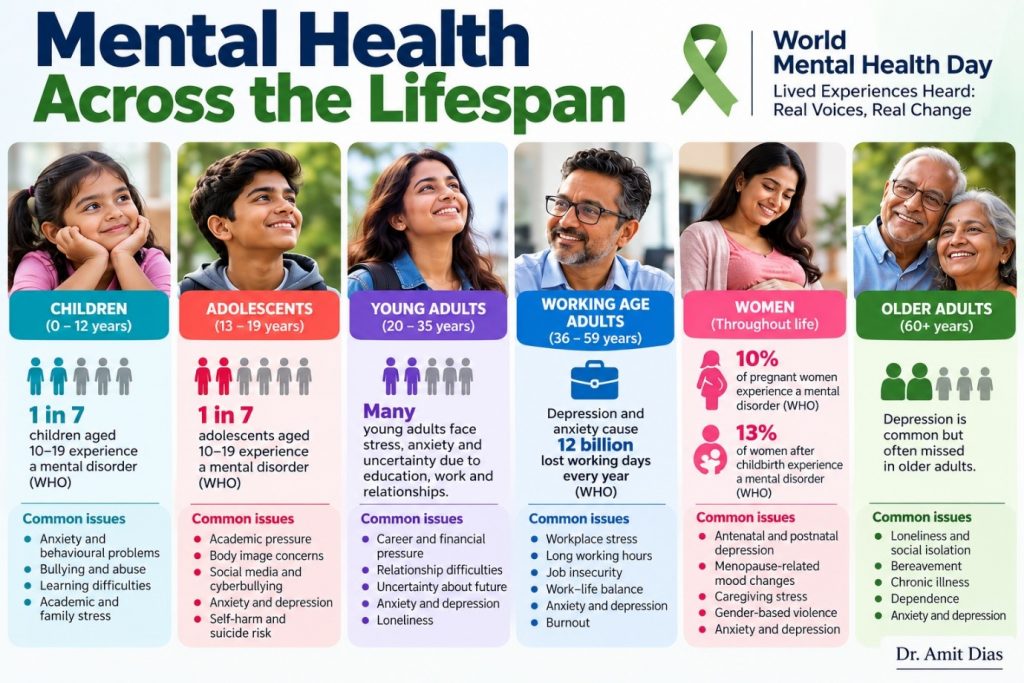
Childhood is not always carefree. Children may experience bullying, anxiety, abuse, family conflict, learning difficulties and academic pressure. Their distress may appear as irritability, withdrawal, school refusal, disturbed sleep or declining performance.
UNICEF notes that half of all mental health conditions begin by age 14, with many remaining undetected and untreated. Parents and teachers must look beyond labels such as “lazy” or “disobedient”. A child who repeatedly complains of stomach aches before school may be communicating distress that they cannot express in words.
Adolescents: Beyond the pressure to fit in
Adolescence brings physical changes, examinations, career decisions, body-image concerns, relationship difficulties and the pressure to belong. Social media can connect young people, but constant comparison and cyberbullying may deepen insecurity.
WHO estimates that one in seven adolescents aged 10–19 experiences a mental disorder. Suicide is a major public health concern among young people and was the third leading cause of death among those aged 15–29 in global WHO estimates.
We must take hopelessness, self-harm and suicidal thoughts seriously. Compassionate listening, supportive families, safe schools and timely professional care can save lives. Telling a distressed teenager to “just be strong” may silence them when they most need help.
Young adults: Relationships, careers and expectations
Young adulthood can feel like an endless examination. Education, employment, financial independence, relationships and family responsibilities create competing demands. Unemployment, rejection, loneliness and uncertainty can undermine confidence.
Online, people often compare their struggles with carefully curated images of others’ success. We must remind young adults that a failed examination, lost job or broken relationship does not define their worth.
Workplace mental health:
Work can provide purpose and belonging, but excessive workloads, bullying, discrimination and job insecurity can damage mental well-being.
WHO estimates that depression and anxiety cause approximately 12 billion lost working days annually, costing the global economy around US$1 trillion in lost productivity.
Workplace mental health requires more than motivational talks. Employers must address harmful working conditions, encourage healthy boundaries and make support accessible. Colleagues can help by listening without judgement and respecting confidentiality.
Women’s mental health:
Women may face mental health challenges during pregnancy, after childbirth and around menopause, alongside caregiving responsibilities, discrimination and unequal expectations.
WHO estimates that approximately 10% of pregnant women and 13% of women who have recently given birth experience a mental disorder, primarily depression.
Postpartum depression is not a sign of poor motherhood. Similarly, menopause-related sleep disturbances, anxiety and mood changes deserve understanding rather than dismissal. Persistent symptoms require appropriate assessment and care.
Older adults: Depression is not inevitable
Bereavement, chronic illness, reduced mobility and social isolation can increase vulnerability to depression in later life. Unfortunately, symptoms are sometimes mistaken for a natural consequence of ageing.
Goa offers an encouraging example through our DIL (Depression in Late Life) project, which explored a community-based intervention for older adults with depressive symptoms. The approach included problem-solving therapy, support for insomnia, self-care education and assistance accessing services.
Older people need companionship, meaningful activities and opportunities to remain socially connected. Mental health care must reach them where they live, not only when they reach a specialist clinic.
It is OK not to be OK
Stigma remains a formidable barrier. People may fear being labelled weak, losing employment or disappointing their families. Consequently, many struggle silently.
Let us replace judgement with empathy, shame with understanding, and silence with conversation. If someone confides in you, listen without comparing their suffering with that of others. Encourage professional help when needed, and take any risk of suicide seriously.
Spread mental health wherever you are
At home, listen to children and support caregivers. In schools, challenge bullying. Among friends, check in on those who withdraw. At work, promote respect and psychological safety. In communities, organise awareness activities and connect people with appropriate services.
Most importantly, involve people with lived experience in leading these efforts. Their voices can transform awareness into practical, compassionate change.
“A voice heard can begin a conversation. A conversation can open a door. And an open door can change a life.”
This October, let us pledge to spread mental health wherever we are—not merely through slogans, but through empathy, inclusion, early intervention and action. Because real voices deserve to be heard, and no one should have to struggle alone.
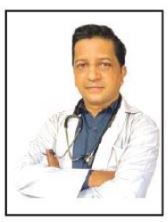
Dr. Amit Dias is an Assistant Professor in the Department of Preventive and Social Medicine at GMC and the PI for the DIL Project on depression in the elderly. His work spans public health, epidemiology, geriatric medicine and mental health research. He advocates for accessible, compassionate and inclusive healthcare, working towards a Goa that serves as a model for promoting health, dignity and well-being for all.
 LETTER TO THE EDITOR FOR THE ISSUE DATED OCTOBER 17, 2026
 AZAD MAIDAN NO LONGER FREE!
 AZAD MAIDAN CRACKDOWN! Goa’s crackdown on protesters raises grave questions about democracy! By Our Special Correspondent
 INDIAN WOMEN ARE ON THE STREETS AGAIN. EVERYTHING HAS CHANGED BUT NOTHING HAS CHANGED!By Shilpa Phadke
 RBI TIGHTENS SCREWs ON ECONOMY!By Arvind Pinto
 SSR OVERRULED SIR IN GOA!
 HI MUMBAI MERI JAAN BUT…
 RAJENDRA ARLEKAR WILL REPLACE PRAMOD SAWANT?
 WEEKEND UPDATES
 LETTER TO THE EDITOR FOR THE ISSUE DATED OCTOBER 10, 2026
 WHEN THE MACHINE OVERRIDES THE LAW!
 HAS GOA BECOME MORE PERMISSIVE? By Special Correspondent
 BILLIONAIRES MULTIPLYING AT THE COST OF THE MIDDLE CLASS!
 THE SHADOW OF VOTE THEFT: WHY CEC GYANESH KUMAR MUST RESIGN!By Dr Olav Albuquerque & Deborah Cordeiro
 ULTRA MODERN ‘MID-DAY’ OFFICE
Goa is abuzz with excitement as vintage bike and car owners, users, collectors and fans are decking […]