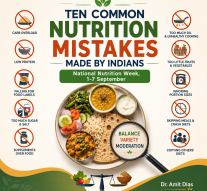
THIS Teacher’s Day, we get a lesson beyond the classroom — on the common mistakes we make with our diet and nutrition, and why, amid today’s flood of conflicting advice, balance may be the most important lesson of all. National Nutrition Week, observed from September 1 to 7, reminds us that good nutrition is one of the foundations of good health. Yet, in today’s world, deciding what to eat has become surprisingly confusing. Open social media and one influencer tells you to avoid an item, while another promotes it as a traditional superfood. Ghee for example has moved from being labelled unhealthy to becoming fashionable again. Carbohydrates are declared dangerous by some, while others insist they are essential. One day fasting is promoted as the secret to health; another day we are warned never to skip breakfast. The result is confusion. MUCH of the problem is that nutrition advice is now delivered through short videos, dramatic headlines and confident influencers. Scientific knowledge does evolve, and recommendations may become more refined as new evidence emerges. However, a changing headline does not mean that everything we previously ate was wrong. Nor does it mean that every new dietary trend deserves to be followed. This Teachers’ Day, perhaps one of the most important lessons we can learn is simple: when it comes to food, balance is often more valuable than extremes. The challenge is not always finding healthy food, but learning to distinguish evidence from exaggeration. Here are ten nutrition mistakes that commonly create problems.
Chasing every new food trend FROM keto diets and intermittent fasting to detox drinks, seed powders and expensive “superfoods”, nutrition trends appear almost daily. What works for one person may not work for everyone. A diet becomes healthy not because it has a fashionable name, but because it provides the nutrients the body requires. Before making major dietary changes, ask whether the advice is supported by sound evidence and whether it is practical and safe for your individual circumstances. There is rarely a miracle food. Good nutrition is built through repeated everyday choices.
Making one food the hero and another the villain NUTRITION on social media often becomes oversimplified. Sugar is called poison, carbohydrates are blamed for every health problem, or a particular oil is presented as the answer to longevity. The truth is usually more nuanced. Rice and roti provide energy. Pulses provide protein and fibre. Oils and fats have important functions, although excessive intake is undesirable. Even foods considered nutritious can become problematic when consumed in large quantities.
Building meals around starch alone A COMMON pattern in Indian diets is to have a large amount of rice, roti, poha (parched rice) or another cereal with relatively little protein and vegetables. Carbohydrates are not the problem. They are an important source of energy. The problem arises when one food group dominates the entire meal. Try to make meals more complete by including a protein-rich food such as dal, chana, rajma, curd, milk, eggs, fish, soy or paneer, along with vegetables. Rice with dal and vegetables, for example, is nutritionally different from a large plate of rice with little else. The goal is not to eliminate carbohydrates but to give other foods sufficient space on the plate.
Assuming the kitchen automatically produces healthy food HOME-COOKED meals are often preferable to heavily processed foods because we control the ingredients and cooking methods. But home cooking itself is not a certificate of good nutrition. A meal can be prepared lovingly at home and still contain excessive oil, salt, sugar or large portions. Regular deep-frying, repeated second helpings and frequent consumption of rich accompaniments can affect overall dietary quality. Traditional food should not be rejected. Instead, traditional recipes can be prepared with sensible quantities of oil and salt and accompanied by more vegetables and protein.
Neglecting the colours on our plate MANY people eat enough food but do not eat enough variety. Different fruits and vegetables provide different vitamins, minerals, fibre and naturally occurring protective compounds. Eating the same foods repeatedly can limit this diversity. Five natural colours are recommended. Fortunately, nutritious food does not have to be exotic or expensive. Locally available and seasonal fruits and vegetables can make an important contribution to health. Guava, papaya, banana, leafy vegetables, pumpkin, beans and many local greens are excellent examples. Aim for greater variety over the week rather than expecting every single meal to be perfect.
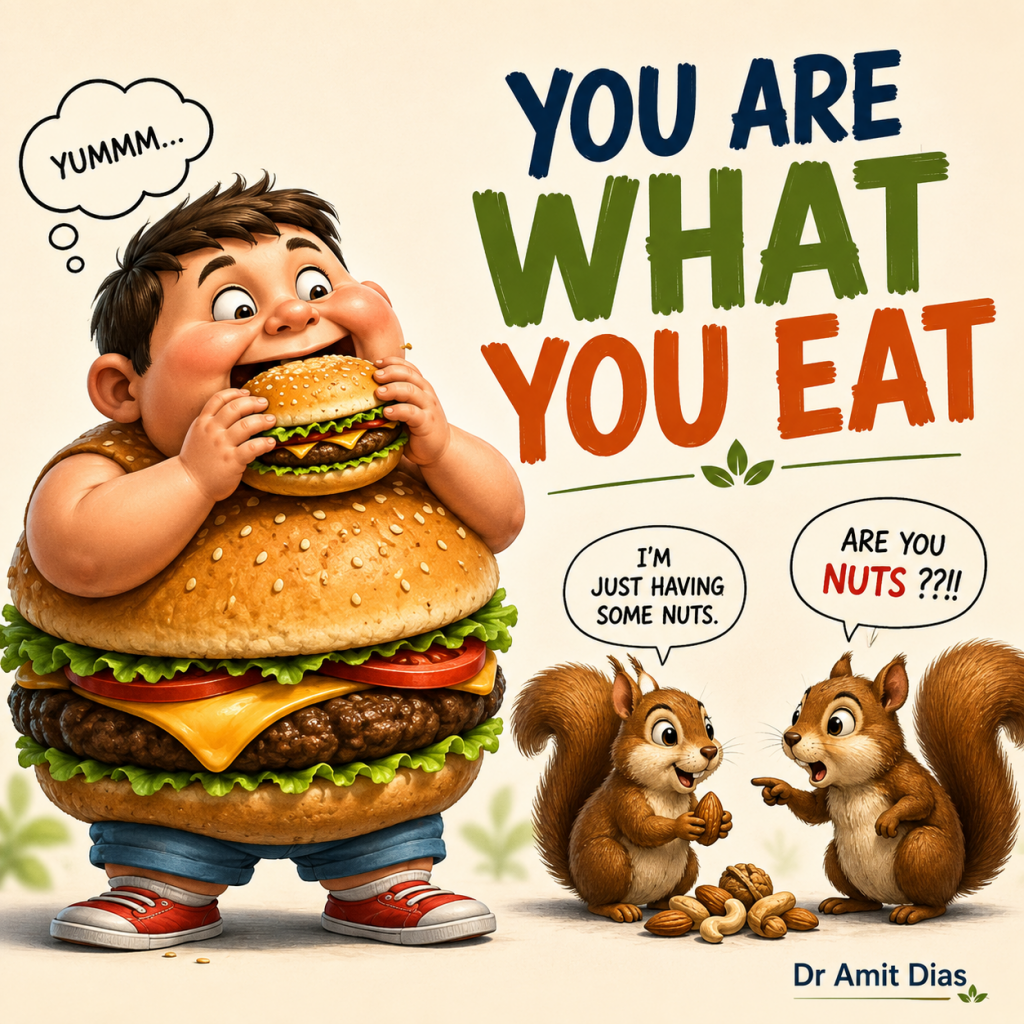
Being misled by attractive packaging FOOD companies understand that people want to eat healthily. Terms such as “multigrain”, “natural”, “baked”, “low-fat” and “high-protein” can therefore make a product sound healthier than it actually is. The front of a packet is advertising. The back contains more useful information. Look at the ingredients, serving size and nutrition information. Check the amount of sugar, sodium and saturated fat. A “baked” snack can still be highly refined and salty, while a “low-fat” product may contain considerable added sugar. Food labels are worth reading because marketing is not the same as nutrition science. We often say- you are what you eat.
Missing the hidden sources of sugar and salt MANY families reduce the sugar in desserts but overlook sweetened drinks, biscuits, packaged beverages and other processed foods. Similarly, salt can quietly accumulate through namkeen, instant foods, sauces, pickles, papad and snacks. The total amount consumed across the day matters. WHO recommends limiting free sugars and keeping salt consumption low. This does not require eating tasteless food. Gradually reducing sweetness and saltiness allows the palate to adapt. Small changes are usually easier to maintain than sudden restrictions.
Confusing supplements with nutrition A TABLET cannot compensate for an otherwise poor diet. Vitamins, minerals and other supplements can be valuable when there is a diagnosed deficiency or a specific medical reason for using them. However, taking multiple products simply because they are popular online may be unnecessary and occasionally harmful.
For most people, food should remain the primary source of nutrition. A varied diet provides not only individual nutrients but also fibre and numerous naturally occurring compounds that supplements cannot fully replicate.
Supplements should solve a genuine nutritional problem, not become a shortcut around healthy eating.
Eating nutritious foods without considering quantity FOODS such as nuts, seeds, dried fruits and paneer can be part of a healthy diet, but large amounts still contribute substantial energy. Similarly, a meal can contain healthy ingredients but become excessive because of oversized servings or repeated second helpings. Portion awareness is not about eating less at all costs. It is about eating according to hunger, activity and individual requirements. Eating slowly and avoiding distraction can also help us recognise when we are comfortably satisfied. A healthy diet requires both good food choices and sensible quantities.
Following somebody else’s diet plan THERE is no universal meal plan suitable for every Indian. A growing child, a pregnant woman, an older adult and a physically active worker have different nutritional needs. Medical conditions and medications may also influence dietary advice. This is why blindly copying an influencer’s diet, celebrity routine or friend’s weight-loss plan can be inappropriate. People with chronic illnesses should seek individual guidance rather than relying on general online advice. The key lesson for National Nutrition Week: Nutrition science will continue to develop. New studies will refine our understanding, and recommendations may change. That is how science works. But some principles remain remarkably consistent: eat a variety of foods, include adequate protein, eat plenty of vegetables and fruits, avoid excessive sugar and salt, limit highly processed foods and maintain sensible portions. Most importantly, avoid extremes. THIS Teachers’ Day, let us learn to question dramatic nutrition claims and become wiser consumers of health information. We do not need to fear every carbohydrate, consume every superfood or follow every influencer. The most sustainable diet is not based on confusion, fear or fashion. It is based on evidence, common sense and balance.


 LETTER TO THE EDITOR FOR THE ISSUE DATED OCTOBER 17, 2026
 AZAD MAIDAN NO LONGER FREE!
 AZAD MAIDAN CRACKDOWN! Goa’s crackdown on protesters raises grave questions about democracy! By Our Special Correspondent
 INDIAN WOMEN ARE ON THE STREETS AGAIN. EVERYTHING HAS CHANGED BUT NOTHING HAS CHANGED!By Shilpa Phadke
 RBI TIGHTENS SCREWs ON ECONOMY!By Arvind Pinto
 SSR OVERRULED SIR IN GOA!
 HI MUMBAI MERI JAAN BUT…
 RAJENDRA ARLEKAR WILL REPLACE PRAMOD SAWANT?
 MENTAL HEALTH ACROSS THE LIFESPAN! By Dr Amit Dias
 WEEKEND UPDATES
 LETTER TO THE EDITOR FOR THE ISSUE DATED OCTOBER 10, 2026
 WHEN THE MACHINE OVERRIDES THE LAW!
 HAS GOA BECOME MORE PERMISSIVE? By Special Correspondent
 BILLIONAIRES MULTIPLYING AT THE COST OF THE MIDDLE CLASS!
 THE SHADOW OF VOTE THEFT: WHY CEC GYANESH KUMAR MUST RESIGN!By Dr Olav Albuquerque & Deborah Cordeiro