Goa is abuzz with excitement as vintage bike and car owners, users, collectors and fans are decking […]
Old is Gold
October 4, 2016
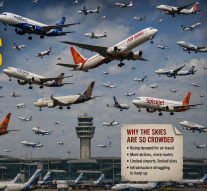
INDIA’S domestic aviation story is usually told through growth: expanding airports, record aircraft orders, and a rising number of first-time flyers. Yet the latest traffic pattern reveals a less reassuring reality. In July 2026, IndiGo carried 80.82 lakh domestic passengers and commanded 67.4% of the market. The Air India group, including Air India and Air India Express, carried 28.75 lakh passengers and held another 24%. Together, the two airline groups controlled more than 91% of domestic traffic. Add Akasa Air’s 5.5%, and the top three accounted for nearly 97%.
This is not a monopoly in the strict legal sense. It is, however, a highly concentrated and increasingly duopolistic market. The distinction matters less to a passenger searching for an alternative after a cancellation, a schedule change, or an abrupt fare increase. On many routes, particularly those connecting smaller cities, the practical choice is between IndiGo and the Air India group; on some sectors, only one airline offers a convenient direct service. A market may be formally competitive while leaving the consumer functionally captive.
Concentration need not be harmful if capacity is reliable, entry barriers are low, and consumer remedies are effective. Indian aviation currently falls short on all three counts. Aircraft availability is constrained, leases and maintenance are largely dollar-denominated, aviation turbine fuel remains expensive, airport slots at major hubs are scarce, and trained personnel cannot be created overnight. These conditions make entry difficult and expansion costly for smaller carriers. They also mean disruption at one large airline can have system-wide consequences.
OPERATIONAL PROBLEMS
THE warning came in December 2025, when operational and crew-roster problems at IndiGo triggered widespread cancellations and delays. A government inquiry reported that between December 3 and 5, 2,507 flights were cancelled, 1,852 delayed, and more than three lakh passengers affected. The Directorate General of Civil Aviation imposed a penalty of Rs22.20 crore and directed the airline to furnish a Rs50-crore bank guarantee. The disruption also pushed up fares on competing airlines and forced government intervention. The episode showed that operational weakness in a carrier controlling roughly two-thirds of the market can rapidly become a national mobility crisis.
Service indicators underline why resilience matters. In July, IndiGo’s on-time performance was 91.2%, Akasa Air’s 90.8%, and Air India’s 86.5%. SpiceJet’s figure was only 34.5%; 28.37% of its domestic flights were delayed by more than two hours, against an industry average of 1.26%. On-time performance is important, but it captures only one part of a passenger’s experience. Timely information, accessible customer service, baggage delivery, automatic refunds, alternative travel, and humane treatment during disruption are equally significant.
India does not lack passenger-protection rules. The DGCA’s Civil Aviation Requirements prescribe obligations relating to denied boarding, cancellations, long delays, refunds, and assistance at airports. Depending on notice, flight duration, and the cause of cancellation, passengers may be entitled to an alternative flight, a full refund, and specified compensation. The problem is that rights on paper often require persistence to enforce. Travellers may not know the rules, complaint channels can be fragmented, and a refund received days later does not restore a missed examination, job interview, medical emergency, wedding, or connecting journey.
FARE TRANSPARENCY?
THIS asymmetry lies at the heart of the passenger’s vulnerability. Airlines collect the full fare immediately. They may alter schedules or cancel flights for operational reasons, subject to regulatory conditions. But when passengers change plans, they can face substantial cancellation charges. Even where the ticket price is refunded, consequential losses are usually borne by the traveller. In a concentrated market, the passenger’s bargaining power is further weakened because an alternative flight may be unavailable or prohibitively expensive.
Fare transparency deserves equal attention. Dynamic pricing is not inherently unfair; it helps airlines match demand with capacity and can reward early booking. But where effective competition is thin, a sudden disruption can send last-minute fares far beyond the reach of ordinary travellers. The State need not return to routine price control. It should, however, monitor abnormal fare spikes on disrupted routes, require clearer disclosure of the final payable amount, and publish route-level concentration and fare data. Transparency would help distinguish legitimate scarcity pricing from conduct that exploits an emergency.
The financial picture is more complicated than a simple contest between profitable airlines and exploited consumers. In 2024-25, IndiGo reported a pre-tax profit of about Rs7,587.5 crore. In contrast, Air India and Air India Express together recorded a pre-tax loss of roughly Rs9,568 crore; Akasa Air lost about Rs1,983.4 crore and SpiceJet about Rs58.1 crore. High fuel costs, lease rentals, maintenance expenses, airport charges, exchange-rate exposure, and fierce price competition make aviation structurally difficult. But the fragility of airline balance sheets cannot justify transferring disruption risk to passengers. Nor should the profitability of one dominant carrier become a substitute for a resilient market.
The government is not powerless. The DGCA can enforce safety and operational standards, require schedule reductions, impose penalties, and order refunds or compensation. The Ministry of Civil Aviation can coordinate crisis responses, while the Competition Commission of India can examine conduct that harms competition. Yet regulation after a breakdown is not enough. The objective should be to reduce the probability that one airline’s failure overwhelms the entire network.
That requires a two-track policy. First, India must make competition economically viable. New and regional airlines need easier access to aircraft financing, domestic maintenance capacity, trained pilots and engineers, and airport slots. Regional connectivity cannot rest solely on licences or temporary incentives; carriers need conditions that make routes commercially sustainable. Airport capacity allocation should also be transparent and designed to prevent scarce slots from permanently reinforcing incumbency.
Second, passenger protection must become automatic rather than adversarial. Refunds for airline-initiated cancellations should be processed within a short, enforceable deadline and returned to the original payment method. Compensation should reflect not merely the fare but also the length of delay and the seriousness of disruption, while retaining reasonable exceptions for extraordinary circumstances. A unified digital grievance platform should display the applicable right, track the complaint, impose a resolution deadline, and escalate non-compliance to the regulator. Penalties must be large enough not to become a routine cost of doing business.
India’s aviation success cannot be measured only by passenger growth, airport inaugurations, or aircraft orders. A mature market is tested when the system fails. The relevant questions are whether a traveller has a genuine alternative, receives timely information, obtains an automatic refund, and is treated fairly when plans collapse. Growth without competition can create scale; growth without enforceable consumer protection creates dependence. India has built an aviation market of impressive size. It must now ensure that the passenger is not its weakest participant.
 LETTER TO THE EDITOR FOR THE ISSUE DATED OCTOBER 10, 2026
 WHEN THE MACHINE OVERRIDES THE LAW!
 HAS GOA BECOME MORE PERMISSIVE? By Special Correspondent
 BILLIONAIRES MULTIPLYING AT THE COST OF THE MIDDLE CLASS!
 THE SHADOW OF VOTE THEFT: WHY CEC GYANESH KUMAR MUST RESIGN!By Dr Olav Albuquerque & Deborah Cordeiro
 ULTRA MODERN ‘MID-DAY’ OFFICE
 HI MUMBAI MERI JAAN BUT…
 TCS INVOLVED IN SIR MATCH FIXING!
 CEREBRAL PALSY: UNDERSTANDING ABILITY, ENABLING INCLUSION! By Dr Amit Dias
 WEEKED UPDATES
 LETTER TO THE EDITOR FOR ISSUE DATED OCTOBER 03, 2026
 GEN-Z BLOCKED FROM VOTING BY GYANESHWAR MODI!
 THE FORAL OF 1526 Five Hundred Years Later, What Does Goa’s Oldest Village Charter Really Mean?
 20 YEARS IN ‘HERALD’, 43 IN GOA!
 THE DEGRADATION OF JNU – MY ALMA MATER! By Arvind Pinto
Goa is abuzz with excitement as vintage bike and car owners, users, collectors and fans are decking […]