Goa is abuzz with excitement as vintage bike and car owners, users, collectors and fans are decking […]
Old is Gold
October 4, 2016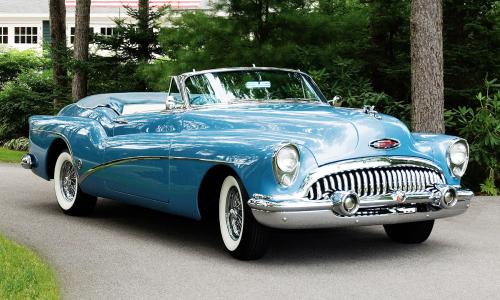

SOME of my most enduring memories of Goa are of people pausing for somebody else’s God.
A bus conductor asks the driver to slow near a roadside shrine so that flowers can be offered. A Catholic bows instinctively while passing a temple. A Hindu folds his hands before a church. In my village, Hindu families placed flowers along the route when the statue of Our Lady passed in procession. Nobody called it interfaith harmony. Nobody organized it. It was simply the Goan way.
I grew up in a Goa where religion was everywhere, but religious identity rarely needed announcing. Church bells carried across one village; temple bells answered from another. There were roadside crosses and shrines beneath trees, zatras and feasts, novenas and pujas were part of everyone ‘s calendar. Hindu friends entered our Catholic home without hesitation, and we entered theirs with the same ease.
Decades later, we still do. We eat together, travel together, celebrate together and mourn together. The doors remain open.
PERHAPS nowhere is this shared inheritance more beautifully expressed than in Goan traditions surrounding Milagres Saibinn in Mapusa, where Hindu and Catholic communities have crossed religious boundaries for generations. These customs survived not because governments taught Goans tolerance, but because ordinary people understood that faith could be deeply held without becoming a wall.
Religion was everywhere in the Goa of my childhood. What I DO NOT remember is conversion.
I cannot recall Catholic priests or nuns trying to turn my Hindu or Muslim schoolmates into Christians. Nor do I remember Hindu priests or temple institutions trying to persuade Catholics or Muslims to become Hindu. Generations of Hindu and Muslim children passed through Catholic schools and colleges and emerged with their faith intact. Why should that surprise us?
Our religions may differ, but our histories are deeply entangled. Many Hindu and Catholic families share ancestral roots. Centuries ago, one branch of a family may have converted while another remained Hindu. Names changed. Rituals changed. Places of worship changed. Kinship did not disappear.
Which is why the Goa Cabinet’s approval of the Goa Prohibition of Unlawful Conversion of Religion Bill, 2026, raises a simple question:
What problem are we trying to solve?
No decent person should defend conversion through force, fraud, intimidation or coercion. Whoever does it should be prosecuted. But laws should respond to evidence. If Goa is experiencing widespread forced conversion, show us. How many credible complaints have there been? How many investigations? How many prosecutions? Where is the pattern serious enough to justify sweeping new legislation?
There is also a larger principle at stake. Faith is deeply personal. An adult must be free to remain Hindu, Catholic or Muslim; to embrace another faith; or to reject religion altogether. If two adults of different religions fall in love and marry, that choice belongs to them, not to politicians, priests, neighbours or the State.
Freedom of religion cannot mean merely the freedom to remain in the religion into which one was born. It must include the freedom to leave it.
As a boy, I accompanied a Catholic friend’s family to the Mangeshi Temple in Priol after their new pickup had already been blessed at our church in Cortalim. Nobody considered it unusual that the same vehicle should seek blessings from both traditions. But something happened at the temple that has stayed with me ever since. Before the ritual began, the priest paused and asked whether someone in the audience was from “Kutthali, the old name for my village of Cortalim, where the holy idol of Mangeshi once resided. No one responded. I was born in Kenya and knew little then of the deeper history of my own village, but my neighbours gently led me forward. The priest blessed me.
I did not fully understand the significance of that moment. It had never occurred to me that centuries earlier, when the temple was moved from Cortalim to Priol, families too had been scattered by history, some moving with their faith, others remaining behind and eventually becoming Catholic.
Perhaps that is what Goa has always understood better than our politics sometimes does: history may have separated our places of worship, but it never entirely separated us.
That changed how I understood Goa.
OUR history is complicated and sometimes painful. Temples were destroyed during Portuguese rule. Families fled. Conversions occurred under different circumstances over centuries. We should neither erase that history nor romanticize it. But remembering history is not the same as remaining imprisoned by it. There are no Portuguese rulers left in Goa. There are only Goans.
And so we should ask why this legislation is necessary now. Is Goa solving a demonstrable Goan problem, or importing the religious anxieties and political battles of a larger national landscape?
We cannot know the Chief Minister’s motives. But citizens have every right to ask whether this law responds to an actual threat or serves a larger political narrative.
Laws do more than punish wrongdoing. They also tell societies what to fear. Once the State encourages us to see our neighbour first as Hindu, Catholic or Muslim, something precious begins to change.
If forced conversions are occurring show us the evidence. Protect the victims. Prosecute those responsible. But if they are not, Goa should be wary of accepting a cure for a disease it does not have.
Our inheritance is deeper than religious tolerance. It is the Hindu family placing flowers before Our Lady, the Catholic bowing before a temple, the Muslim welcomed at a Christian feast, the bus conductor pausing his journey for somebody else’s God.
Governments did not create that Goa. Generations of ordinary Goans did. Those who govern us should be very careful not to destroy it.
Do not teach Goa to fear its neighbours!
 LETTER TO THE EDITOR FOR THE ISSUE DATED OCTOBER 10, 2026
 WHEN THE MACHINE OVERRIDES THE LAW!
 HAS GOA BECOME MORE PERMISSIVE? By Special Correspondent
 BILLIONAIRES MULTIPLYING AT THE COST OF THE MIDDLE CLASS!
 THE SHADOW OF VOTE THEFT: WHY CEC GYANESH KUMAR MUST RESIGN!By Dr Olav Albuquerque & Deborah Cordeiro
 ULTRA MODERN ‘MID-DAY’ OFFICE
 HI MUMBAI MERI JAAN BUT…
 TCS INVOLVED IN SIR MATCH FIXING!
 CEREBRAL PALSY: UNDERSTANDING ABILITY, ENABLING INCLUSION! By Dr Amit Dias
 WEEKED UPDATES
 LETTER TO THE EDITOR FOR ISSUE DATED OCTOBER 03, 2026
 GEN-Z BLOCKED FROM VOTING BY GYANESHWAR MODI!
 THE FORAL OF 1526 Five Hundred Years Later, What Does Goa’s Oldest Village Charter Really Mean?
 20 YEARS IN ‘HERALD’, 43 IN GOA!
 THE DEGRADATION OF JNU – MY ALMA MATER! By Arvind Pinto
Goa is abuzz with excitement as vintage bike and car owners, users, collectors and fans are decking […]